Specifying tiles
without surprises
Most tile problems on site are not quality problems. They are specification problems that only become visible when the pallets arrive. Here is the order we work through with architects and contractors before anything is ordered.
Start from the format, not the photo
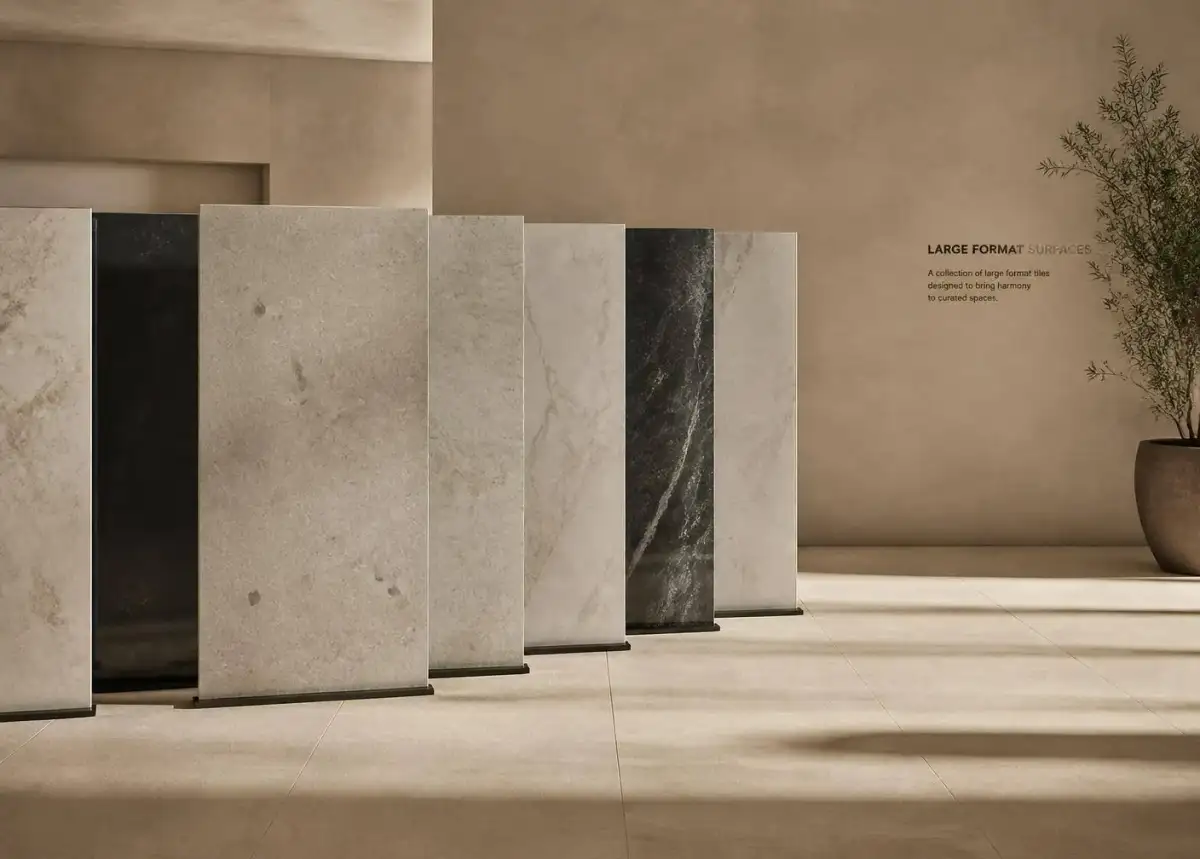
A tile reference is usually chosen from an image, but the image says nothing about how the floor will be laid. Format drives substrate flatness, adhesive class, joint width and waste. A 120x120 cm panel on an uneven screed will cost more in levelling than the tile itself.
We fix the format first, then look for the appearance within that format. It sounds backwards, but it removes the most common late change: a beautiful reference that only exists in a size the space cannot take.
Rectified or not is a budget decision
Rectified edges allow 2 mm joints and a near-monolithic surface. Non-rectified tiles need wider joints and are more forgiving of substrate movement. Neither is better; they belong to different jobs and different installation budgets.
The decision matters because it also sets the grout, the trims and the labour hours. We put all four in the same line of the quotation so nothing is discovered later.
Slip resistance is a legal spec, not a preference
Wet areas, entrances, pool surrounds and commercial kitchens all have slip-rating expectations. On hospitality and HoReCa projects this is the single most frequent revision we see after the first inspection.
- R9
- Dry interiors, living areas, bedrooms, retail floors.
- R10-R11
- Bathrooms, entrances, covered terraces, back-of-house.
- R12-R13
- Commercial kitchens, pool surrounds, exposed exteriors.
Quantities: order once, order correctly
We calculate net area, add cutting waste by laying pattern (5% straight, 10-15% diagonal or herringbone), then add an attic stock of one box per area. Reordering the same batch six weeks later is the expensive scenario, because shade tolerance between production runs is real.
For projects in phases we reserve the batch at the factory rather than storing it in Greece, which keeps the shade consistent across floors delivered months apart.