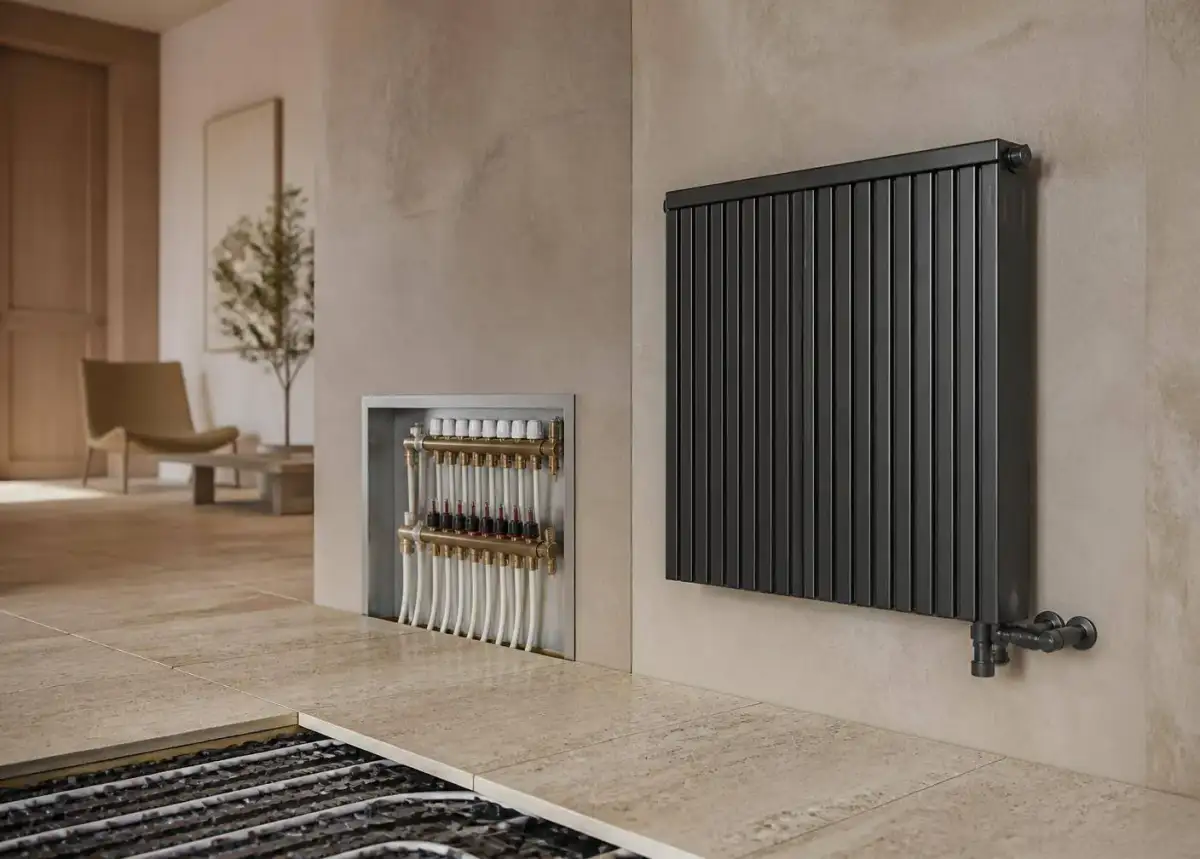
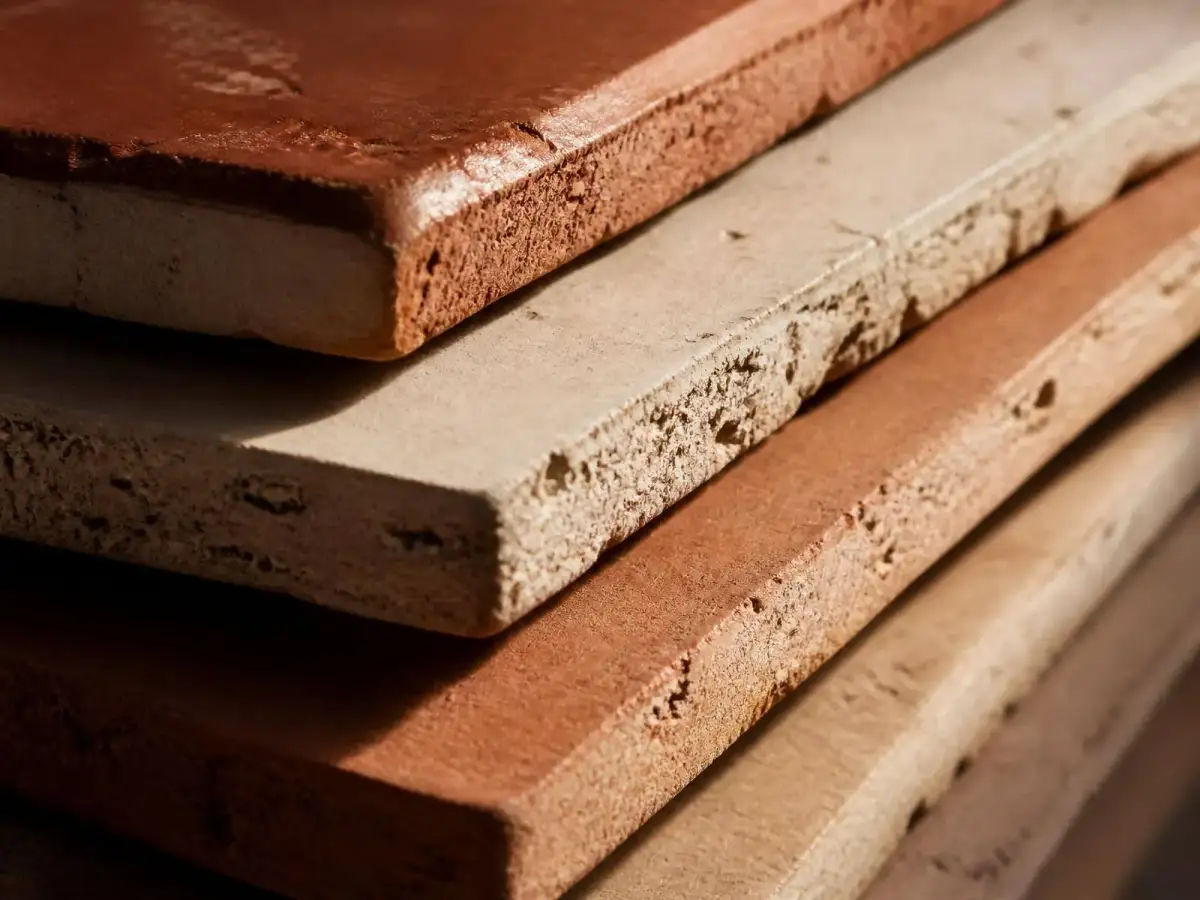
01 / 04
The right floor for the room, so it doesn't fail in year two
Traffic class and moisture exposure are matched to the actual use of the room, avoiding a costly reinstall.
Matched to traffic and moisture, not the brochure
Floors chosen for the traffic, the moisture and the budget they actually face.
Not every floor should be tiled. We import laminate, SPC and LVT vinyl, engineered wood and the underlays, profiles and skirtings that finish them — matched to the traffic class, moisture exposure and installation method of the room instead of the picture in the brochure.
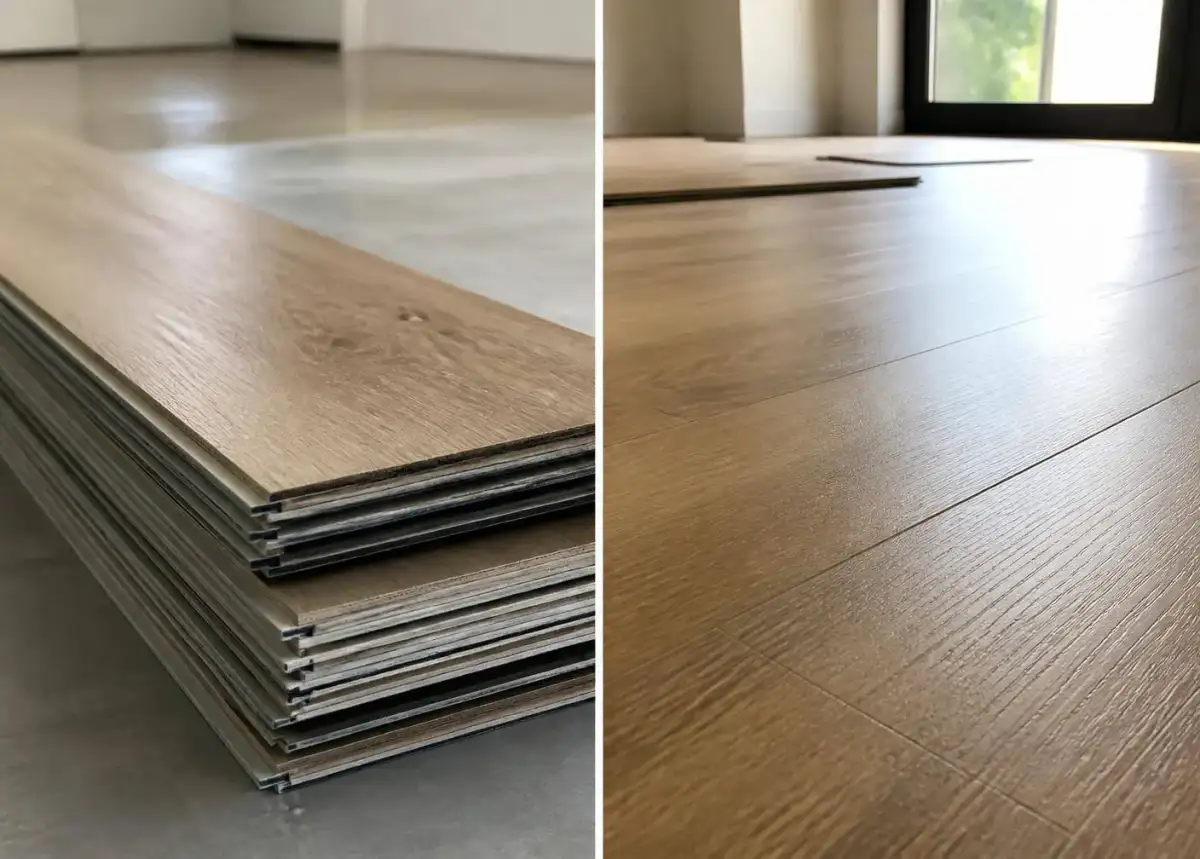
Laminate, SPC, LVT and engineered wood each solve a different commercial problem, and choosing by picture instead of by traffic class and moisture exposure is how a floor gets replaced within two years. SPC belongs in kitchens, ground floors and rentals because it won't swell; laminate is the honest value choice for dry rooms; LVT takes commercial traffic; engineered wood is the only one that can be sanded back later.
Matched to the traffic and the moisture in the room, not the photo in the brochure — so it doesn't fail in year two.
We import the floor and everything that finishes it — underlay matched to the subfloor and the heating, expansion profiles, thresholds, skirtings and stair nosings. A floor delivered without its profiles is a floor that stops on Friday afternoon.
A floor bought on looks alone gets re-laid when water or footfall finds the wrong choice. We match the range to the room before you commit budget.
Traffic class and moisture exposure are matched to the actual use of the room, avoiding a costly reinstall.
Matched to traffic and moisture, not the brochure
Underlay, skirtings, thresholds and expansion profiles ship with the floor, so the job doesn't stall on a missing trim.
Floor, underlay and trims in one delivery
SPC and LVT specified for kitchens, rentals and ground floors, removing the risk of a warped floor after one leak.
Waterproof where it actually matters
Volumes reserved from a single batch, so there's no visible shade change between rooms or phases.
One batch, no visible shade change
AC4–AC5 planks in oak and contemporary tones for homes and light commercial.
Waterproof rigid-core planks for kitchens, rentals and high-traffic apartments.
Glue-down and click vinyl for commercial floors and acoustic-sensitive spaces.
Real oak top layers, brushed and oiled, for living spaces that want the real thing.

A 3–4 mm real oak top layer can be refinished once or twice, which is what separates engineered wood from a printed decor. Brushed and oiled surfaces hide daily life better than a lacquer.
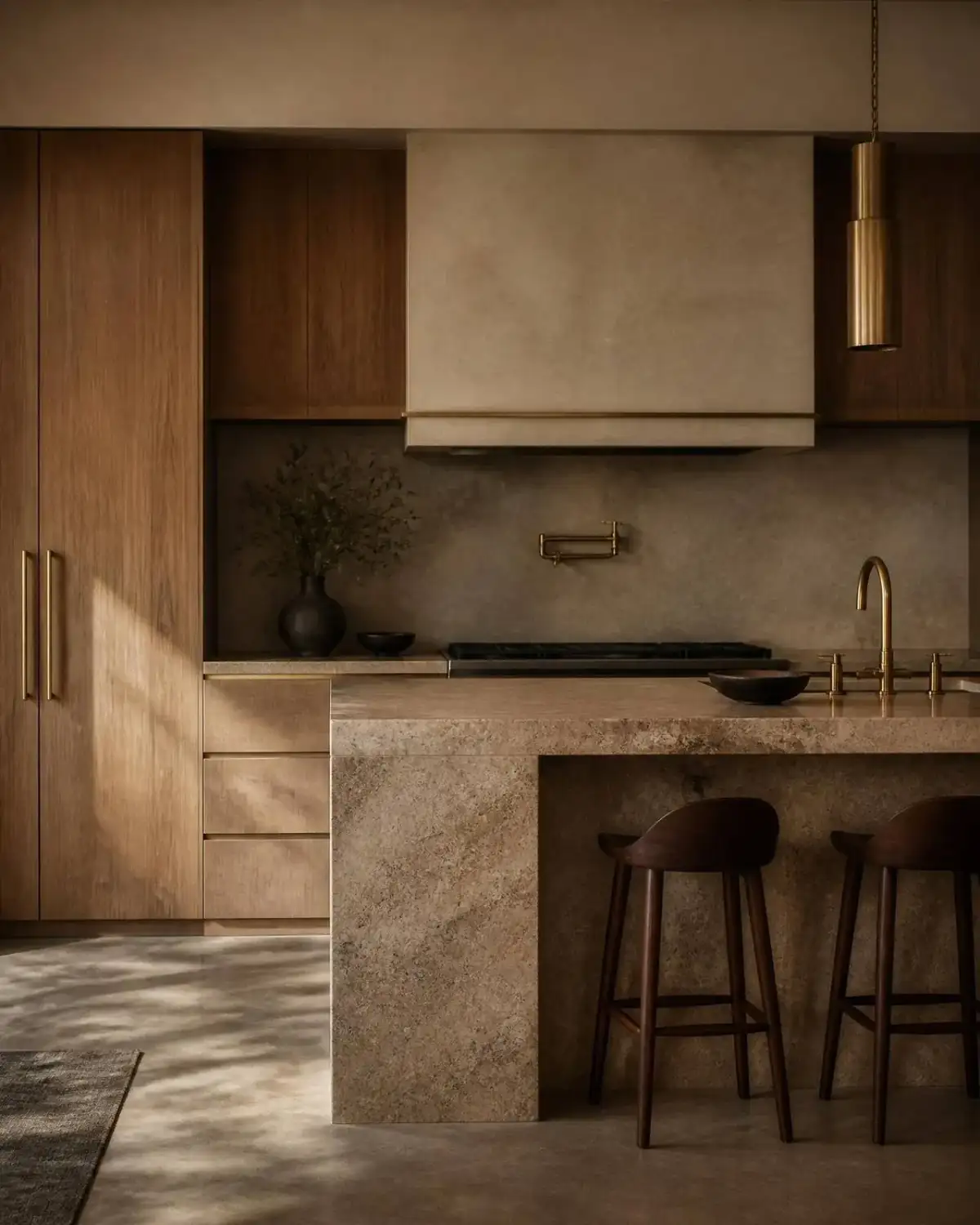
A dishwasher leak ends a laminate floor. SPC has a mineral core that does not swell, does not move with heat and clicks together tightly enough to keep water at the surface long enough to be wiped up.

Rentals need floors that install in a day, survive tenants and can be part-replaced without a full re-lay. Standardising one decor across every unit means spare packs cover everything you own.
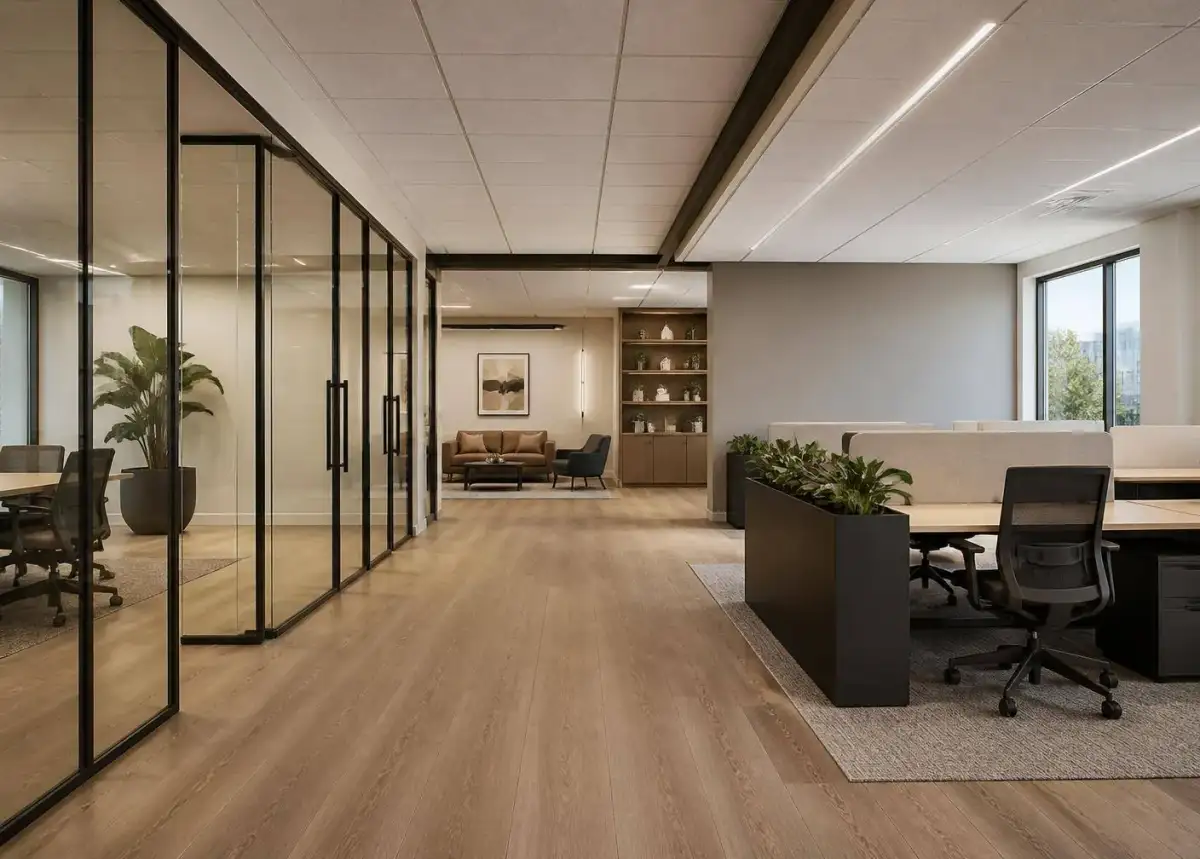
Glue-down LVT takes commercial class 33 traffic, handles chair castors and can be specified with an acoustic backing that keeps a floor plate quiet. Planks are replaceable individually.
Floorschosenforthetraffic,themoistureandthebudgettheyactuallyface.
If water is realistically possible — kitchen, ground floor, rental, bathroom-adjacent — specify SPC. If the room stays dry and budget matters, laminate at AC4–AC5 is the honest choice.
AC4 for normal homes, AC5 for heavy domestic and light commercial, class 32–33 for offices and retail. Under-specifying shows up as wear paths within a year.
Flatness tolerance, moisture content and a damp-proof membrane on ground floors. Most floating-floor failures start below the floor.
Acoustic performance, thermal resistance and thickness all change with the underlay. Over underfloor heating it must be low resistance, not the thickest one on the shelf.
Floating floors need perimeter movement. That gap is covered by the skirting or a profile — ordered at the same time, in the same decor.
Thresholds, expansion profiles and stair nosings are what finish a job. They are the most common back-order.
It blocks the heat you just paid to install. Low-resistance underlay is specified with any heated floor.
Boards need 48 hours in the room before installation. Skipping it produces gaps in the first heating season.
Representative selections from the catalog — indicative of what we quote, stock-source and deliver week to week. Ask for the full schedule with formats, finishes and current lead times.
01AC4–AC5 planks in oak and contemporary tones for homes and light commercial.
02Waterproof rigid-core planks for kitchens, rentals and high-traffic apartments.
03Glue-down and click vinyl for commercial floors and acoustic-sensitive spaces.
04Real oak top layers, brushed and oiled, for living spaces that want the real thing.
A floor bought on looks alone gets re-laid when water or footfall finds the wrong choice. We match the range to the room before you commit budget. This is the part most suppliers leave out: what we import, how flooring should be specified before anyone prices it, where projects lose money, and what our 1–2 wks lead time actually covers.
Not every floor should be tiled. We import laminate, SPC and LVT vinyl, engineered wood and the underlays, profiles and skirtings that finish them — matched to the traffic class, moisture exposure and installation method of the room instead of the picture in the brochure.
Because we buy flooring directly from the factories, the range you see is the range we can programme — not a catalogue we hope to source later. In practice that means laminate, SPC rigid core and LVT vinyl, each with its own price band and availability, so a specification can be tuned to a budget instead of abandoned.
The right floor for the room, so it doesn't fail in year two: traffic class and moisture exposure are matched to the actual use of the room, avoiding a costly reinstall.
Matched to the traffic and the moisture in the room, not the photo in the brochure — so it doesn't fail in year two.
Traffic class and moisture exposure are matched to the actual use of the room, avoiding a costly reinstall.
Underlay, skirtings, thresholds and expansion profiles ship with the floor, so the job doesn't stall on a missing trim.
SPC and LVT specified for kitchens, rentals and ground floors, removing the risk of a warped floor after one leak.
Volumes reserved from a single batch, so there's no visible shade change between rooms or phases.
Specifying flooring well comes down to a short list of decisions taken in the right order — laminate or SPC: let water decide, match the class to the traffic, check the subfloor before anything else and underlay is part of the specification. Taken on paper, these cost nothing. Taken on site, each one is a change order.
We write the specification with you before anything is quoted, so the number you get is for the material that will actually be installed. That means confirmed dimensions and finishes, the right performance class for the space, and quantities that include the waste factor rather than discovering it mid-installation.
The same reference behaves differently depending on where it goes — apartments, short-term rentals, offices and retail each carry their own requirements, and we specify against the space rather than against a mood image.
Abrasion resistance rating for laminate, AC3–AC6.
Stone Polymer Composite — waterproof rigid-core vinyl plank.
Luxury Vinyl Tile, glue-down or click, common in commercial interiors.
Top protective layer thickness — real oak on engineered, PU on vinyl.
Almost every delay we are called in to rescue traces back to the same handful of causes: ordering the floor without profiles, thick insulating underlay over heating, no acclimatisation time and specifying by decor name across different ranges. None of them are exotic, and all of them are avoidable at specification stage.
Ordering the floor without profiles is the most expensive one, because thresholds, expansion profiles and stair nosings are what finish a job. They are the most common back-order.
We have supplied flooring into apartments & homes, kitchens & wet-risk rooms and rentals & fast turnaround, and the pattern is consistent: the projects that run smoothly are the ones where the material was locked before the trades were booked.
Thick insulating underlay over heating — checked once on paper, never again on site.
Thresholds, expansion profiles and stair nosings are what finish a job. They are the most common back-order.
It blocks the heat you just paid to install. Low-resistance underlay is specified with any heated floor.
Boards need 48 hours in the room before installation. Skipping it produces gaps in the first heating season.
The same decor name from two product lines can differ in plank width, bevel and thickness, so a mixed order looks like two floors laid side by side instead of one continuous one.
Standard lead time on flooring is 1–2 wks from confirmed specification, and that window covers the whole chain — factory programming, consolidation, transport, customs where applicable and delivery to site or to your warehouse. We quote the landed number, not an ex-works price that grows later.
Pricing is per project rather than per line. Because we import directly and consolidate flooring with the rest of the materials for the same room, you get one quote, one delivery window and one point of contact — and the savings show up on the total, not just on a headline reference.
If you already have drawings, send them and we will come back with a specification and a landed price. If you do not, we will build the specification with you first. Either way, nothing is ordered until the quantities, finishes and dates are agreed in writing.
Pricing is per m² against the specific range and finish; send the area and we return a quote that includes wastage allowance for cuts and pattern layout.
Packs can be ordered in small quantities for single rooms from stock, while whole-project volumes are programmed to guarantee a single production batch.
Common laminate and SPC decors are held in fast-moving stock; specific colours, wide-plank formats and engineered wood are typically programmed at 1–2 weeks.
Yes, physical samples ship on request, and the floor can be generated in 3D across your actual room layout to check the tone and plank direction first.
SPC where water is likely, such as kitchens, rentals and ground floors; laminate where budget matters and the room stays consistently dry.
Selected ranges are UFH-compatible with the correct low-resistance underlay, and we specify the floor and underlay together to confirm compatibility.
Yes, matching skirtings, thresholds, expansion profiles and the correct underlay ship as part of the same order.
Project volumes are reserved from a single production batch where possible, and we flag any batch change before it affects an installed area.
Yes, we supply trade and private clients nationwide, with delivery timed to the screed drying schedule where underfloor heating is involved.
Materials from this category are usually specified for interior design projects and retail fit-out. If your project needs installation as well as supply, we handle both together.