01 / 04
The flue is quoted with the fire
Most bad fireplaces are bad chimneys. We specify the full insulated run — diameter, height, terminal — in the same quote as the appliance.
Appliance and full flue run on one order
Energy fireplaces, pellet and wood stoves, inserts and complete insulated flue systems.
Closed energy fireplaces with air or water jackets, pellet and wood-burning stoves, cassette inserts for existing openings, and the insulated stainless flue systems that decide whether any of it draws properly. We size the appliance against the heated volume, specify the whole chimney run from connector to terminal, and deliver both on one order with the certificates your installer needs.
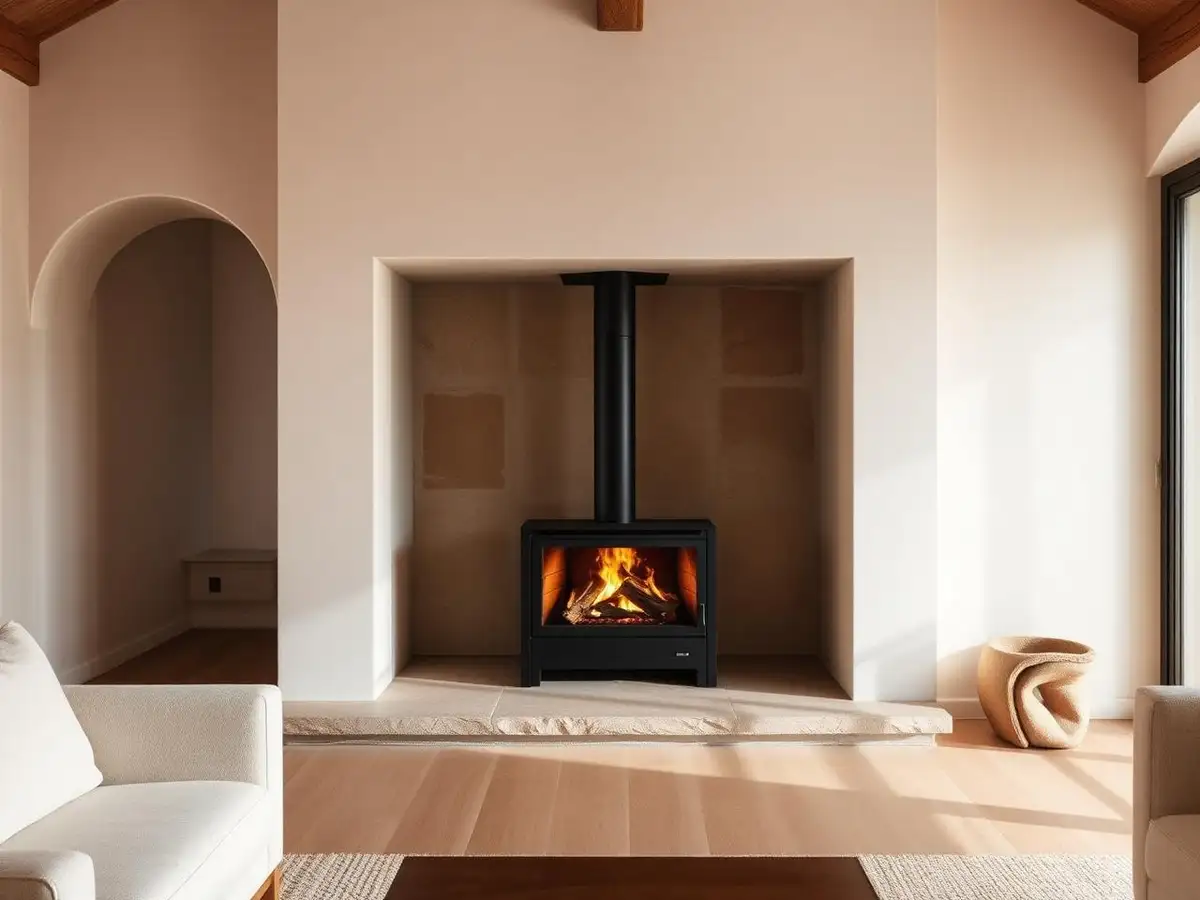
Almost every fireplace complaint — smoke in the room, blackened glass, wood that won't burn properly — traces back to the chimney, not the fire. A beautiful appliance on the wrong chimney will disappoint every single evening.
A fireplace is a system: appliance, chimney, air supply and hearth. We price all four, because the missing one is what ruins the winter.
We start from the size of the room to fix the right output, design the chimney to suit your building, then choose the appliance that fits both. Wood or pellet, freestanding or built-in — we lay out the running cost of each option so the decision is an easy one.
One supplier sizes the appliance, designs the chimney and delivers both with the paperwork — instead of a stove from one shop and a flue improvised on site.
Most bad fireplaces are bad chimneys. We specify the full insulated run — diameter, height, terminal — in the same quote as the appliance.
Appliance and full flue run on one order
Output matched to m³, insulation level and how many rooms the heat has to reach, so it isn't roasting one room and starving the rest.
kW output calculated per heated volume
A water-jacket fireplace feeding radiators or a buffer tank pays back differently than a hot-air unit. We show both cases before you choose.
Air vs water-jacket comparison in the quote
EN 13240 / EN 13229 declarations, efficiency and emissions data, and flue certification supplied for the building file.
CE and emissions documents with every unit
Closed steel or cast-iron chambers 8–20 kW with ducted hot-air distribution to adjacent rooms
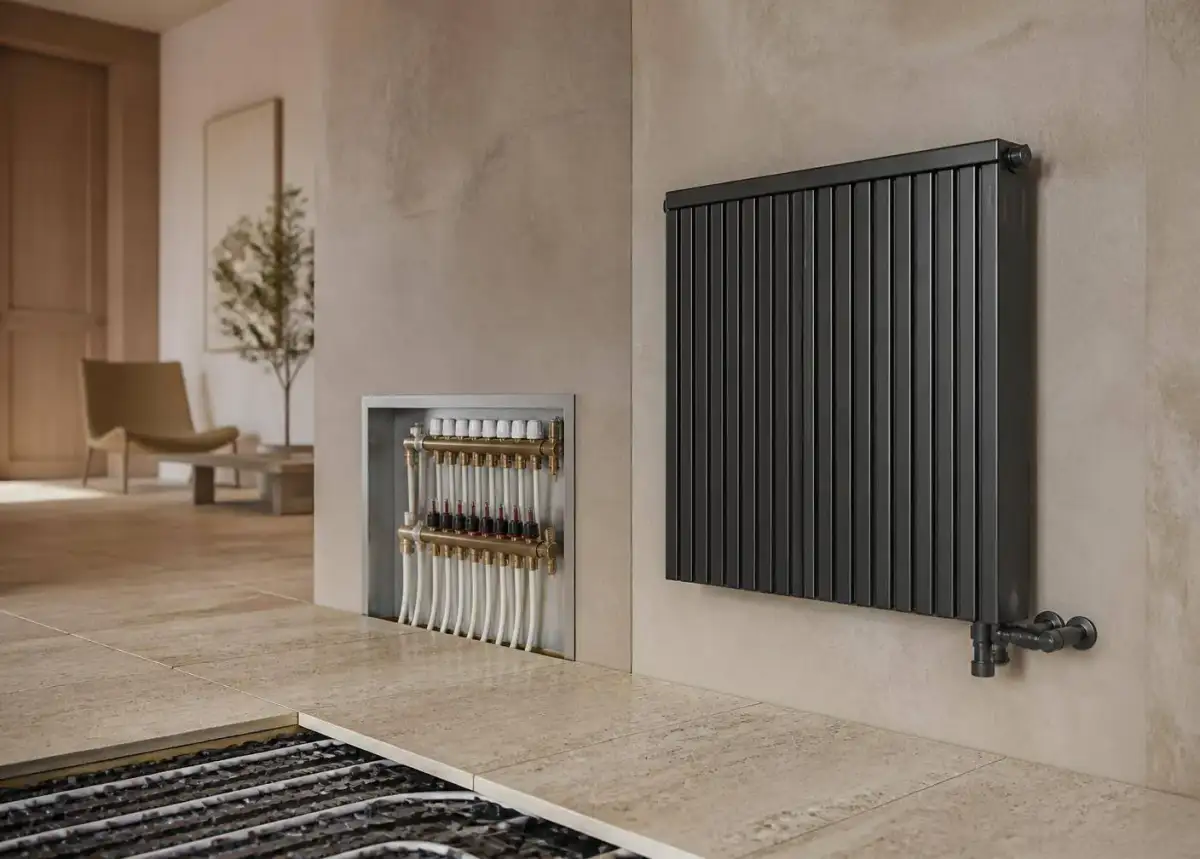
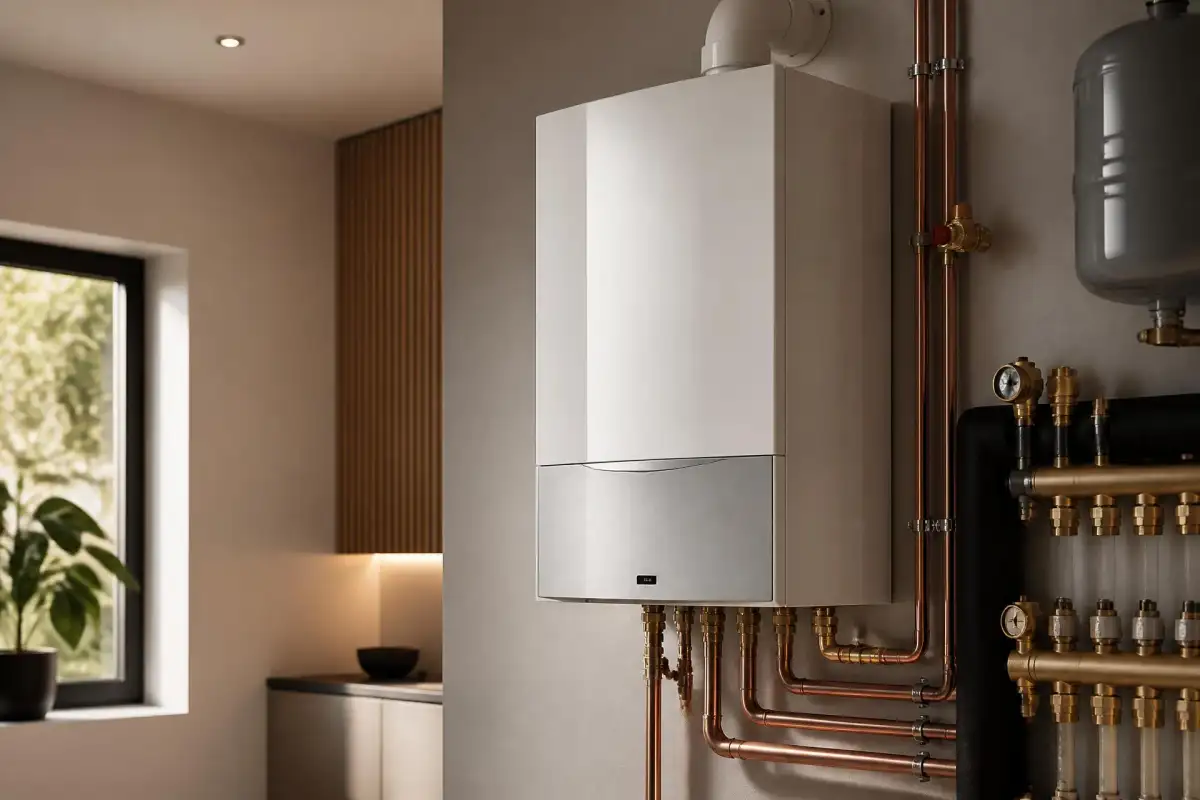
Boiler fireplaces feeding radiators, underfloor circuits or a buffer tank alongside the main heat source
6–24 kW air and hydro pellet units with programmable controls, WiFi modules and low-emission burn
Freestanding stoves and cassette inserts that retrofit into an existing masonry opening
Double-wall stainless 316L flues, connectors, tees, terminals and flexible liners for existing chimneys

One room warm and calm, not one room roasting.
A closed stove sized to the room heats an open-plan living and kitchen space comfortably, with ducted outlets carrying spare warmth to nearby rooms instead of overheating the sofa.
A fire that also runs your radiators.
Where the house already has radiators or underfloor heating, a water-jacket stove takes the load off your main heating system through the coldest months, fully integrated by us at quote stage.

A lounge fire that runs itself.
Pellet units with programmable timing and remote monitoring keep the lobby warm before staff even arrive, with the paperwork you need for licensing supplied alongside.

A fireplace that pulls in customers on a cold night.
A working fireplace turns a taverna's coldest tables into the tables people ask for by name. We size the appliance to the room's volume and footfall, specify a chimney that can run every evening through winter without tarring up, and finish the surround in stone or render that matches your interior.
We calculate output from the room's volume and insulation. Oversizing is as bad as undersizing — a throttled fire tars the glass and the chimney.
A straight run with fewer bends, fully insulated, terminating above the roofline — this is what makes a fire actually draw well.
A water-jacket stove changes the plumbing plan, so we settle this before the walls close up.
Modern airtight houses starve a fire of oxygen — we fit an outside air feed so the fire isn't competing with your kitchen extractor.
Hearth size and clearance to timber and furniture come from the appliance itself — we check this against your room first.
An oversized old chimney kills the draught and causes tar build-up. A correctly sized liner is part of a proper installation.
Two stoves with the same rating can perform completely differently. We look at efficiency and control, not just the headline number.
Wind over the roof pushes smoke back down if the flue doesn't clear the ridge properly — we get this right first time.
Representative selections from the catalog — indicative of what we quote, stock-source and deliver week to week. Ask for the full schedule with formats, finishes and current lead times.
01Closed steel or cast-iron chambers 8–20 kW with ducted hot-air distribution to adjacent rooms
02Boiler fireplaces feeding radiators, underfloor circuits or a buffer tank alongside the main heat source
036–24 kW air and hydro pellet units with programmable controls, WiFi modules and low-emission burn
04Freestanding stoves and cassette inserts that retrofit into an existing masonry opening
One supplier sizes the appliance, designs the chimney and delivers both with the paperwork — instead of a stove from one shop and a flue improvised on site. This is the part most suppliers leave out: what we import, how fireplaces, stoves & flues should be specified before anyone prices it, where projects lose money, and what our 1–3 wks lead time actually covers.
Closed energy fireplaces with air or water jackets, pellet and wood-burning stoves, cassette inserts for existing openings, and the insulated stainless flue systems that decide whether any of it draws properly. We size the appliance against the heated volume, specify the whole chimney run from connector to terminal, and deliver both on one order with the certificates your installer needs.
Because we buy fireplaces, stoves & flues directly from the factories, the range you see is the range we can programme — not a catalogue we hope to source later. In practice that means energy fireplaces (hot air), water-jacket fireplaces and pellet stoves & boilers, each with its own price band and availability, so a specification can be tuned to a budget instead of abandoned.
The flue is quoted with the fire: most bad fireplaces are bad chimneys. We specify the full insulated run — diameter, height, terminal — in the same quote as the appliance.
A fireplace is a system: appliance, chimney, air supply and hearth. We price all four, because the missing one is what ruins the winter.
Most bad fireplaces are bad chimneys. We specify the full insulated run — diameter, height, terminal — in the same quote as the appliance.
Output matched to m³, insulation level and how many rooms the heat has to reach, so it isn't roasting one room and starving the rest.
A water-jacket fireplace feeding radiators or a buffer tank pays back differently than a hot-air unit. We show both cases before you choose.
EN 13240 / EN 13229 declarations, efficiency and emissions data, and flue certification supplied for the building file.
Specifying fireplaces, stoves & flues well comes down to a short list of decisions taken in the right order — get the size right before the style, design the chimney properly, decide air or water heating early and plan for fresh air. Taken on paper, these cost nothing. Taken on site, each one is a change order.
We write the specification with you before anything is quoted, so the number you get is for the material that will actually be installed. That means confirmed dimensions and finishes, the right performance class for the space, and quantities that include the waste factor rather than discovering it mid-installation.
The same reference behaves differently depending on where it goes — houses and holiday homes, mountain and island properties, hotels and guesthouses, restaurants and lounges each carry their own requirements, and we specify against the space rather than against a mood image.
A sealed, efficient fireplace with controlled air supply — far more efficient than an open hearth.
A stove that also heats water for radiators, underfloor heating or a hot water tank.
A stainless liner fitted inside an old chimney to make it work properly with a modern stove.
A small valve fitted in the flue that keeps draught constant, protecting the stove from gusty conditions.
Almost every delay we are called in to rescue traces back to the same handful of causes: connecting a new stove to an old bare chimney, buying on power output alone, a chimney terminating too low and burning wet wood. None of them are exotic, and all of them are avoidable at specification stage.
Connecting a new stove to an old bare chimney is the most expensive one, because an oversized old chimney kills the draught and causes tar build-up. A correctly sized liner is part of a proper installation.
We have supplied fireplaces, stoves & flues into living rooms, whole-house heating and hotels & guesthouses, and the pattern is consistent: the projects that run smoothly are the ones where the material was locked before the trades were booked.
Buying on power output alone — checked once on paper, never again on site.
An oversized old chimney kills the draught and causes tar build-up. A correctly sized liner is part of a proper installation.
Two stoves with the same rating can perform completely differently. We look at efficiency and control, not just the headline number.
Wind over the roof pushes smoke back down if the flue doesn't clear the ridge properly — we get this right first time.
Damp wood wastes energy and tars the chimney fast. We advise on proper storage as part of the design.
Standard lead time on fireplaces, stoves & flues is 1–3 wks from confirmed specification, and that window covers the whole chain — factory programming, consolidation, transport, customs where applicable and delivery to site or to your warehouse. We quote the landed number, not an ex-works price that grows later.
Pricing is per project rather than per line. Because we import directly and consolidate fireplaces, stoves & flues with the rest of the materials for the same room, you get one quote, one delivery window and one point of contact — and the savings show up on the total, not just on a headline reference.
If you already have drawings, send them and we will come back with a specification and a landed price. If you do not, we will build the specification with you first. Either way, nothing is ordered until the quantities, finishes and dates are agreed in writing.
Rough guide for an insulated Greek home: about 0.04–0.06 kW per m³ of heated volume, so a 100 m² apartment with 2.8 m ceilings needs roughly 11–17 kW. Poorly insulated or open-plan spaces need more. Send the plan and we calculate it properly.
Hot air is cheaper and heats the room it sits in plus one or two ducted spaces. A water-jacket unit connects to radiators or a buffer tank and heats the whole house, but needs plumbing, a safety circuit and a proper hydraulic design. We quote both.
Usually yes, with a flexible stainless liner sized to the appliance outlet. An old oversized masonry flue on its own cools the gases, kills the draught and produces tar — the liner is not optional.
Pellets cost more per kWh than bought firewood but burn with far higher efficiency, thermostatic control and no daily loading, so real running costs land close. Pellets win on convenience and programmable heating.
The terminal should clear the roof ridge, or stand at least 1 m above any surface within 3 m horizontally. Getting this wrong is the most common cause of smoke blowing back into the room.
We supply the appliance, the full flue package and the accessories, and coordinate with your installer — or introduce a vetted crew where you don't have one.