
01
Inspection report
Photographed findings, located on the plan, with severity rating and indicative cost per item.
An independent engineer inspects the home you are about to buy in Greece — the building, its systems and whether what stands on site matches its permit and papers — or finds the cause of damp, leaks and cracking in a home you already own. Buyers from abroad get a report written to be read without having been on site. If you then renovate, the same engineer can supervise the works as a separate service.
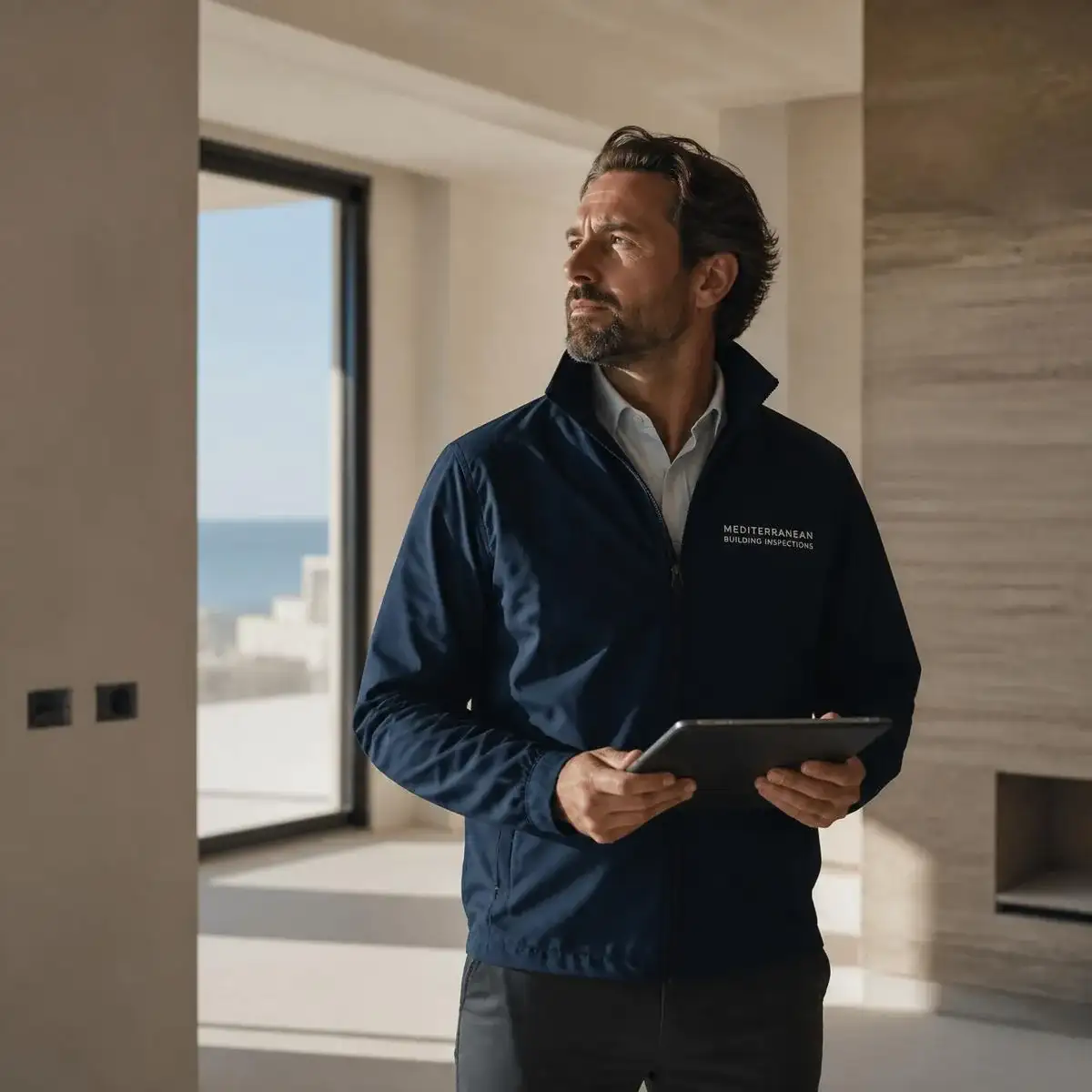
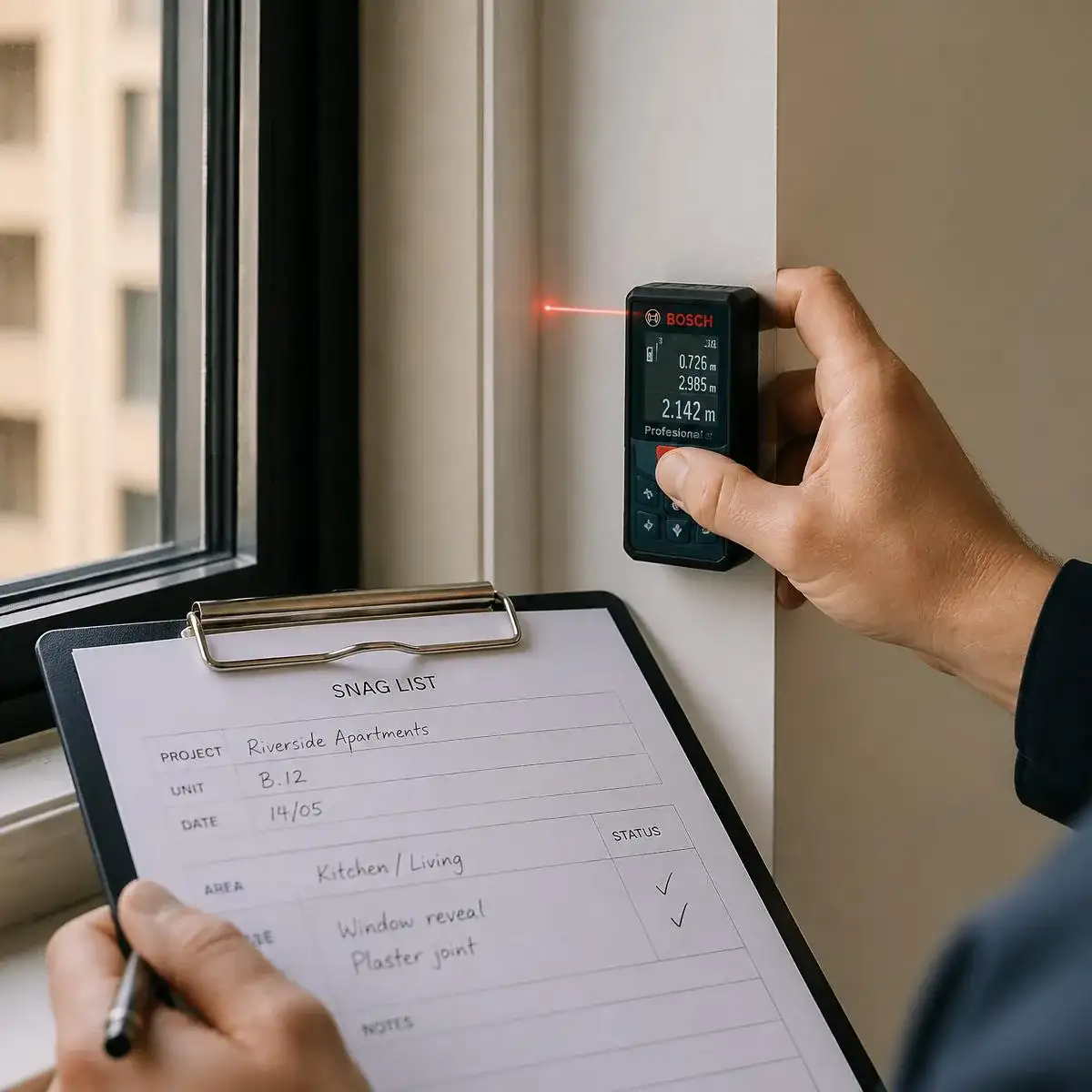
Close inspection of finishes, joints and installations in a home
Before you sign, we inspect the property against a structured checklist: load-bearing frame and cracking, flat roof terrace (ταράτσα) waterproofing, damp, insulation and thermal bridging, electrical and plumbing condition, heating and cooling, windows, and traces of past interventions. You receive a photographed report with an indicative cost to put things right — the figure you actually negotiate with.
The cheapest moment to find a problem with a home is before you own it. After the deed, it is yours to fix.
We agree what is inspected and ask for what the seller or agent can provide: address, floor plans, permit number, ΠΕΑ and any engineer's certificates. For a defect, we ask what failed and when.
Every visit produces a written record you can use in negotiation, with the seller's engineer, with a contractor, or with your insurer.
Photographed findings, located on the plan, with severity rating and indicative cost per item.
Permit and plans against the property, unauthorised works, ΠΕΑ and building identity documents.
Cause, severity and remedy for damp, leaks, cracking or corrosion, in writing.
If you renovate: stage records, payment recommendations, snag closure and certificates.
Most residential purchases in Greece are made on a viewing, a floor plan and a feeling, with legal checks that never look at the building itself. This is what an independent engineer adds, and why it matters more here than in many other markets.
A Greek purchase has a lawyer who checks ownership and encumbrances at the land registry or cadastre, and a notary who draws up the deed. Both are essential, and neither inspects the property. Damp, a failing roof terrace, an electrical installation from the 1980s or a crack across a beam are outside what either of them is asked to look at.
A structured inspection fills that gap. It tells you whether cracking is cosmetic or structural, whether damp is condensation or water getting in, whether the roof terrace waterproofing still works, and whether the heating and electrics have a realistic remaining life — with an indicative cost for each item that you can take into the negotiation.
The notary checks the deed. Nobody else checks the walls unless you ask.
Greek properties often carry changes nobody filed: an enclosed balcony, a room on the roof, a semi-basement turned into living space. Law 4495/2017 allows many of these to be legalised, and a sale needs an engineer's certificate on the property's legal status, the Electronic Building Identity documents where they apply, and an energy certificate (ΠΕΑ).
Those documents are prepared by the seller's engineer. Our job is different: we compare what stands on site with the permit and plans, list what does not match, and note whether it appears to be legalised. That gives you, and your lawyer, the questions to put to the seller before the deed rather than after.
Footprint, floors and openings compared with the approved plans.
Enclosures, additions and conversions listed, with apparent legalisation status.
Energy certificate present and describing this property.
Engineer's documents for the sale present, and consistent with what we saw.
Flat roof terraces are the most common source of leaks: the membrane under the tiles ages, joints open, and water appears two floors away from where it entered. Older reinforced-concrete blocks, especially those on open ground-floor pilotis and built before the modern seismic codes, need their cracking read carefully. Near the sea and on the islands, salt air corrodes reinforcement until the concrete cover spalls off balconies and slab edges.
An inspection looks for each of these deliberately rather than by chance, and says plainly when a finding needs a structural engineer's further assessment rather than a guess. Ground-floor and semi-basement homes get particular attention for rising damp, which is common and often painted over before a viewing.
Fresh paint on a ground-floor wall is a question, not an answer.
Many buyers of homes on the islands and in Athens live outside Greece and see the property once, if at all, before committing. That is exactly when an independent report matters most, because the decision rests on photographs chosen by the seller.
We arrange access with the agent or seller, inspect, and write the report so that someone who has never stood in the property can follow it: each finding photographed and located on the plan, with severity, indicative cost and the papers to ask for. We then walk you through it by phone before you instruct your lawyer.
Most homes bought in Greece are renovated soon after. If you renovate, we can supervise the works as a separate service: visits timed before waterproofing, insulation and services are covered, independent measurement of completed work before each payment, and a check of invoices and variations against the contract.
The job closes with a room-by-room snag list that is re-inspected rather than marked complete, and a file of the certificates, warranties and as-built information for every system installed — the papers that turn a later failure into a warranty claim instead of an expense.
Timed before each concealment point, with photographs of what is covered.
Measured completion against the contract before money is released.
Every item re-inspected, not marked complete by the contractor.
Certificates, warranties and a maintenance plan.
The building and its systems — frame and cracking, roof terrace, damp, insulation, electrics, plumbing, heating and cooling — and whether the property matches its building permit and plans. You get a photographed report with an indicative repair budget and a list of any papers that are missing or do not match.
They check ownership, title and the legal documents for the deed. Neither of them visits the building to look at its structure, damp, roof or installations, and neither compares what stands on site with the permit. That is an engineer's job, and it is what we do.
Yes. We compare the property with its permit and plans, list unauthorised parts and note whether they appear to be legalised under law 4495/2017. We report; we do not legalise. Legalisation and the engineer's certificate for the sale are done by the seller's or your own engineer, and our report tells them what to resolve.
Yes. We inspect homes on the mainland and the islands. Travel is agreed in the scope before the visit, and on islands we plan around ferry and flight times so the inspection fits your purchase timetable.
We arrange the visit with the agent or the seller, and the report is written to be read without having been there: every finding photographed and located on the plan, with severity, indicative cost and the papers to ask for. We then go through it with you by phone.
It depends on the size and age of the property, where it is (island travel adds time), how many papers there are to check, and whether you need a defect diagnosis or thermal imaging as well. Call us with the address and size and we will tell you the cost before anything is booked.
Yes. We visit, trace the cause — rising damp, condensation, a failed roof terrace, corroding reinforcement, structural movement — and give you a written finding with severity and remedy, using thermal imaging where it helps. That finding is what you take to the contractor or the other owners in the building.
Yes, as a separate service. We attend before works are covered, measure completed work before each payment, and close the job with a snag list and the certificates you should receive. A typical apartment renovation is inspected at four to six stages.
Tell us where the property is and what stage you are at. We will tell you what needs checking, what it will cost and how soon we can be there.