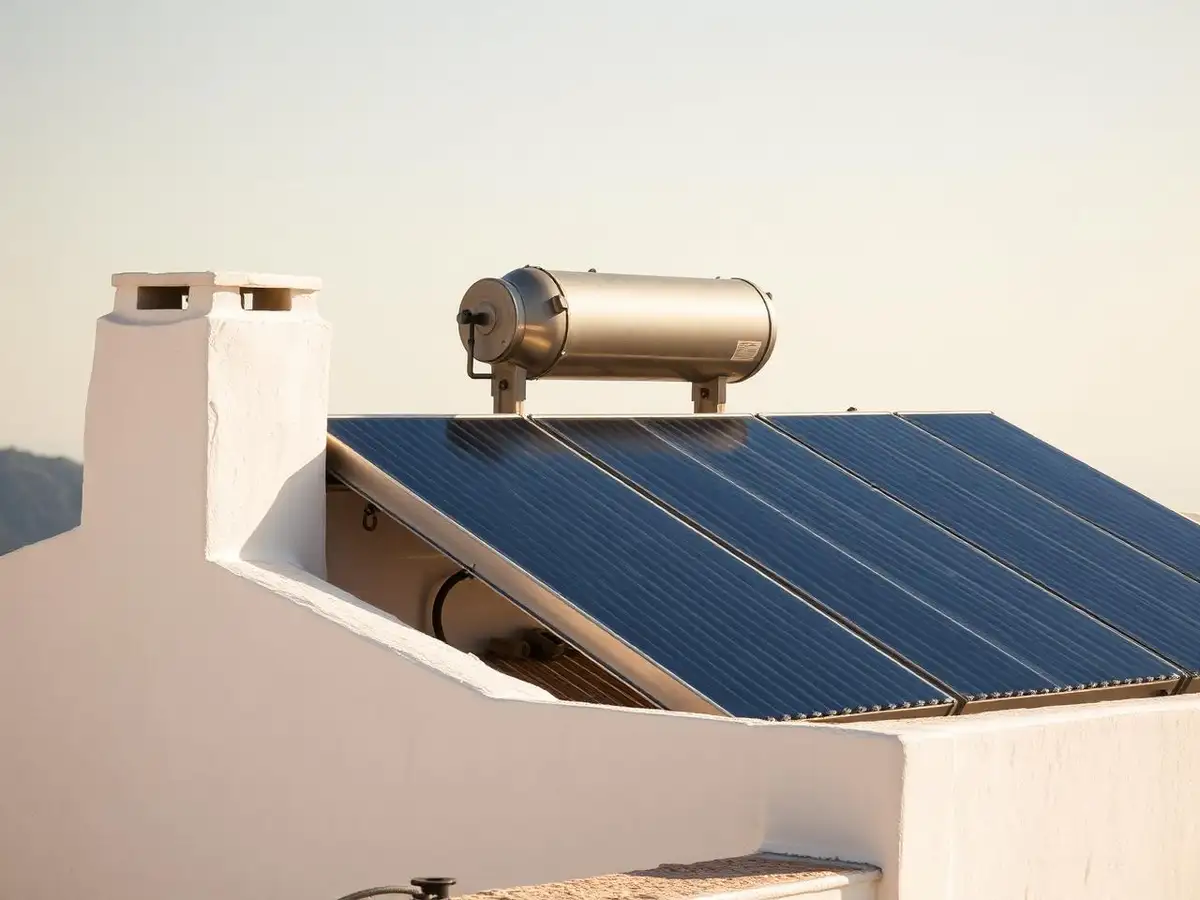
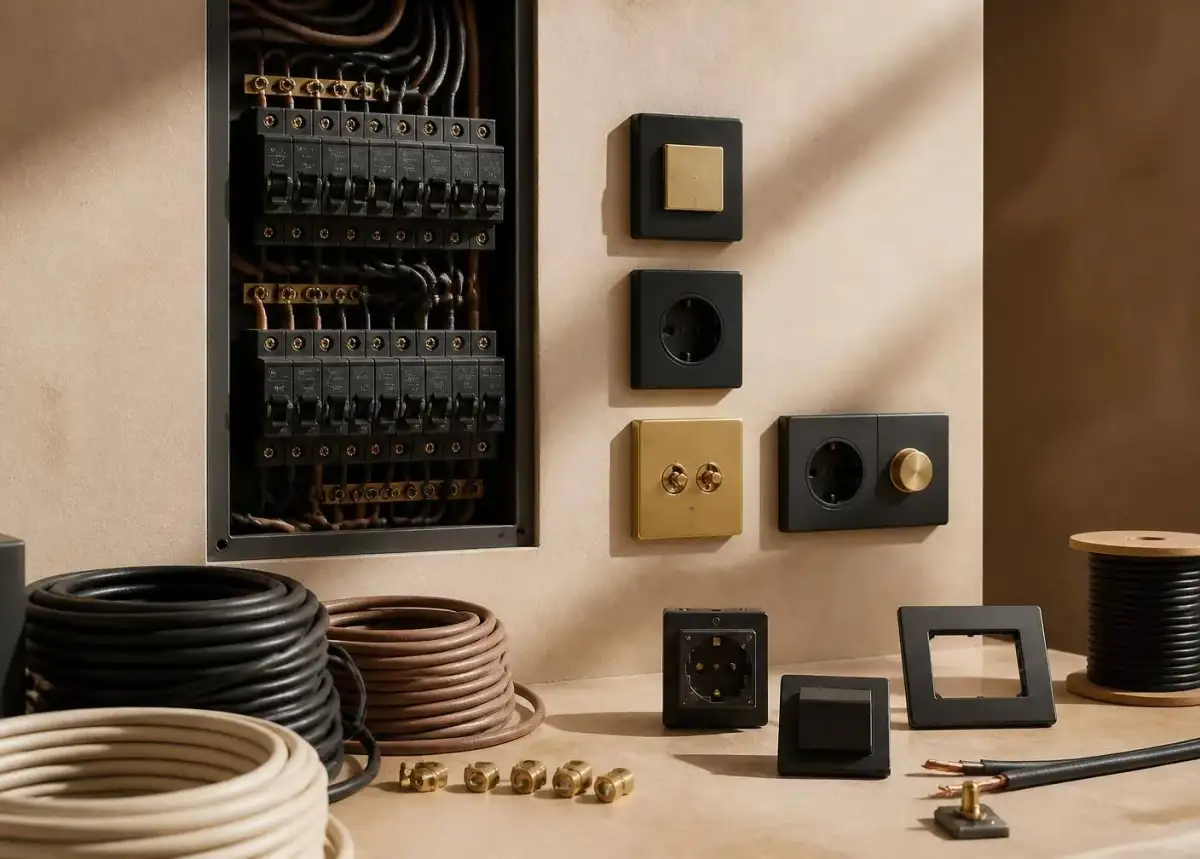
01 / 04
Sized on your consumption, not your roof area
The right array matches what the building actually uses through the day, which is what decides the payback.
Array sized from consumption profile
Panels, inverters, batteries, mounting systems and protection for roofs and businesses.
Monocrystalline panels, string and hybrid inverters, lithium storage, mounting systems for flat and pitched roofs, DC protection, cabling and monitoring. We size the array against your consumption profile and roof geometry, supply every component as one kit, and hand over the datasheets and certificates the electrician and the grid application both require.
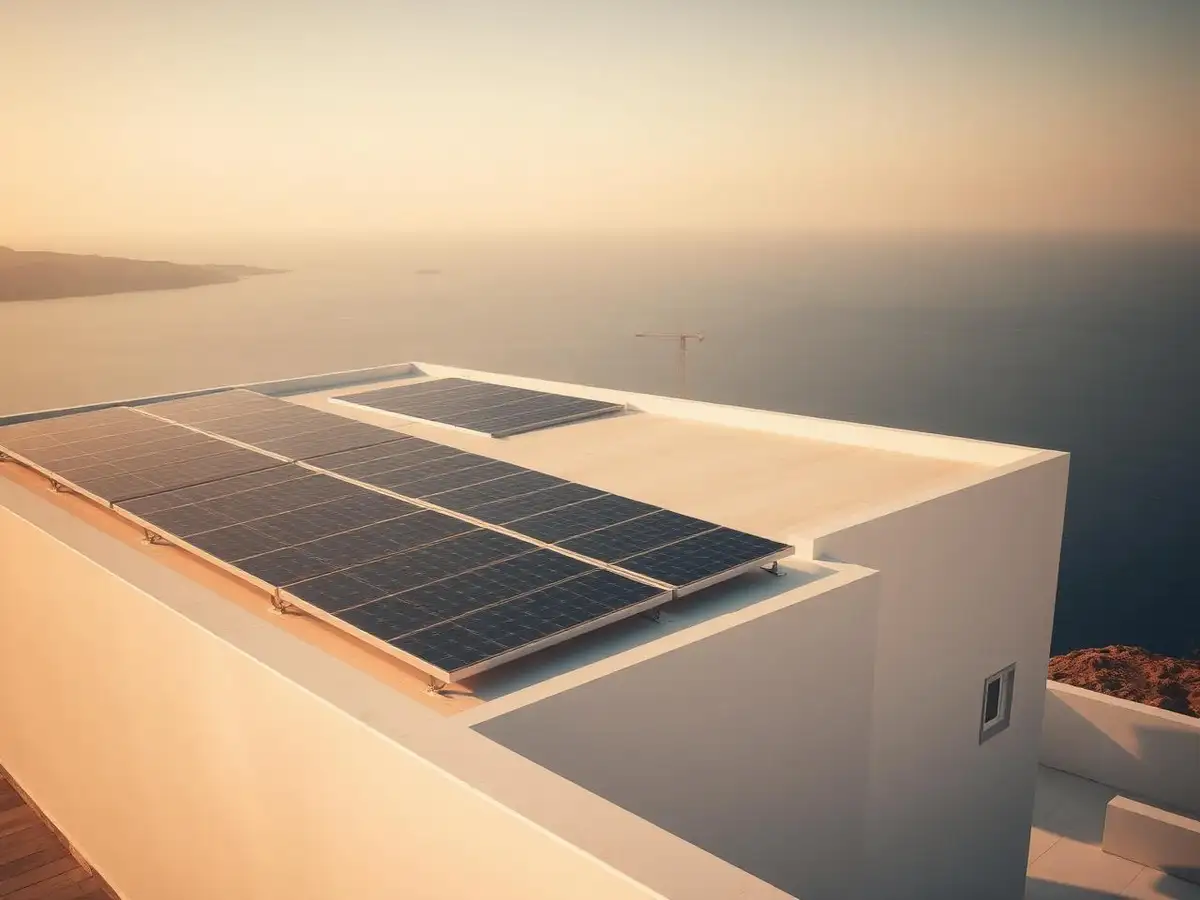
Your annual electricity bill, in kWh, gives us the right system size in about thirty seconds. What changes the answer is when you use that power: daytime use pays back on panels alone, evening use needs a battery to get the same result.
The array is sized by how you actually use power. Everything else — panels, inverter, storage — follows from that.
We size the system from your actual usage, check your roof and any shading, then supply everything as one labelled kit — panels, inverter, mounting, protection, cabling and monitoring. Every certificate goes with it, so nothing holds up your grid connection.
Panels, inverter, mounting, protection and monitoring ship as one labelled kit with the documentation your electrician and the grid application both need.
The right array matches what the building actually uses through the day, which is what decides the payback.
Array sized from consumption profile
Panels, inverter, mounting, DC/AC protection, cable, connectors and monitoring shipped together and labelled.
Complete labelled kit per installation
Ballasted frames for flat concrete, hooks and rails for tiles, trapezoid clamps for metal — with wind loading checked.
Wind-load-checked mounting per roof type
Datasheets, certificates and single-line documentation supplied so the connection file isn't waiting on PDFs.
Full documentation pack per system
Monocrystalline 400–600 Wp, half-cut and bifacial, all-black options for visible roofs
String, hybrid and three-phase inverters 3–100 kW with monitoring and export control
LFP lithium batteries 5–30 kWh, high and low voltage, stackable and rack systems
Ballasted and triangular frames for flat roofs, hooks and rails for tiles, clamps for metal sheet
DC/AC combiner boxes, surge protection, isolators, solar cable, MC4 connectors and earthing

A right-sized system, and the evening covered too.
Most households land on a modest system before storage. Where you use most power in the evening, a battery with the right inverter shifts the daytime generation to when you actually need it.

Daytime use, daytime generation, fast payback.
Kitchens, laundries and air conditioning all run while the sun is up — the ideal match for solar. We include monitoring so you can see production against usage in real time.
Large roofs, properly engineered for the wind.
Factory and warehouse roofs get mounting calculated for the local wind conditions, with cable routing and protection all documented before anything goes up on the roof.

Daytime loads that make solar pay back fast.
Shops, cold storage and agricultural buildings often run their heaviest loads — refrigeration, irrigation pumps, processing equipment — exactly when the sun is up, which is what makes the payback so quick, so we size the array against that load profile rather than a generic household default.
Your annual usage gives the system size that matches your consumption — filling the whole roof rarely makes sense beyond that.
A single shaded panel can drag down a whole row of output — we plan the layout to avoid it.
The right inverter now means you can add storage or backup power later without replacing anything.
Especially important on islands and coastal sites — never just copied from another job.
Certificates and warranties go straight into your connection file, ready when needed.
An oversized system just exports cheaply and takes longer to pay back — we size to your bill instead.
Storage pays off for evening use — for a daytime-heavy business it can add cost for little benefit.
Standard inverters shut off in a power cut — backup needs the right inverter and a battery, which we can supply.
Representative selections from the catalog — indicative of what we quote, stock-source and deliver week to week. Ask for the full schedule with formats, finishes and current lead times.
01Monocrystalline 400–600 Wp, half-cut and bifacial, all-black options for visible roofs
02String, hybrid and three-phase inverters 3–100 kW with monitoring and export control
03LFP lithium batteries 5–30 kWh, high and low voltage, stackable and rack systems
04Ballasted and triangular frames for flat roofs, hooks and rails for tiles, clamps for metal sheet
Panels, inverter, mounting, protection and monitoring ship as one labelled kit with the documentation your electrician and the grid application both need. This is the part most suppliers leave out: what we import, how solar & photovoltaic systems should be specified before anyone prices it, where projects lose money, and what our 2–4 wks lead time actually covers.
Monocrystalline panels, string and hybrid inverters, lithium storage, mounting systems for flat and pitched roofs, DC protection, cabling and monitoring. We size the array against your consumption profile and roof geometry, supply every component as one kit, and hand over the datasheets and certificates the electrician and the grid application both require.
Because we buy solar & photovoltaic systems directly from the factories, the range you see is the range we can programme — not a catalogue we hope to source later. In practice that means PV panels, inverters and battery storage, each with its own price band and availability, so a specification can be tuned to a budget instead of abandoned.
Sized on your consumption, not your roof area: the right array matches what the building actually uses through the day, which is what decides the payback.
The array is sized by how you actually use power. Everything else — panels, inverter, storage — follows from that.
The right array matches what the building actually uses through the day, which is what decides the payback.
Panels, inverter, mounting, DC/AC protection, cable, connectors and monitoring shipped together and labelled.
Ballasted frames for flat concrete, hooks and rails for tiles, trapezoid clamps for metal — with wind loading checked.
Datasheets, certificates and single-line documentation supplied so the connection file isn't waiting on PDFs.
Specifying solar & photovoltaic systems well comes down to a short list of decisions taken in the right order — we start from the bill, not the roof, we map any shading honestly, we choose an inverter that leaves your options open and we calculate the mounting for the wind. Taken on paper, these cost nothing. Taken on site, each one is a change order.
We write the specification with you before anything is quoted, so the number you get is for the material that will actually be installed. That means confirmed dimensions and finishes, the right performance class for the space, and quantities that include the waste factor rather than discovering it mid-installation.
The same reference behaves differently depending on where it goes — houses and villas, hotels and rentals, factories and warehouses, offices and retail each carry their own requirements, and we specify against the space rather than against a mood image.
The rated size of a solar array — used as its nominal capacity.
An inverter that manages panels, battery and grid together, and can supply power during an outage.
A safe, long-lasting battery chemistry, the standard choice for home solar storage.
A billing arrangement crediting exported solar power against later grid consumption.
Almost every delay we are called in to rescue traces back to the same handful of causes: sizing by available roof space, adding a battery without checking when you use power, expecting backup power from a standard inverter and penetrating a waterproofed roof carelessly. None of them are exotic, and all of them are avoidable at specification stage.
Sizing by available roof space is the most expensive one, because an oversized system just exports cheaply and takes longer to pay back — we size to your bill instead.
We have supplied solar & photovoltaic systems into houses & villas, hotels & businesses and industrial roofs, and the pattern is consistent: the projects that run smoothly are the ones where the material was locked before the trades were booked.
Adding a battery without checking when you use power — checked once on paper, never again on site.
An oversized system just exports cheaply and takes longer to pay back — we size to your bill instead.
Storage pays off for evening use — for a daytime-heavy business it can add cost for little benefit.
Standard inverters shut off in a power cut — backup needs the right inverter and a battery, which we can supply.
Every unsealed fixing risks a future leak — we detail this properly or avoid penetrating at all.
Standard lead time on solar & photovoltaic systems is 2–4 wks from confirmed specification, and that window covers the whole chain — factory programming, consolidation, transport, customs where applicable and delivery to site or to your warehouse. We quote the landed number, not an ex-works price that grows later.
Pricing is per project rather than per line. Because we import directly and consolidate solar & photovoltaic systems with the rest of the materials for the same room, you get one quote, one delivery window and one point of contact — and the savings show up on the total, not just on a headline reference.
If you already have drawings, send them and we will come back with a specification and a landed price. If you do not, we will build the specification with you first. Either way, nothing is ordered until the quantities, finishes and dates are agreed in writing.
Start from annual consumption in kWh, not from roof size. In Greece roughly 1 kWp produces about 1,400–1,600 kWh a year, so a household using 6,000 kWh usually lands on a 4–5 kWp array before any storage.
It depends on when you use power. If most consumption is in the evening, storage shifts daytime generation to when it is needed and improves self-consumption sharply. If the load is daytime — an office, a workshop, a hotel kitchen — the panels alone pay back faster.
Only with a hybrid inverter configured for backup and, in practice, a battery. A standard grid-tied inverter shuts down when the grid is down, for the safety of anyone working on the line.
Usually a ballasted triangular frame that avoids penetrating the waterproofing, with ballast calculated for the wind zone. Where penetration is unavoidable, the fixings are sealed into the membrane detail.
We supply the complete system and documentation and coordinate with your electrician or installer. The grid connection application and commissioning stay with the licensed installer.
Modern monocrystalline panels carry 25–30 year performance warranties and typically still deliver above 85% of rated output at year 25. The inverter is the component most likely to be replaced once in that period.
Cost per kW drops as the array grows — panels, hybrid inverter, roof mounting and DC/AC protection are quoted together, not the panel alone. Send us your annual consumption and roof geometry and we return a price per kWp with the equipment itemised.