01 / 04
You approve the actual slab, not a swatch
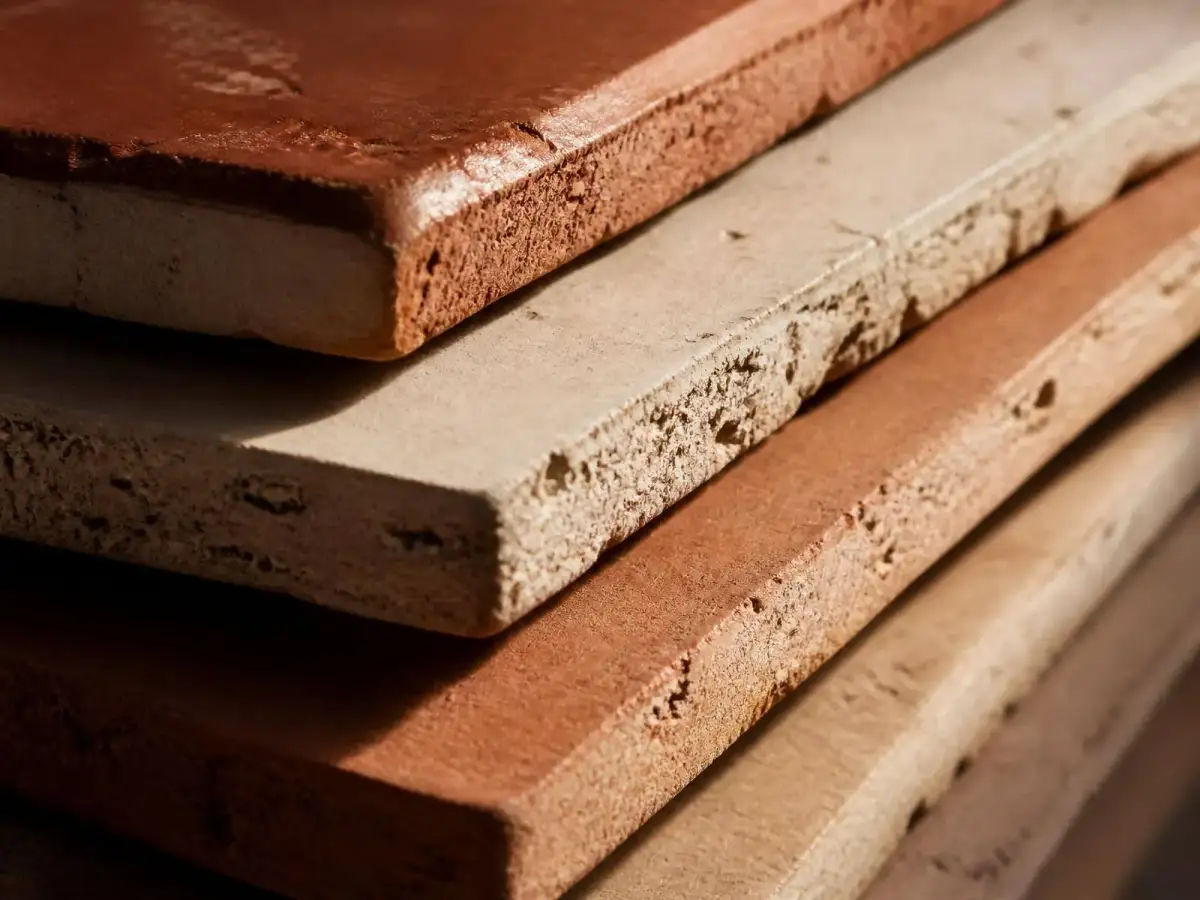
We photograph and reserve the bundle before cutting, so what lands on site is the exact stone you signed off.
Slab approved by you, before a single cut
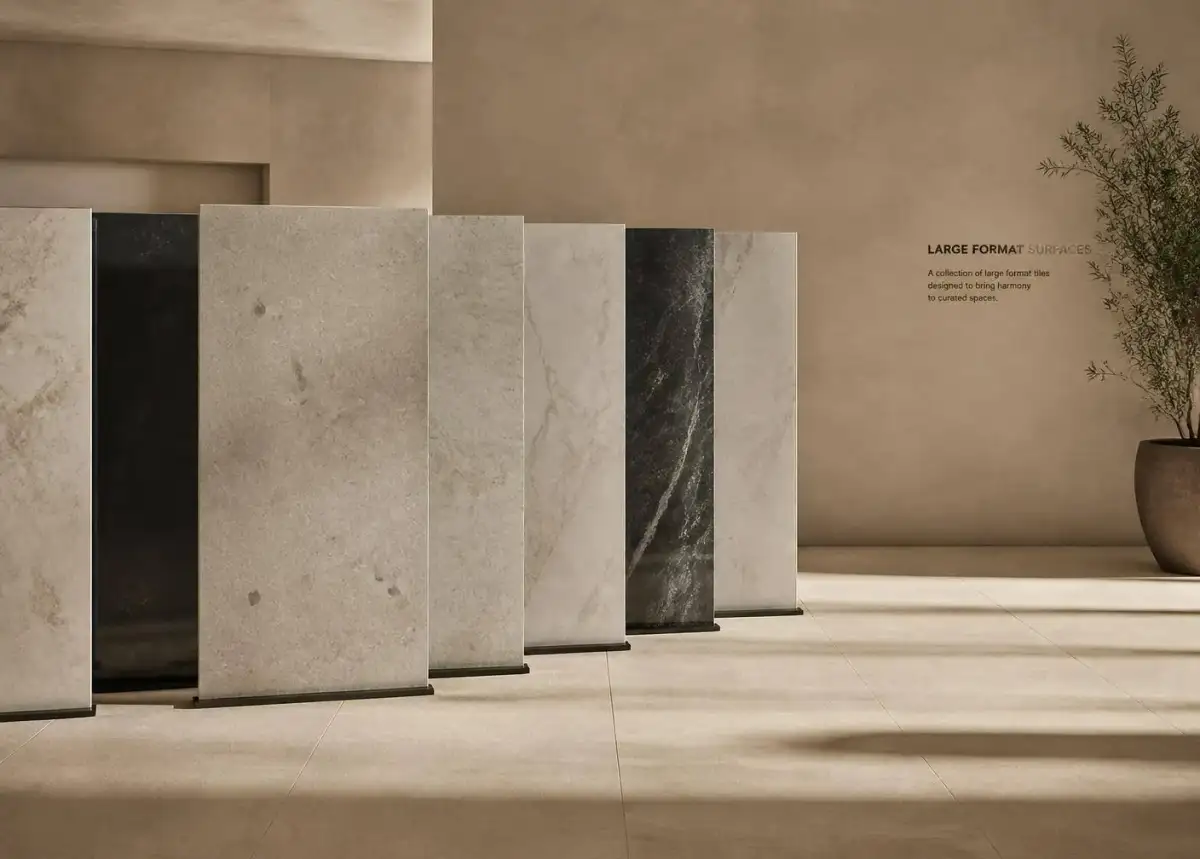
Greek and imported marble for floors, cladding, worktops and bespoke pieces.
Marble is bought by the block and judged by the slab. We work with quarries and processors for Greek and imported marbles — selecting bundles, matching veining across a project, and coordinating cutting, finishing and delivery so what arrives on site is what was specified in the drawing.

Two slabs sold under the same commercial name can be completely different stones, and by the time that's obvious the block has already been cut. We select at bundle level, photograph exactly what we've reserved, and hold it for your approval before a single cut is released — so the cost and the look are both locked in before production starts.
You see and approve the exact slab before it's cut — no surprises when the pallet lands on site.
The second half of the job is processing. Book-matching a bathroom wall, keeping the vein continuous across a worktop and its splashback, choosing an edge profile that survives daily use, honing versus polishing for a floor that will actually be walked on — all of it is planned as a cutting drawing, not decided by the fabricator on the day.
Marble bought on a commercial name alone is a gamble on colour and vein. We reserve the bundle, send photographs for approval, and quote the cutting and finishing in the same number as the stone.
We photograph and reserve the bundle before cutting, so what lands on site is the exact stone you signed off.
Slab approved by you, before a single cut
Cutting, edges, honing and sealing are quoted in the same line as the slab, so there's no second invoice later.
No second invoice for finishing and fitting
Book-matched and continuous-vein layouts are planned from one bundle, so a bathroom or a lobby reads as one surface.
One bundle, no shade drift across the room
Domestic quarries plus Italian, Turkish and Spanish sources, all managed through one supplier and one delivery date.
One supplier for local and imported stone
Classic whites with grey veining for bathrooms, cladding and statement walls.
Travertine-adjacent and beige tones for hospitality and residential floors.
Deep greens, browns and blacks for bars, reception desks and feature joinery.
Slabs selected and sealed for kitchen and vanity surfaces.

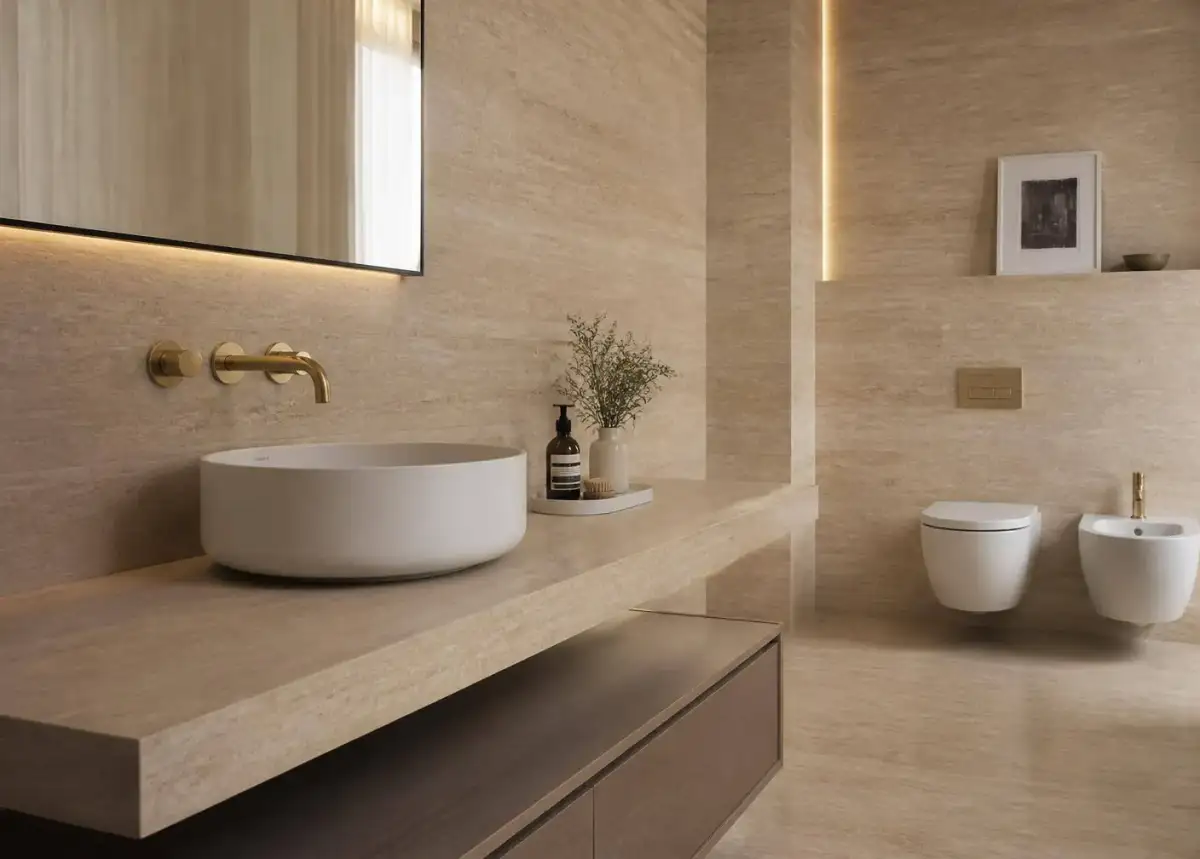
Book-matched walls, sealed and detailed.
A book-matched pair opens the vein like a butterfly across the wall behind the bath — the single most photographed detail in a marble bathroom. It only works if the bundle is reserved and the cutting drawing is made before anyone touches the saw.
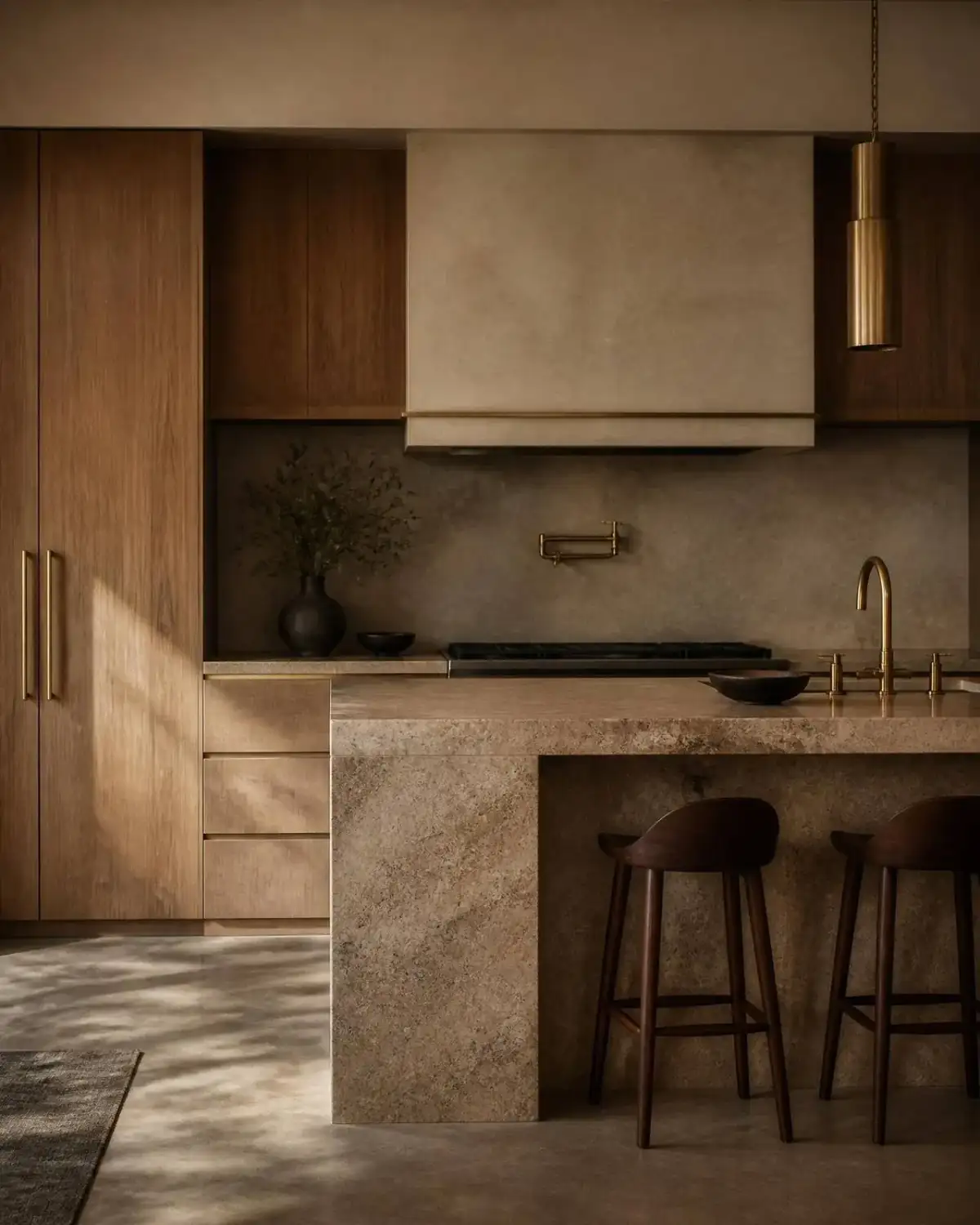
Honest advice about which marbles belong in a kitchen.
Marble etches with lemon and wine. Some clients want that patina, some will call it damage in month two. We say which is which, then detail the edge, the mitre and the sealing schedule for the one you choose.

A floor pattern set out before the first slab is cut.
Large lobby floors need a setting-out drawing: where the pattern starts, where cuts land, how the border meets the lift threshold. Dark, dramatic marbles do the work on the desk and the bar front; the floor stays honed and calm.

Treads, risers and nosings as one package.
Stairs are where marble is most often bought twice. Tread thickness, nosing profile, anti-slip grooving and the riser height all have to be resolved against the built structure, not the drawing that was made before it.
A 10×10 sample confirms nothing about the vein you'll actually get, and finding that out after the block is cut is an expensive way to learn. We send photographs of the full reserved bundle, numbered slab by slab, and hold it for approval before a single cut is released.
Polished marble on a floor is a slip risk and shows every scratch within a year — a fact worth knowing before, not after, the floor is laid. Honed absorbs traffic and reads softer; keep the polish for vertical surfaces where it isn't walked on.
Vein-cut and cross-cut from the same block can look like two unrelated stones once installed, and the choice is irreversible once the saw has run. Fix the direction on the cutting drawing before the block is committed.
Cutting, mitres, cut-outs, edge profiles, honing and sealing can add 30–60% on top of the raw slab price — a number that shouldn't arrive as a second invoice after the client has already approved the first.
Choosing real marble for a rental kitchen or heavy commercial floor is often a maintenance cost you're signing up for unknowingly. A marble-effect porcelain slab is frequently the better commercial decision, and we'll say so before selling the more expensive stone.
"Calacatta" describes dozens of very different stones, so ordering on the name alone means gambling on whatever happens to be on the floor that week — with no comeback once it's installed.
Sealer type and re-application interval are part of the specification, not an afterthought — unsealed marble in a shower absorbs and shadows within months, and that's a client complaint with your name on the invoice.
Fissures and resin repairs exist in almost every block. Without an allowance built into the m², a genuinely natural feature can look like it's stopped the job when it shouldn't.
Representative selections from the catalog — indicative of what we quote, stock-source and deliver week to week. Ask for the full schedule with formats, finishes and current lead times.
01Classic whites with grey veining for bathrooms, cladding and statement walls.
02Travertine-adjacent and beige tones for hospitality and residential floors.
03Deep greens, browns and blacks for bars, reception desks and feature joinery.
04Slabs selected and sealed for kitchen and vanity surfaces.
Marble bought on a commercial name alone is a gamble on colour and vein. We reserve the bundle, send photographs for approval, and quote the cutting and finishing in the same number as the stone. This is the part most suppliers leave out: what we import, how marble should be specified before anyone prices it, where projects lose money, and what our 1–2 wks lead time actually covers.
Marble is bought by the block and judged by the slab. We work with quarries and processors for Greek and imported marbles — selecting bundles, matching veining across a project, and coordinating cutting, finishing and delivery so what arrives on site is what was specified in the drawing.
Because we buy marble directly from the factories, the range you see is the range we can programme — not a catalogue we hope to source later. In practice that means white & grey marbles, warm & beige marbles and dark & dramatic, each with its own price band and availability, so a specification can be tuned to a budget instead of abandoned.
You approve the actual slab, not a swatch: we photograph and reserve the bundle before cutting, so what lands on site is the exact stone you signed off.
You see and approve the exact slab before it's cut — no surprises when the pallet lands on site.
We photograph and reserve the bundle before cutting, so what lands on site is the exact stone you signed off.
Cutting, edges, honing and sealing are quoted in the same line as the slab, so there's no second invoice later.
Book-matched and continuous-vein layouts are planned from one bundle, so a bathroom or a lobby reads as one surface.
Domestic quarries plus Italian, Turkish and Spanish sources, all managed through one supplier and one delivery date.
Specifying marble well comes down to a short list of decisions taken in the right order — decide on the bundle, never the sample, decide finish by where feet, not eyes, will meet it, decide the vein direction before the block is sawn and decide the processing budget with the stone, not after it. Taken on paper, these cost nothing. Taken on site, each one is a change order.
We write the specification with you before anything is quoted, so the number you get is for the material that will actually be installed. That means confirmed dimensions and finishes, the right performance class for the space, and quantities that include the waste factor rather than discovering it mid-installation.
The same reference behaves differently depending on where it goes — bathroom cladding, worktops & vanities, stairs and reception & feature walls each carry their own requirements, and we specify against the space rather than against a mood image.
Consecutive slabs cut from one block, kept in sequence for matching.
Two adjacent slabs opened like a book to mirror the vein.
Block sawn against the bedding plane, producing a linear vein instead of a cloud.
45° joint that makes a 2 cm slab read as a 6 cm solid edge.
Almost every delay we are called in to rescue traces back to the same handful of causes: ordering by commercial name alone, leaving the sealing to the installer, no allowance for natural defects and assuming any fabricator can process it the same way. None of them are exotic, and all of them are avoidable at specification stage.
Ordering by commercial name alone is the most expensive one, because "Calacatta" describes dozens of very different stones, so ordering on the name alone means gambling on whatever happens to be on the floor that week — with no comeback once it's installed.
We have supplied marble into bathrooms & wet rooms, worktops & vanities and lobbies & reception, and the pattern is consistent: the projects that run smoothly are the ones where the material was locked before the trades were booked.
Leaving the sealing to the installer — checked once on paper, never again on site.
"Calacatta" describes dozens of very different stones, so ordering on the name alone means gambling on whatever happens to be on the floor that week — with no comeback once it's installed.
Sealer type and re-application interval are part of the specification, not an afterthought — unsealed marble in a shower absorbs and shadows within months, and that's a client complaint with your name on the invoice.
Fissures and resin repairs exist in almost every block. Without an allowance built into the m², a genuinely natural feature can look like it's stopped the job when it shouldn't.
Marble is soft and reacts to the wrong blade speed, coolant or sealant with chipped edges and permanent staining that only becomes visible once the piece is installed. Processing is specified with the stone, using fabricators who work with natural marble routinely.
Standard lead time on marble is 1–2 wks from confirmed specification, and that window covers the whole chain — factory programming, consolidation, transport, customs where applicable and delivery to site or to your warehouse. We quote the landed number, not an ex-works price that grows later.
Pricing is per project rather than per line. Because we import directly and consolidate marble with the rest of the materials for the same room, you get one quote, one delivery window and one point of contact — and the savings show up on the total, not just on a headline reference.
If you already have drawings, send them and we will come back with a specification and a landed price. If you do not, we will build the specification with you first. Either way, nothing is ordered until the quantities, finishes and dates are agreed in writing.
Marble is quoted by the slab or by the bundle once we know the exact area and cut list, since yield varies with veining and book-matching — we confirm the final m² price after slab selection.
There is no rigid minimum, but small orders are priced per remnant slab while full rooms or facades are sourced as a dedicated bundle for consistent veining.
Yes. We photograph the reserved bundle and send it for approval, and the same slab can be rendered in 3D on your floor plan before cutting is released.
Once the slab is approved, cutting and finishing typically run 1–2 weeks, with delivery to site or to your fabricator coordinated as part of the order.
With the right selection, thickness and sealing it performs well; we advise honestly on which marbles suit a working kitchen and which are better kept to walls or low-traffic floors.
Yes, book-matched and continuous-vein layouts are planned from the same bundle before any cutting starts, so the pattern reads as one surface.
We supply the correct impregnating sealer and a maintenance schedule, and can recommend installers we work with regularly on marble projects.
Yes, we quote directly for private clients and run full specification packages for architects, developers and contractors on the same terms.
Yes, nationwide delivery is standard, with island logistics planned around ferry schedules to protect the slabs in transit.
Materials from this category are usually specified for interior design projects and bathroom development projects. If your project needs installation as well as supply, we handle both together.