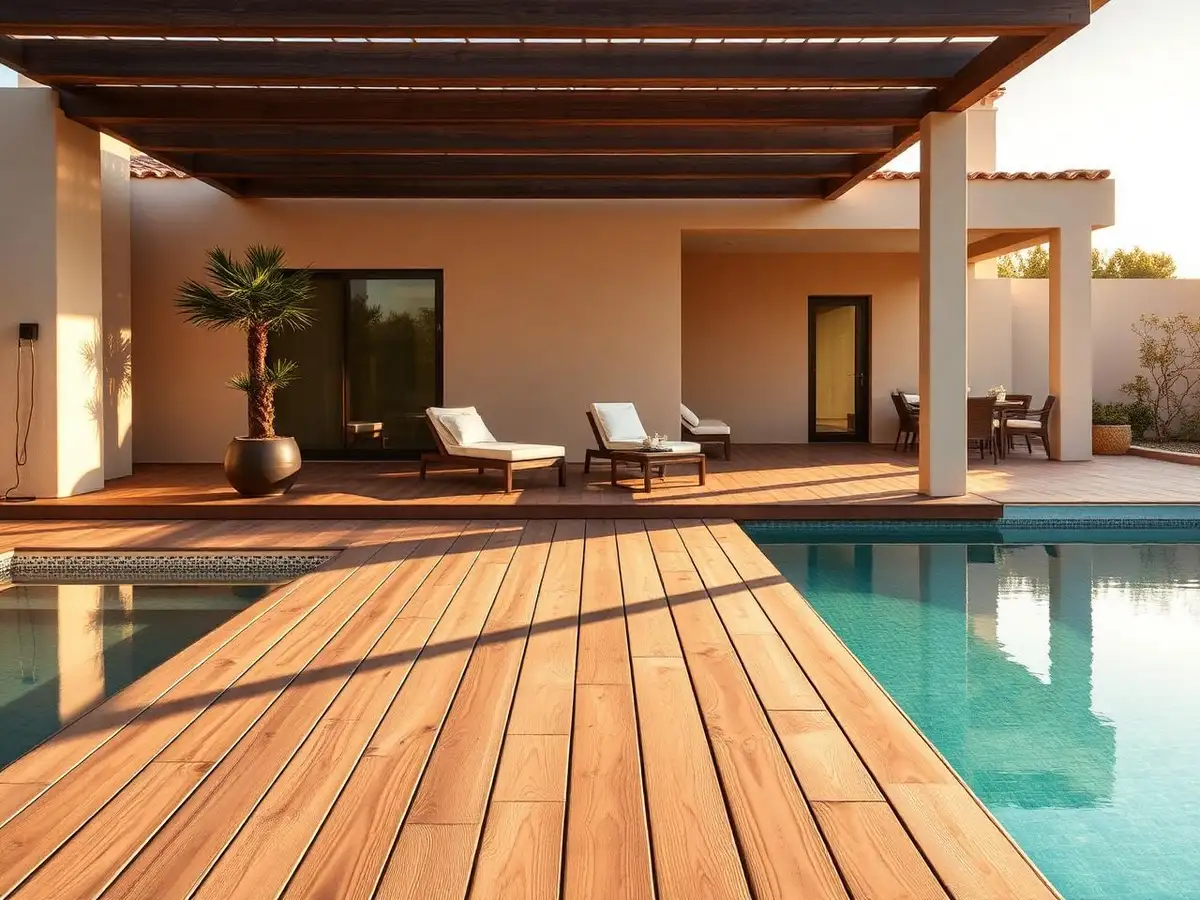
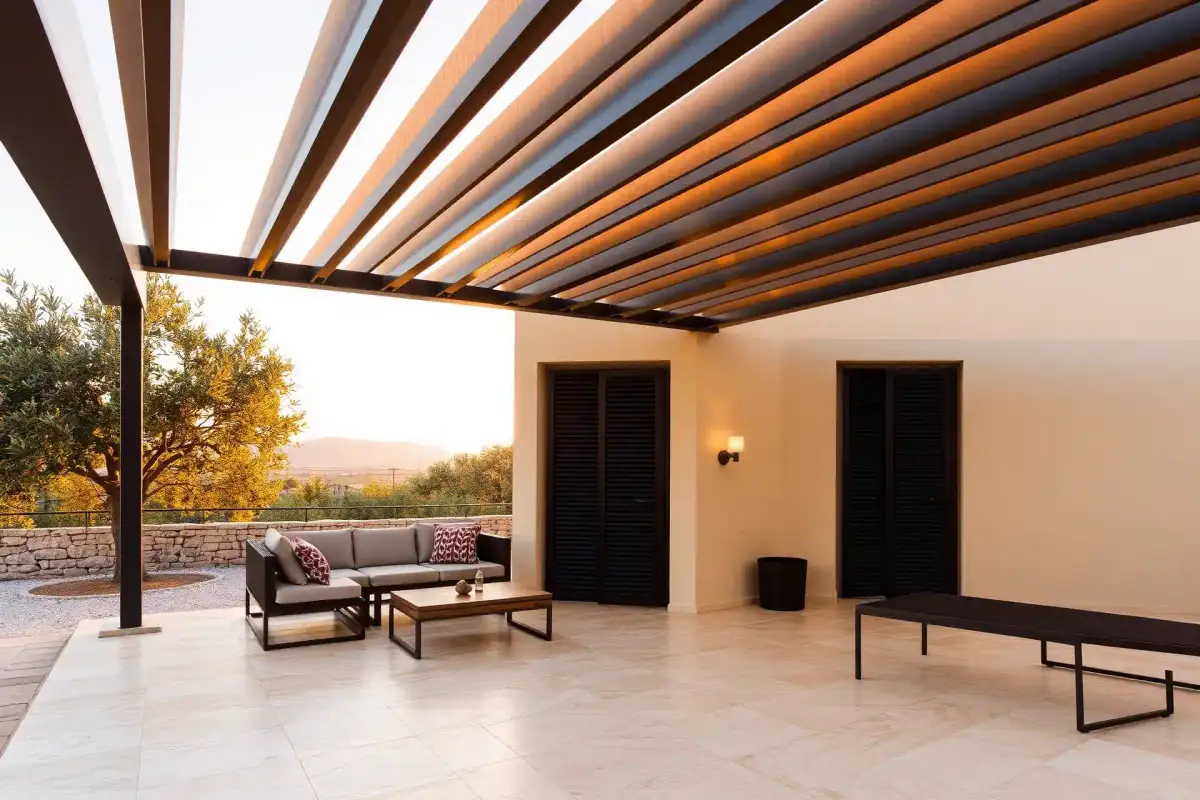
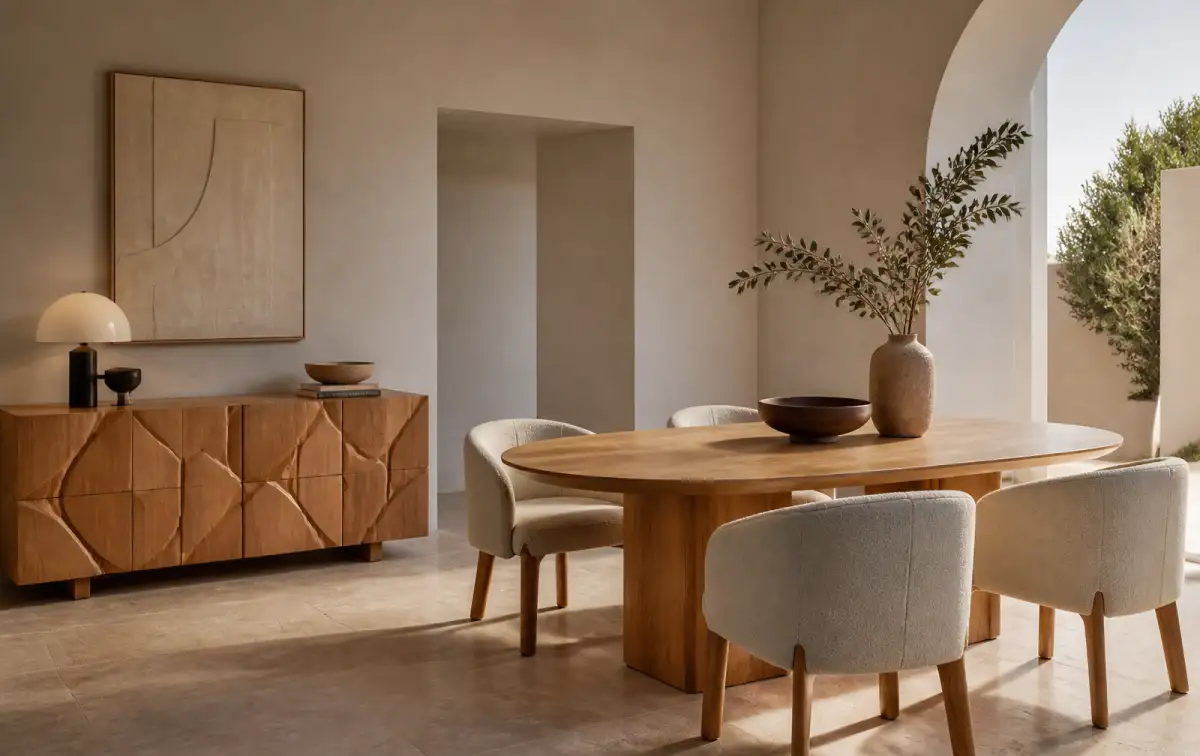
01 / 04
Specified against exposure, not style alone
Coastal salt, direct summer sun and winter storage change which frame and fabric make sense on the same terrace.
Exposure noted on every quote
Garden and terrace furniture in teak, aluminium, rope and technical fabrics, for homes, hotels and hospitality venues.
We import outdoor furniture directly from the factories that build it: lounge sets, dining tables and chairs, sunbeds, parasols and cushions in teak, powder-coated aluminium, woven rope and marine-grade textiles. Selection starts from exposure — sun, salt, wind and how many months a year the furniture stays outside — because that decides frame, fabric and fixings far more than the photograph does.
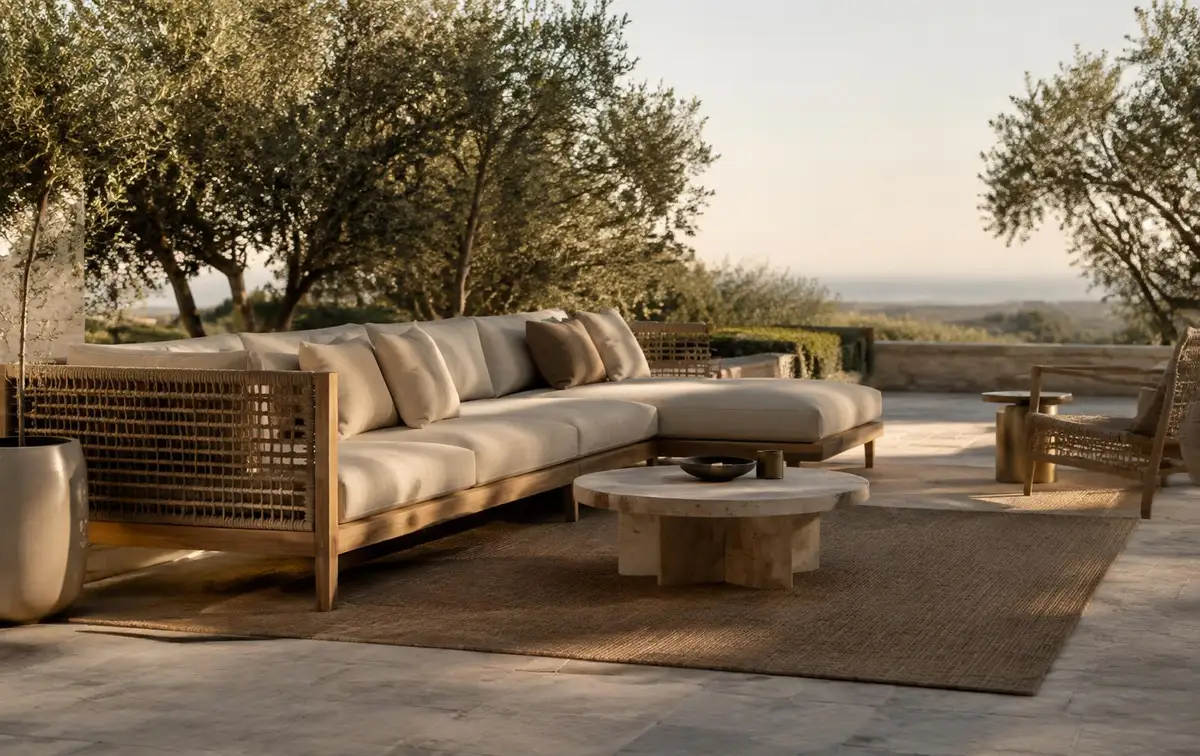
Salt, UV and wind decide which coating, fabric and fixing survive. Furniture chosen only on appearance often looks tired after two summers, while the identical range in the right specification lasts far longer.

Outdoor furniture is a five-year decision, and the coastline decides it more than the catalogue does.
We start with exposure, usage and storage, then match frame material, fabric family and cushion construction — and keep the codes on file so the same specification can be reordered later.
One order covers frames, fabrics, cushions and covers, so a terrace is quoted, sampled and delivered without three separate suppliers.
Coastal salt, direct summer sun and winter storage change which frame and fabric make sense on the same terrace.
Exposure noted on every quote
Powder-coated aluminium, certified teak, UV-stable rope and solution-dyed acrylic fabrics with replaceable covers.
Fabric performance data supplied
The same ranges cover one balcony and a hundred-cover terrace, quoted against quantity, timing and delivery access.
Programme-based quantity pricing
Cushion codes and replacement parts stay recorded, so a hotel can re-order the same specification years later.
Reference kept for re-ordering
The ranges follow how the outdoor space is used: lounging, eating, lying in the sun and staying in the shade. Lounge and dining pieces are chosen for comfort and how they handle a whole season outside; sunbeds for pool decks and daily turnover; parasols and cushions are the textiles that take the strongest sun and wind. Start with the frame material that suits the exposure, then pick fabrics.
Lounge sets turn a terrace into an outdoor living room, with deep seats you can stay in from late afternoon until night. Modular sofas let you build a corner, a long bench or two facing sofas out of the same pieces and rearrange them later. Comfort outdoors depends on what is inside the cushion: quick-dry foam lets rain drain straight through, so the seat is usable an hour after a storm. Frames in teak, aluminium or woven synthetic rope each age differently in salt air and sun.
Choose a lounge set when the terrace is where you spend evenings and you want to sit back, not upright.
Look at dining sets if the space mainly serves meals, or at daybeds if guests will mostly lie down.
An outdoor dining set lets you host long summer meals in comfort, with a table that does not wobble on paving and chairs that stack away when the season ends. Outdoor tables and chairs are tested under EN 581, which covers stability and strength for domestic and contract use, so ask which part a hospitality range has passed. Tops in ceramic or HPL shrug off heat, stains and sun; teak gives warmth to the touch. Extending tables keep a family terrace practical most days and seat a crowd at weekends.
Choose a dining set when meals outside are a daily habit or the venue seats guests under the open sky.
Look at a lounge set with a low table if the space is too small for chairs to pull out comfortably.
Sunbeds and daybeds give guests somewhere to lie in the sun or shade all day, and for a hotel they are the furniture that works hardest. Coated polyester mesh dries in minutes and stays cool to the touch; cushioned models feel softer but need storing at night. A good lounger has a backrest with several positions, wheels for moving it on the deck and a frame that stacks so the poolside can be cleared. Near the sea, 316 stainless or aluminium fixings stop rust streaks on the paving.
Choose sunbeds when the pool or beach is the centre of the day and guests move between water and sun.
Look at a lounge set if people will sit and talk more than they lie down.
Parasols and cushions are what make a terrace usable at midday in a Greek July, and they are the pieces most exposed to sun and wind. A cantilever parasol hangs its canopy from a side post, so the shade covers a table or lounger without a pole in the middle. Canopy fabric is rated by its ultraviolet protection, and the maker states how much wind the parasol is designed to stay open in. The base must be heavy enough for the canopy size or fixed to the floor, especially on exposed roofs.
Choose parasols when the shade has to move through the day or the terrace cannot take a fixed structure.
Look at a pergola or awning if the space needs shade all day on a windy site.

Comfort that still packs away for winter.
Weight, stacking and storage volume matter as much as the look when a balcony has to be cleared each autumn.
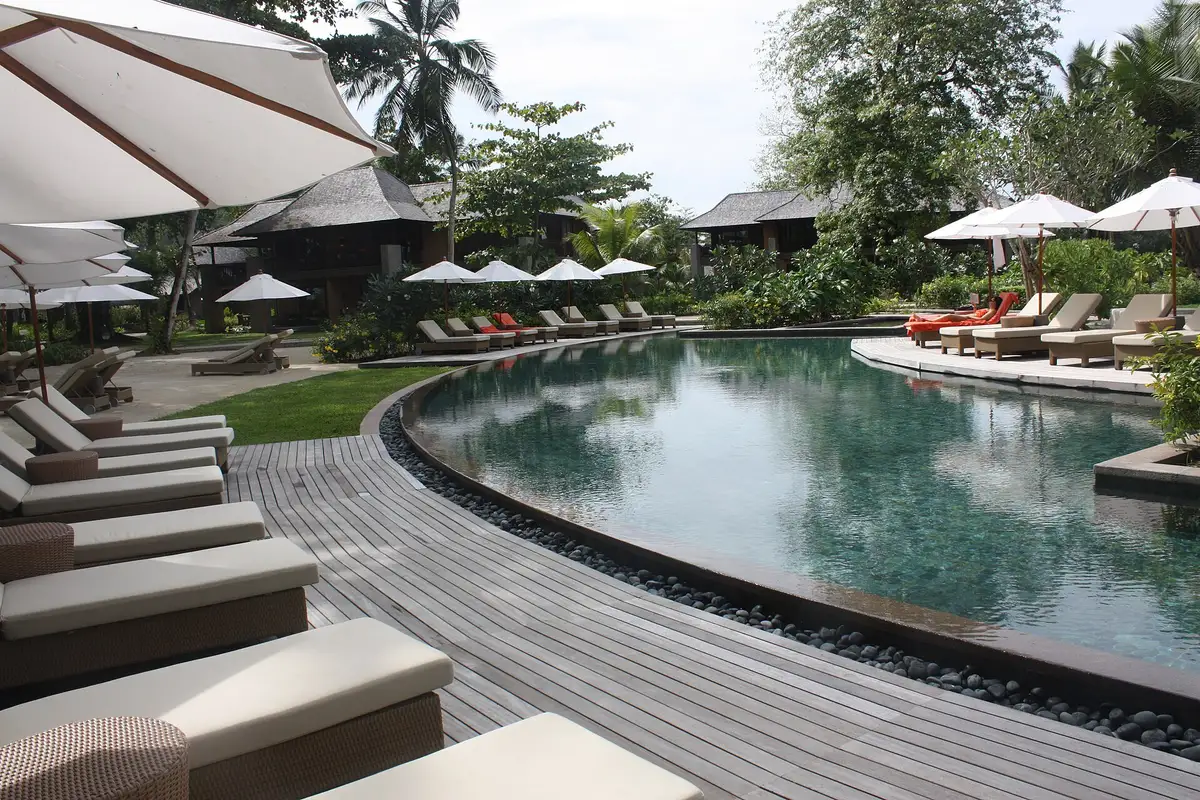
Contract-grade frames for daily service.
Sunbeds and loungers face constant handling, sun cream and cleaning chemicals, so frame and sling quality decide the replacement cycle.
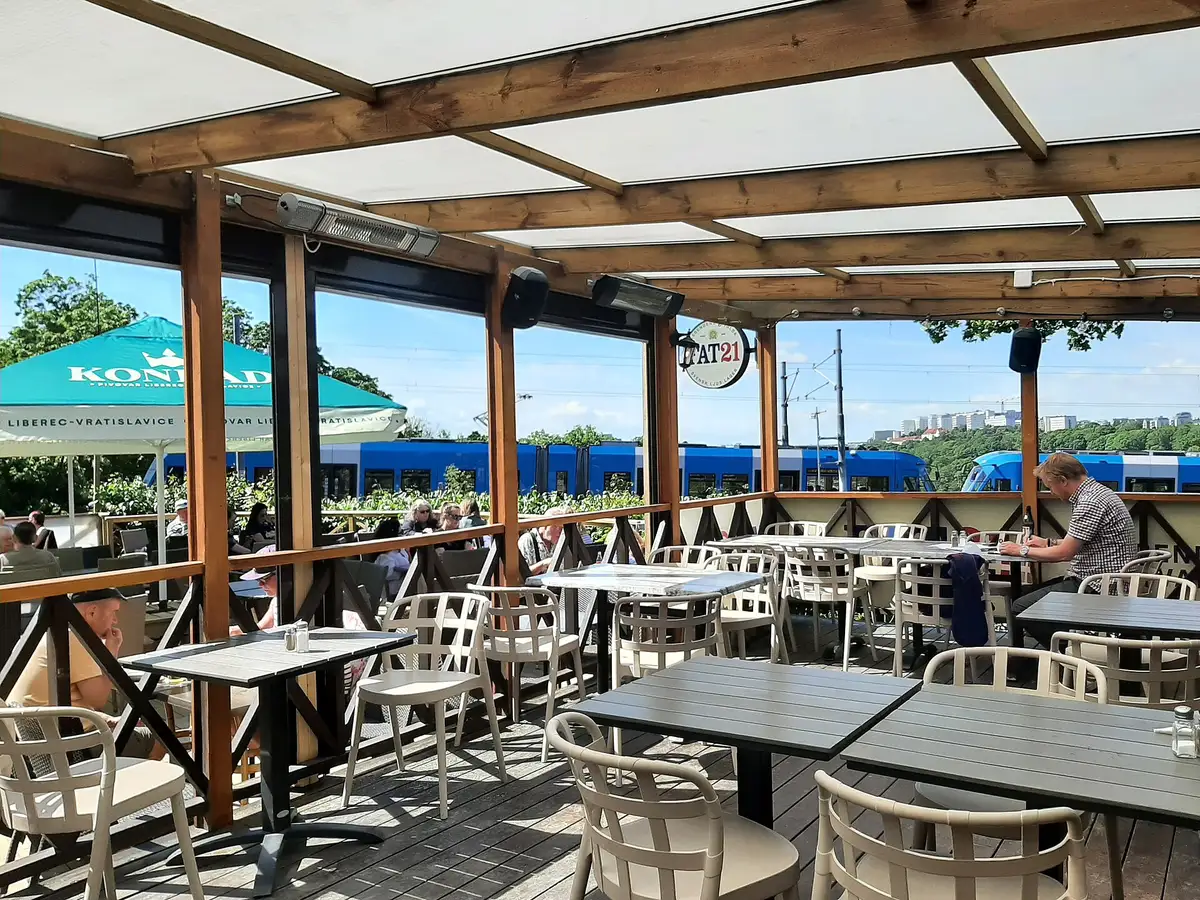
Chairs that survive being moved a hundred times a day.
Stacking height, weight and joint strength matter more than anything else in a venue that resets its terrace nightly.

Low-maintenance sets for properties left unattended.
Rental properties need furniture that tolerates weeks without care between guests and cleaning crews.
Distance from the sea, hours of direct sun and winter wind narrow the sensible options immediately.
Stainless fixings and quality coating decide whether an aluminium frame stays sound near salt water.
Solution-dyed acrylic holds colour far longer than printed polyester, and removable covers extend life further.
Where cushions and parasols will live out of season changes which set is practical.
Lift dimensions, staircases and island transport should be resolved before the order, not on delivery day.
Frame, finish and fabric references make future additions match instead of nearly matching.
It fades and weakens within a season or two, while the frame is still perfectly good.
A large modular set with nowhere to store cushions becomes a winter problem every year.
Daily commercial handling breaks joints that a home terrace would never stress.
Each card lists what goes on the schedule for the range: frame and fabric, fixings, the dimensions the layout depends on and the finishes most collections are offered in. Fabric codes and finish references are what let you add matching pieces seasons later.
 01€120–€2400 /unit
Stand cushions on edge to drain after heavy rain and store them dry over winter. Wash teak with mild soap; let it silver or treat it with a teak protector, but do not varnish it.
 02€120–€2400 /unit
Use felt or nylon feet on stone floors so chair legs do not scratch them. Wipe ceramic tops with water and a mild cleaner; no special sealing is needed.
 03€120–€2400 /unit
Rinse frames with fresh water after salt spray or chlorine splashes. Stack loungers under cover over winter so the mesh is not left under weight in the rain.
 04€120–€2400 /unit
Close the parasol and fit its cover whenever you leave the terrace, and always above the stated wind rating. Unzip cushion covers to wash them at the temperature on the label.
One order covers frames, fabrics, cushions and covers, so a terrace is quoted, sampled and delivered without three separate suppliers. This is the part most suppliers leave out: what we import, how outdoor furniture should be specified before anyone prices it, where projects lose money, and what our 2–8 wks lead time actually covers.
We import outdoor furniture directly from the factories that build it: lounge sets, dining tables and chairs, sunbeds, parasols and cushions in teak, powder-coated aluminium, woven rope and marine-grade textiles. Selection starts from exposure — sun, salt, wind and how many months a year the furniture stays outside — because that decides frame, fabric and fixings far more than the photograph does.
Because we buy outdoor furniture directly from the factories, the range you see is the range we can programme — not a catalogue we hope to source later. In practice that means lounge & modular seating, dining sets and sunbeds & daybeds, each with its own price band and availability, so a specification can be tuned to a budget instead of abandoned.
Specified against exposure, not style alone: coastal salt, direct summer sun and winter storage change which frame and fabric make sense on the same terrace.
Outdoor furniture is a five-year decision, and the coastline decides it more than the catalogue does.
Coastal salt, direct summer sun and winter storage change which frame and fabric make sense on the same terrace.
Powder-coated aluminium, certified teak, UV-stable rope and solution-dyed acrylic fabrics with replaceable covers.
The same ranges cover one balcony and a hundred-cover terrace, quoted against quantity, timing and delivery access.
Cushion codes and replacement parts stay recorded, so a hotel can re-order the same specification years later.
Specifying outdoor furniture well comes down to a short list of decisions taken in the right order — start with exposure, check the fixings, not just the frame, choose fabric by construction and plan winter storage. Taken on paper, these cost nothing. Taken on site, each one is a change order.
We write the specification with you before anything is quoted, so the number you get is for the material that will actually be installed. That means confirmed dimensions and finishes, the right performance class for the space, and quantities that include the waste factor rather than discovering it mid-installation.
The same reference behaves differently depending on where it goes — terraces and roof gardens, hotels and resorts, restaurants and beach bars, villas and holiday rentals each carry their own requirements, and we specify against the space rather than against a mood image.
Fabric coloured at fibre stage, holding colour under strong UV far longer than printed cloth.
Baked finish on aluminium frames; coating quality governs corrosion resistance near the sea.
Specification rated for continuous commercial use rather than occasional residential use.
Tensioned fabric seat with no cushion, common on pool loungers for quick drying.
Almost every delay we are called in to rescue traces back to the same handful of causes: choosing indoor-look fabric for a sea-front terrace, ignoring storage volume, buying residential furniture for a venue and leaving delivery access to the end. None of them are exotic, and all of them are avoidable at specification stage.
Choosing indoor-look fabric for a sea-front terrace is the most expensive one, because it fades and weakens within a season or two, while the frame is still perfectly good.
We have supplied outdoor furniture into private terraces, hotel pool decks, restaurants and bars, and the pattern is consistent: the projects that run smoothly are the ones where the material was locked before the trades were booked.
Ignoring storage volume — checked once on paper, never again on site.
It fades and weakens within a season or two, while the frame is still perfectly good.
A large modular set with nowhere to store cushions becomes a winter problem every year.
Daily commercial handling breaks joints that a home terrace would never stress.
Oversized pieces that cannot reach an upper terrace turn into a return and a delay.
Standard lead time on outdoor furniture is 2–8 wks from confirmed specification, and that window covers the whole chain — factory programming, consolidation, transport, customs where applicable and delivery to site or to your warehouse. We quote the landed number, not an ex-works price that grows later.
Pricing is per project rather than per line. Because we import directly and consolidate outdoor furniture with the rest of the materials for the same room, you get one quote, one delivery window and one point of contact — and the savings show up on the total, not just on a headline reference.
If you already have drawings, send them and we will come back with a specification and a landed price. If you do not, we will build the specification with you first. Either way, nothing is ordered until the quantities, finishes and dates are agreed in writing.
Powder-coated aluminium and certified teak both perform well; near the sea the coating quality and the stainless grade of the fixings matter more than the frame material itself.
Solution-dyed acrylic fabrics handle sun and rain far better than printed polyester, but every cushion lasts longer with covers and a dry storage point out of season.
Yes. Contract ranges are built for daily commercial use and are quoted against the number of covers, the delivery window and how the furniture will be moved and stored.
We send fabric and finish samples, and for larger projects we can arrange a single reference piece before the full quantity is confirmed.
We plan the route before ordering — volumes, packaging and lifting points — so a terrace on an upper floor or an island site does not stall on delivery day.
Yes, as long as the range stays in production. We keep the frame, finish and fabric codes on file so additions match the original order.
Materials from this category are usually specified for interior design projects and retail fit-out. We specify and supply every material the project needs; if you need installers, we can suggest partners you contract directly.