01 / 04
Sized on litres, not on habit
160 litres is not a default. We size the cylinder and collector area against occupancy, showers per day and roof orientation.
Cylinder and collector area sized per household
Thermosiphon and forced-circulation solar systems, cylinders, buffer tanks and controls.
Thermosiphon solar water heaters for houses and apartments, forced-circulation systems for hotels and larger buildings, single and double-coil cylinders, buffer tanks, pump stations and differential controllers. Sized against real consumption and roof orientation, supplied complete with the mounting frame, and documented for subsidy files.
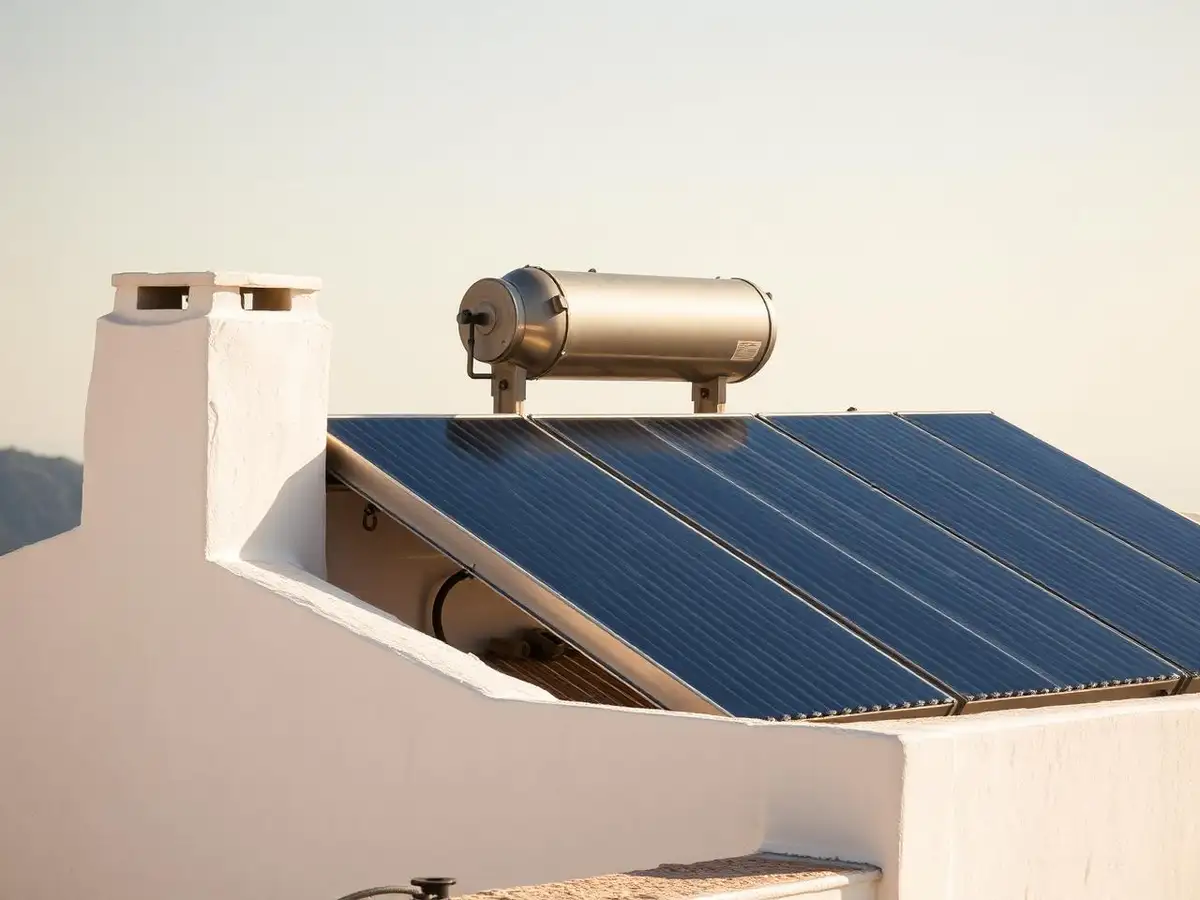
Greek sunshine makes solar the most economic hot-water source available, and a well-sized system can cover most of a household's annual demand. What undermines it is fitting a default-size tank regardless of how many people live in the house or which way the roof faces.
Solar hot water is still the fastest payback in a Greek building. It only works that way if the tank matches the household.
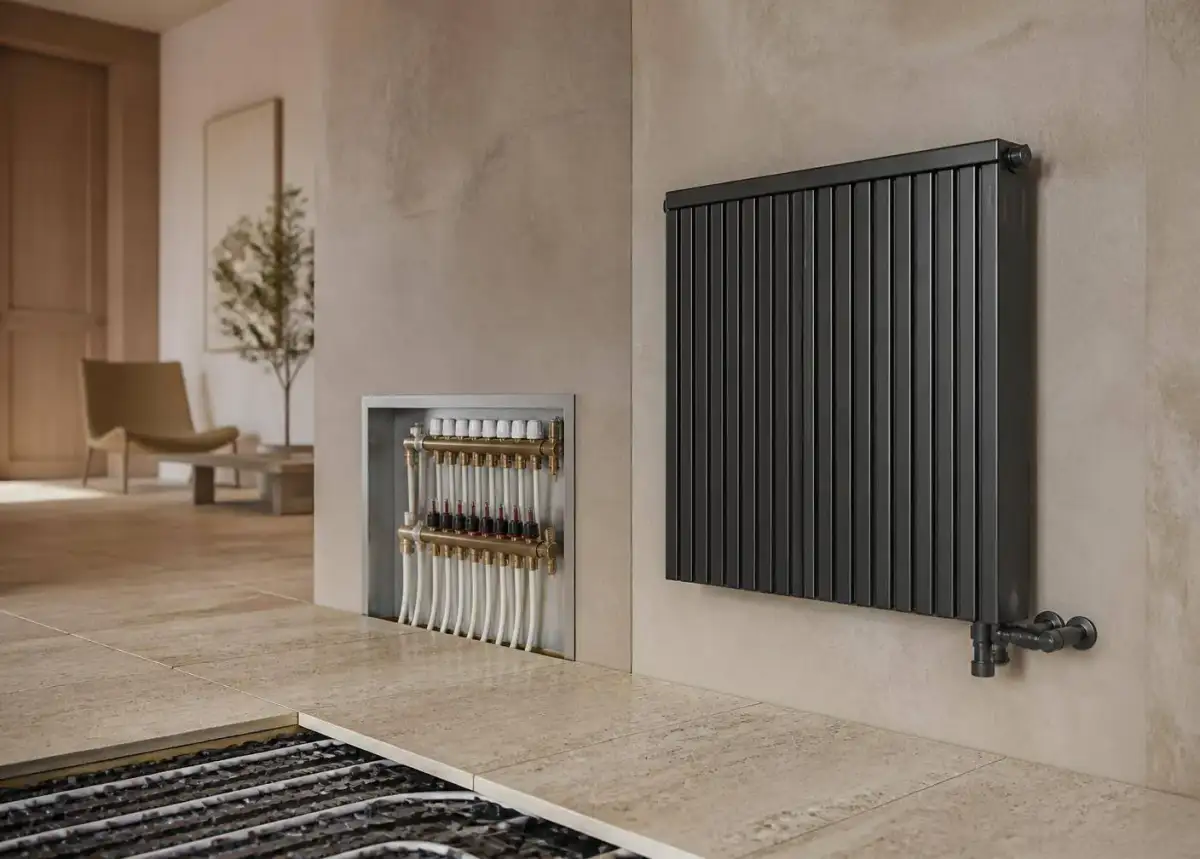
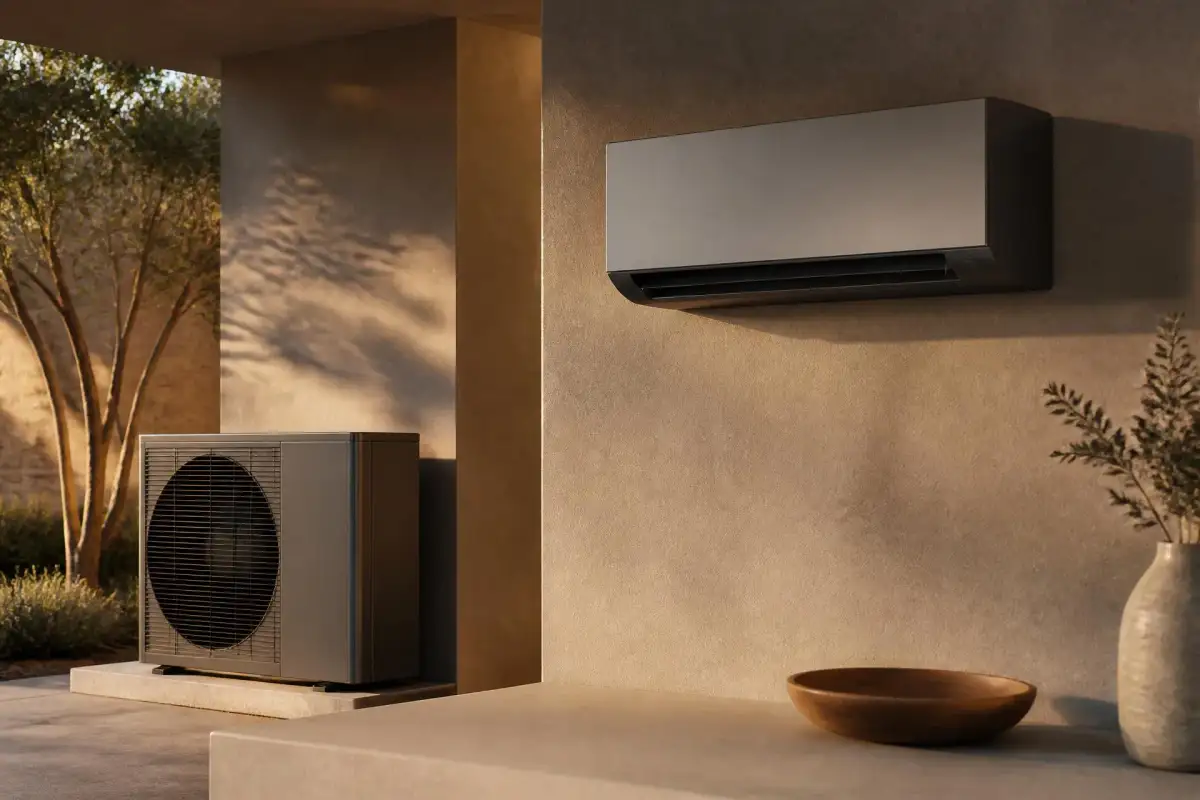
We size the tank and collectors against how the household actually uses hot water, then choose the simplest system that fits your roof. Where a heat pump, boiler or fireplace also makes hot water, we can supply one tank that lets all of them work together under a single control.
Collectors, tank, frame, fittings and controls arrive as one kit sized against your actual household — with the certificates a subsidy application needs.
160 litres is not a default. We size the cylinder and collector area against occupancy, showers per day and roof orientation.
Cylinder and collector area sized per household
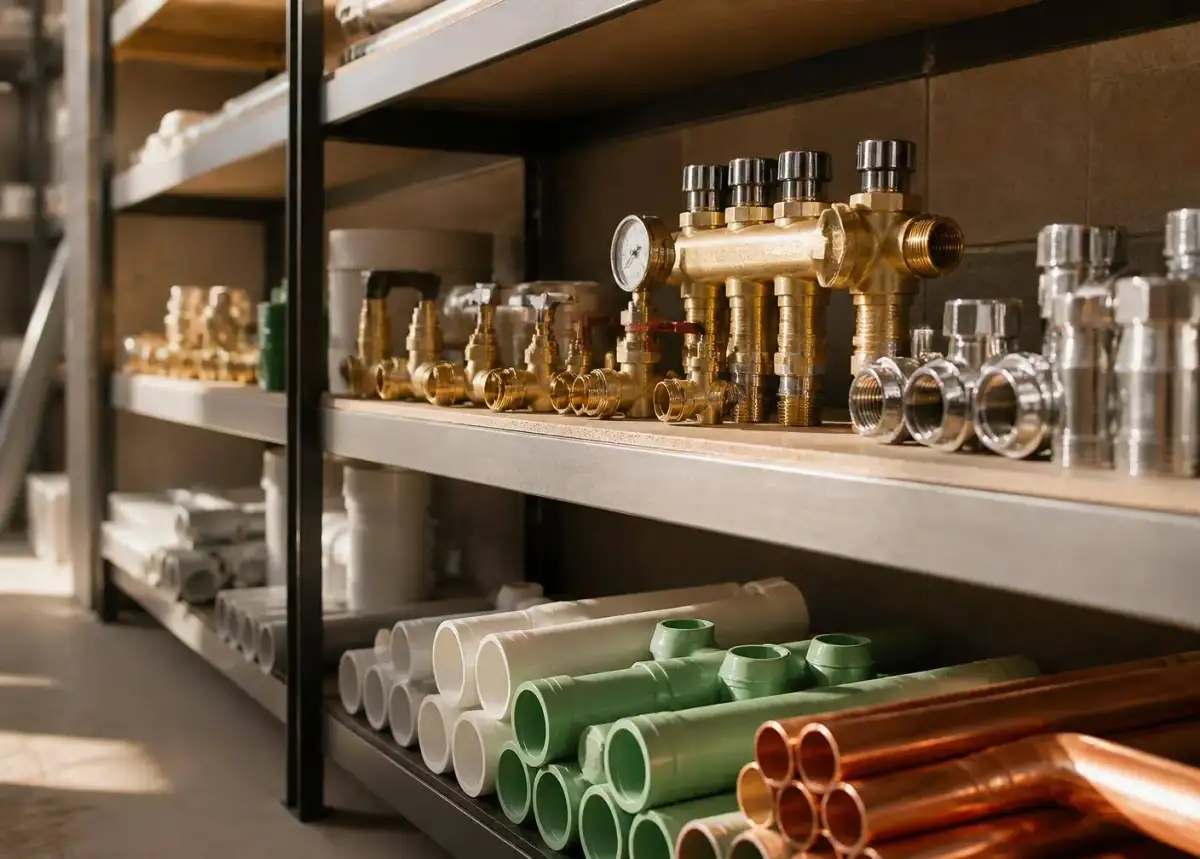
Collectors, cylinder, mounting frame for flat or pitched roof, fittings and glycol arrive together.
Frame, fittings and fluid included in the kit
Double-coil cylinders and buffer tanks let the boiler, heat pump or fireplace back up the sun instead of fighting it.
Cylinder chosen to match the backup heat source
Solar Keymark certificates, efficiency data and technical sheets supplied for grant applications.
Solar Keymark documentation with every system
120–300 litre closed-circuit units with selective-coating collectors, roof or terrace frames
Pumped systems with separate cylinder for hotels, large houses and shaded roofs
Single, double and triple-coil cylinders 80–1000 litres, enamelled and stainless
Selective flat plate and vacuum tube collectors for roof, terrace and facade mounting
Differential controllers, pump stations, expansion vessels, glycol and safety groups

A couple is comfortable on a smaller tank; a family of four with a bath is not. We size from how many showers a day you actually run, and check your roof's orientation before fixing the collector area.

Hospitality hot water demand spikes hard in the morning. We design central systems against your measured demand, with proper hygiene controls and backup built in.

A single tank can take solar, a heat pump or boiler, and an electric backup, all managed by one smart control — turning three separate appliances into one simple system.

A rental villa cycles through guests every week, each expecting a full tank on arrival, so we size collectors and storage for peak weekly turnover rather than average daily use, with a fast electric backup for the changeover days when demand spikes hardest, so nobody's mid-week guest gets a cold shower.
Thermosiphonandforced-circulationsolarsystems,cylinders,buffertanksandcontrols.
Household size and usage decide tank and collector size — adjusted up for baths, down for households that travel often.
This decides whether a simple gravity-fed system works, or whether you need a pumped one.
South-facing at the right tilt is the annual optimum — we adjust it if winter performance matters most to you.
The right tank configuration is chosen before it's ordered, to suit your boiler, heat pump or fireplace.
Certificates for subsidy applications are collected at delivery, ready when you need them.
A small tank on a family of five means cold showers by the third person — and it's the sizing at fault, not the sun.
A nearby wall or chimney across the panels removes far more output than it looks like it would.
Degraded heat-transfer fluid damages the circuit — a check every few years is the whole maintenance job.
Representative selections from the catalog — indicative of what we quote, stock-source and deliver week to week. Ask for the full schedule with formats, finishes and current lead times.
01120–300 litre closed-circuit units with selective-coating collectors, roof or terrace frames
02Pumped systems with separate cylinder for hotels, large houses and shaded roofs
03Single, double and triple-coil cylinders 80–1000 litres, enamelled and stainless
04Selective flat plate and vacuum tube collectors for roof, terrace and facade mounting
Collectors, tank, frame, fittings and controls arrive as one kit sized against your actual household — with the certificates a subsidy application needs. This is the part most suppliers leave out: what we import, how solar water heaters & cylinders should be specified before anyone prices it, where projects lose money, and what our 1–2 wks lead time actually covers.
Thermosiphon solar water heaters for houses and apartments, forced-circulation systems for hotels and larger buildings, single and double-coil cylinders, buffer tanks, pump stations and differential controllers. Sized against real consumption and roof orientation, supplied complete with the mounting frame, and documented for subsidy files.
Because we buy solar water heaters & cylinders directly from the factories, the range you see is the range we can programme — not a catalogue we hope to source later. In practice that means thermosiphon systems, forced-circulation systems and cylinders & buffer tanks, each with its own price band and availability, so a specification can be tuned to a budget instead of abandoned.
Sized on litres, not on habit: 160 litres is not a default. We size the cylinder and collector area against occupancy, showers per day and roof orientation.
Solar hot water is still the fastest payback in a Greek building. It only works that way if the tank matches the household.
160 litres is not a default. We size the cylinder and collector area against occupancy, showers per day and roof orientation.
Collectors, cylinder, mounting frame for flat or pitched roof, fittings and glycol arrive together.
Double-coil cylinders and buffer tanks let the boiler, heat pump or fireplace back up the sun instead of fighting it.
Solar Keymark certificates, efficiency data and technical sheets supplied for grant applications.
Specifying solar water heaters & cylinders well comes down to a short list of decisions taken in the right order — we size from people, not habit, we check where the tank can go, we orient the collectors for the season you need and we plan the backup source with the tank. Taken on paper, these cost nothing. Taken on site, each one is a change order.
We write the specification with you before anything is quoted, so the number you get is for the material that will actually be installed. That means confirmed dimensions and finishes, the right performance class for the space, and quantities that include the waste factor rather than discovering it mid-installation.
The same reference behaves differently depending on where it goes — houses and apartments, holiday rentals, hotels and guesthouses, gyms and sports facilities each carry their own requirements, and we specify against the space rather than against a mood image.
A simple solar system with the tank mounted above the panels — no pump required.
Lets the tank sit away from and below the panels, useful when roof space is limited.
A tank that can be heated by solar and a second source, like a boiler, together.
The total surface area of solar panels installed, sized against expected hot water demand.
Almost every delay we are called in to rescue traces back to the same handful of causes: installing the default size, shading the collectors, neglecting the fluid and ignoring the tank's protective anode. None of them are exotic, and all of them are avoidable at specification stage.
Installing the default size is the most expensive one, because a small tank on a family of five means cold showers by the third person — and it's the sizing at fault, not the sun.
We have supplied solar water heaters & cylinders into houses & apartments, hotels & rentals and integrated systems, and the pattern is consistent: the projects that run smoothly are the ones where the material was locked before the trades were booked.
Shading the collectors — checked once on paper, never again on site.
A small tank on a family of five means cold showers by the third person — and it's the sizing at fault, not the sun.
A nearby wall or chimney across the panels removes far more output than it looks like it would.
Degraded heat-transfer fluid damages the circuit — a check every few years is the whole maintenance job.
Once it's used up, the tank itself is next — we flag replacement before it's a problem.
Standard lead time on solar water heaters & cylinders is 1–2 wks from confirmed specification, and that window covers the whole chain — factory programming, consolidation, transport, customs where applicable and delivery to site or to your warehouse. We quote the landed number, not an ex-works price that grows later.
Pricing is per project rather than per line. Because we import directly and consolidate solar water heaters & cylinders with the rest of the materials for the same room, you get one quote, one delivery window and one point of contact — and the savings show up on the total, not just on a headline reference.
If you already have drawings, send them and we will come back with a specification and a landed price. If you do not, we will build the specification with you first. Either way, nothing is ordered until the quantities, finishes and dates are agreed in writing.
As a working rule, roughly 50 litres of storage and 1 m² of collector per person: 160 l for a couple, 200 l for a family of three to four, 300 l for larger households or homes with baths.
Thermosiphon is simpler and cheaper and works whenever the cylinder can sit above the collectors on the roof. Forced circulation is for hotels, large demand, or when the cylinder has to live in a plant room.
In most of Greece a well-sized system covers the large majority of annual demand, with the electric element or the boiler topping up on cloudy winter days. It is not designed to be the only heat source in January.
Yes — a double or triple-coil cylinder takes the solar circuit on one coil and the heat pump or boiler on another, with the controller deciding which source runs.
Little: check the glycol condition and the anode every few years and keep the collectors reasonably clean. Neglected glycol is the most common cause of an early failure.
Yes. Forced-circulation arrays with central storage, stratification and legionella control are designed against measured consumption profiles and delivered as one package.