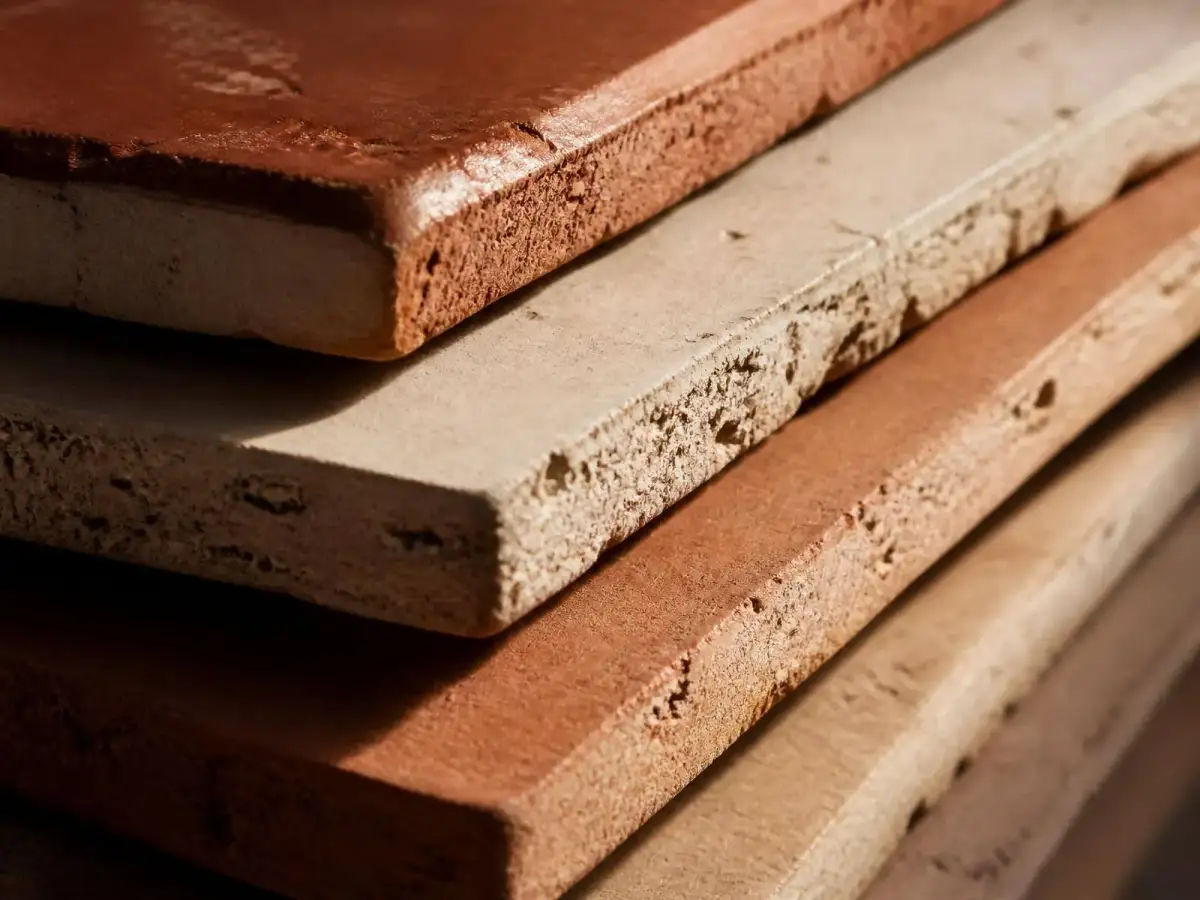
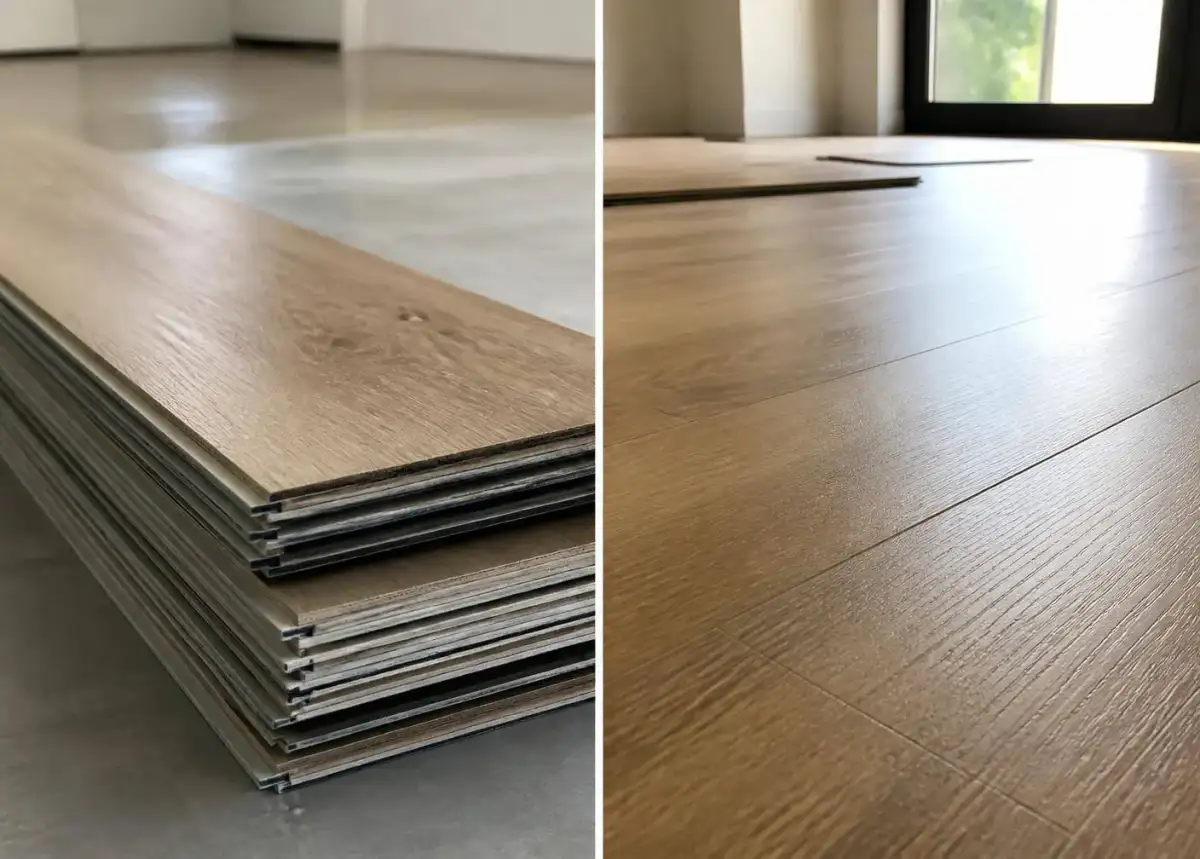
01 / 04
One order, one delivery, no split invoices
Tile, adhesive, grout and trims land on the same truck under the same PO, so nobody is chasing three merchants for one bathroom.
One supplier for the whole tile package
Large-format porcelain, ceramic wall tiles and technical surfaces from European factories.
We import porcelain and ceramic tiles directly from the factories that press them — large-format slabs, wood-look and stone-look ranges, anti-slip outdoor series and technical porcelain for commercial floors. Every reference in the range is priced, stocked or programmed with a 1–2 week lead time, and every reference is specification-ready inside the platform.
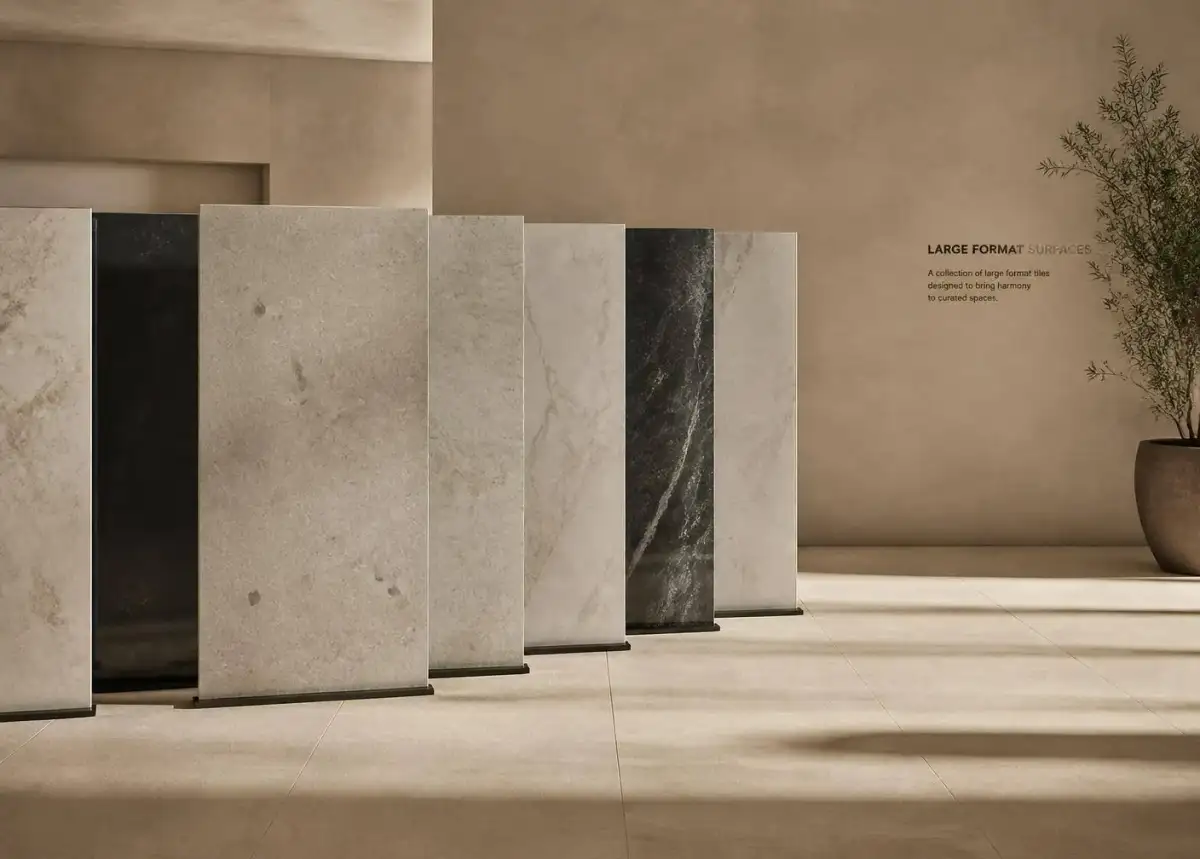
Contractors don't lose money on the tile itself — they lose it on the wrong slip rating discovered on site, two batches with a visible shade difference, or a delivery that slips because nobody confirmed stock. We quote the tile, the substrate, the adhesive class, the grout and the real cut waste as one line, with a lead time you can promise a client and hold to.
Every tile in the range is priced, stocked or programmed at 1–2 weeks — no waiting on a factory to decide your schedule.
Every reference we carry is specification-ready: format, rectification, thickness, water absorption group, PEI class, slip rating, frost resistance and pack yield in m². That data is what lets the agent price a full bathroom or a whole hotel floor in minutes, and it is what stops a specification collapsing on the day the tiler opens the first pallet.
One order covers the tile, the adhesive, the grout and the trims, so a bathroom or a hotel floor is quoted, sampled and delivered by a single supplier instead of three.
Tile, adhesive, grout and trims land on the same truck under the same PO, so nobody is chasing three merchants for one bathroom.
One supplier for the whole tile package
Quoted direct from the press with logistics folded in, so the number you approve is the number you're invoiced.
Factory pricing, no importer margin stacked on top
A physical sample and a 3D render of the exact reference in your own room, so the specification isn't a gamble.
Sample and 3D render before you commit budget
Fast-moving formats ship from stock; project volumes are programmed and confirmed at booking, not guessed at.
1–2 wk lead time, confirmed at order
Travertine, limestone and marble effects in matte, honed and polished finishes for walls and floors.
Plank formats with realistic grain for interiors that need wood warmth with porcelain durability.
R10–R11 outdoor and wet-area series for hotels, pools, terraces and commercial floors.
Glossy and matte wall ranges, decors and mosaics for bathroom and kitchen schemes.

Large format, fewer joints, less grout to clean.
Bathroom walls in 60×120 or 120×280 reduce the joint count dramatically, which is what makes a small bathroom read calm instead of busy. The floor changes rating: R10 minimum inside a walk-in shower, and a linear or point drain resolved before the screed is poured.
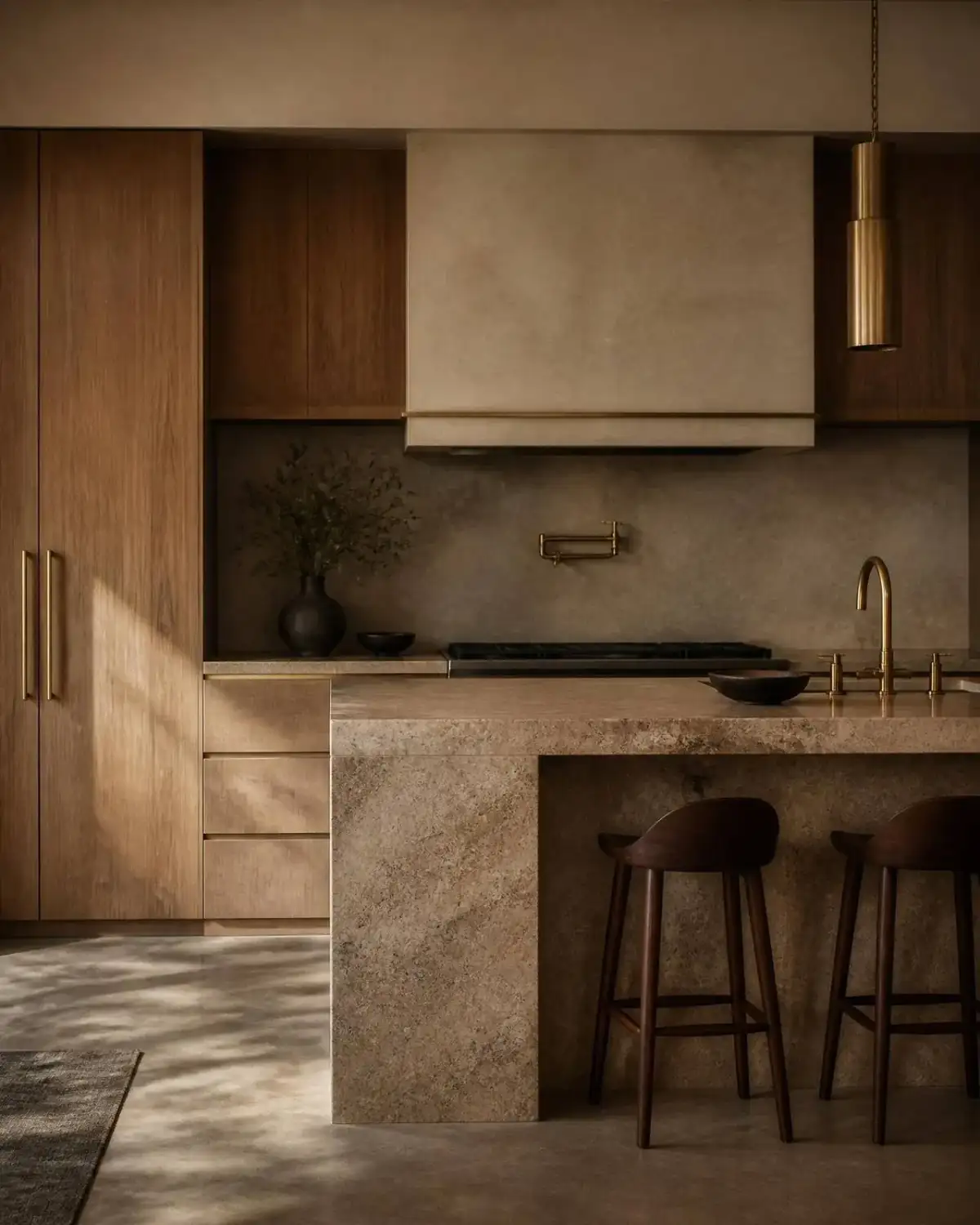
Porcelain slabs that run from worktop to splashback.
A 12 mm porcelain slab takes heat, knives and acid where a natural stone worktop would stain, and the same slab continues up the wall so the vein carries across the corner. Floors take a matte through-body porcelain that hides the traffic of an actual kitchen.

One batch, fifty rooms, zero shade drift.
Repetition is the whole risk in hospitality. We reserve a single production batch for the full room count plus attic stock, so room 512 matches room 104 and a broken tile in year three still has a match in the store cupboard.
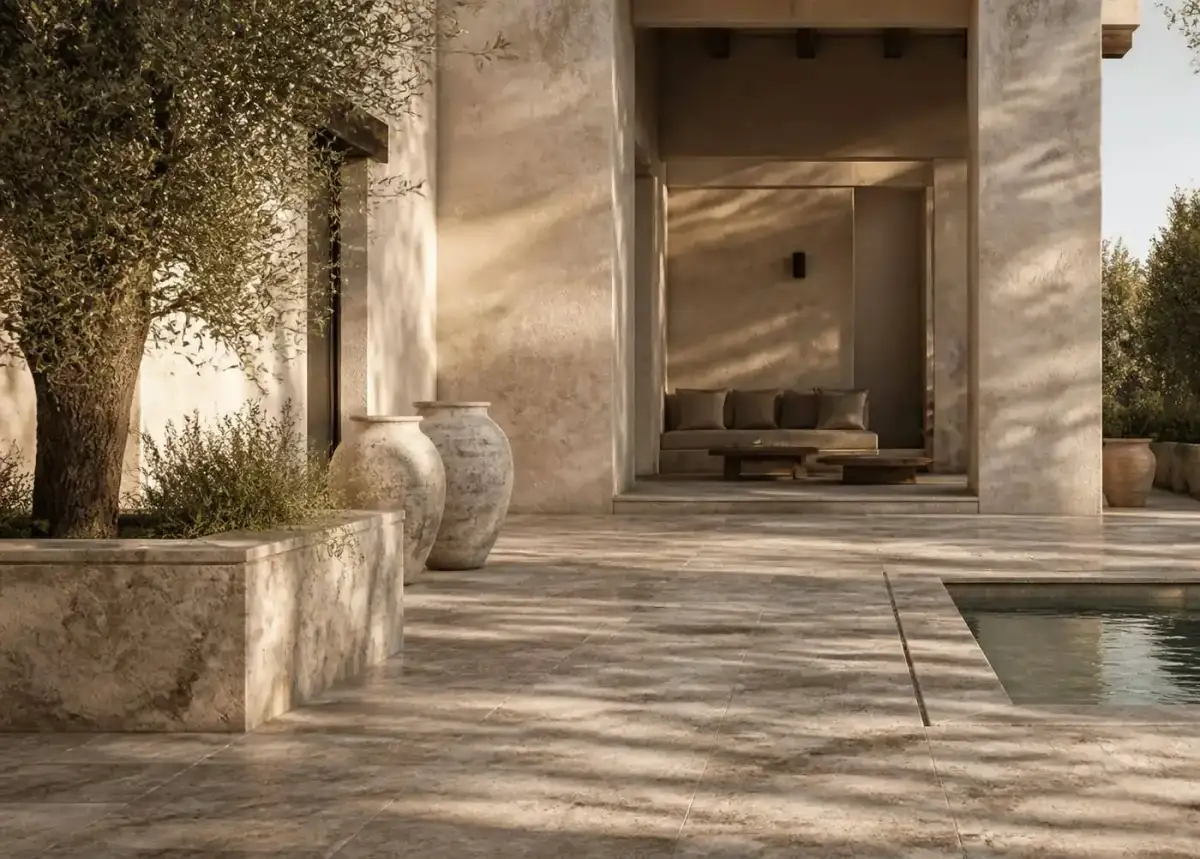
20 mm outdoor porcelain, laid dry or bedded.
Outdoor porcelain at 20 mm can be laid on pedestals, on gravel or bedded in mortar, and it survives frost cycles that would destroy a ceramic. Indoor and outdoor come from the same colour family, so the terrace reads as an extension of the living room.
Choose the finish first and the rating afterwards, and a beautiful floor becomes a liability claim: R9 in a wet area is a fall waiting to happen, and a wrong rating discovered on site means ripping out a floor that's already grouted. R9 is for dry interiors only; R10 covers kitchens, bathrooms and hotel corridors; R11 with A+B+C is the honest answer for pool surrounds and commercial wet areas.
Get this wrong on a large-format wall and the whole visual result changes — wider joints than planned on a feature wall is a complaint, not a detail. Rectified tiles are mechanically squared after firing and can be laid at 2 mm; non-rectified needs 3–5 mm to absorb dimensional tolerance, so the two cannot be specified interchangeably.
Adhesive failure, not tile failure, is what causes a slab to debond and a wall to be re-done at the contractor's cost. A 120×280 slab on plasterboard is not a C1 job — adhesive class (C2TE, S1 or S2 deformability), back-buttering and coverage per m² need to be fixed at quote stage.
Under-ordering on waste means a stalled site waiting on a re-order and a possible batch mismatch on the top-up. A straight layout in a rectangular room runs 5–7% waste; a diagonal or herringbone layout, or a room full of cuts, runs 12–15% — calculated from the actual setting-out, with attic stock added for future repairs.
A grout picked by the tiler on the day can undo the whole look a client signed off, and repointing an entire floor is not a small job. Epoxy grout for wet rooms and commercial kitchens, cement-based CG2 elsewhere, colour selected against the tile in the approved visual before the pallet ships.
Porcelain ships in full packs with a fixed m² yield. Ordering 41 m² against a 1.44 m² pack yield leaves a site either short on delivery day or paying for an unplanned extra pallet.
Two batches of the same reference can carry a visible shade difference that only shows up once it's laid — and by then it's a callback, not a swap. Batch number is recorded on the order and checked against delivery.
External corners, movement joints and stair nosings are ordered with the tile because they're what a missing-parts delay looks like on site — the tiler stops, and the schedule slips for the sake of a low-value item.
Representative selections from the catalog — indicative of what we quote, stock-source and deliver week to week. Ask for the full schedule with formats, finishes and current lead times.
01Travertine, limestone and marble effects in matte, honed and polished finishes for walls and floors.
02Plank formats with realistic grain for interiors that need wood warmth with porcelain durability.
03R10–R11 outdoor and wet-area series for hotels, pools, terraces and commercial floors.
04Glossy and matte wall ranges, decors and mosaics for bathroom and kitchen schemes.
One order covers the tile, the adhesive, the grout and the trims, so a bathroom or a hotel floor is quoted, sampled and delivered by a single supplier instead of three. This is the part most suppliers leave out: what we import, how tiles should be specified before anyone prices it, where projects lose money, and what our 1–2 wks lead time actually covers.
We import porcelain and ceramic tiles directly from the factories that press them — large-format slabs, wood-look and stone-look ranges, anti-slip outdoor series and technical porcelain for commercial floors. Every reference in the range is priced, stocked or programmed with a 1–2 week lead time, and every reference is specification-ready inside the platform.
Because we buy tiles directly from the factories, the range you see is the range we can programme — not a catalogue we hope to source later. In practice that means stone-look porcelain, wood-look porcelain and technical & anti-slip, each with its own price band and availability, so a specification can be tuned to a budget instead of abandoned.
One order, one delivery, no split invoices: tile, adhesive, grout and trims land on the same truck under the same PO, so nobody is chasing three merchants for one bathroom.
Every tile in the range is priced, stocked or programmed at 1–2 weeks — no waiting on a factory to decide your schedule.
Tile, adhesive, grout and trims land on the same truck under the same PO, so nobody is chasing three merchants for one bathroom.
Quoted direct from the press with logistics folded in, so the number you approve is the number you're invoiced.
A physical sample and a 3D render of the exact reference in your own room, so the specification isn't a gamble.
Fast-moving formats ship from stock; project volumes are programmed and confirmed at booking, not guessed at.
Specifying tiles well comes down to a short list of decisions taken in the right order — decide the slip rating before you decide the look, decide the joint width before the layout is drawn, decide the adhesive with the tile, not with the tiler and decide the real cut waste before you commit the budget. Taken on paper, these cost nothing. Taken on site, each one is a change order.
We write the specification with you before anything is quoted, so the number you get is for the material that will actually be installed. That means confirmed dimensions and finishes, the right performance class for the space, and quantities that include the waste factor rather than discovering it mid-installation.
The same reference behaves differently depending on where it goes — bathrooms, kitchens, hotels and retail floors each carry their own requirements, and we specify against the space rather than against a mood image.
Surface abrasion class for glazed tiles, I–V. PEI IV+ for commercial floors.
Mechanical squaring of the edges after firing, allowing 2 mm joints.
Colour running through the tile body, so chips and cut edges stay the same tone.
BIa porcelain absorbs under 0.5% — the reason it is frost-resistant.
Almost every delay we are called in to rescue traces back to the same handful of causes: ordering per piece instead of per pack, mixing batches on one continuous surface, forgetting the trims and profiles, skipping the flatness check under large-format tiles. None of them are exotic, and all of them are avoidable at specification stage.
Ordering per piece instead of per pack is the most expensive one, because porcelain ships in full packs with a fixed m² yield. Ordering 41 m² against a 1.44 m² pack yield leaves a site either short on delivery day or paying for an unplanned extra pallet.
We have supplied tiles into bathrooms, kitchens and hotels & hospitality, and the pattern is consistent: the projects that run smoothly are the ones where the material was locked before the trades were booked.
Mixing batches on one continuous surface — checked once on paper, never again on site.
Porcelain ships in full packs with a fixed m² yield. Ordering 41 m² against a 1.44 m² pack yield leaves a site either short on delivery day or paying for an unplanned extra pallet.
Two batches of the same reference can carry a visible shade difference that only shows up once it's laid — and by then it's a callback, not a swap. Batch number is recorded on the order and checked against delivery.
External corners, movement joints and stair nosings are ordered with the tile because they're what a missing-parts delay looks like on site — the tiler stops, and the schedule slips for the sake of a low-value item.
A 120×280 slab telegraphs every dip in the substrate as visible lippage at the edge — a defect that shows in raking light and gets rejected on snagging day. Substrate flatness tolerance is confirmed before the format is chosen, not after it's ordered.
Standard lead time on tiles is 1–2 wks from confirmed specification, and that window covers the whole chain — factory programming, consolidation, transport, customs where applicable and delivery to site or to your warehouse. We quote the landed number, not an ex-works price that grows later.
Pricing is per project rather than per line. Because we import directly and consolidate tiles with the rest of the materials for the same room, you get one quote, one delivery window and one point of contact — and the savings show up on the total, not just on a headline reference.
If you already have drawings, send them and we will come back with a specification and a landed price. If you do not, we will build the specification with you first. Either way, nothing is ordered until the quantities, finishes and dates are agreed in writing.
Pricing is per m² against a specific reference and finish, based on the factory list plus logistics — send the area and the range and we return a firm quote, no invented markups hidden in the number.
Fast-moving sizes can be ordered in small quantities from stock; large-format and special finishes are ordered by the pallet or the project run to keep the batch and the price sensible.
Stocked references ship within days, programmed factory runs land in 1–2 weeks, and we deliver palletised to site or to your warehouse anywhere in Greece.
Yes, physical samples are available for any reference, and the same tile can be generated in 3D and dropped into a moodboard so you see it in your own space first.
Send the plans or the areas and we return a quantified take-off per room, including wastage allowance for cuts and pattern layouts.
Outdoor and pool-adjacent areas should be R10–R11, wet indoor floors R9–R10; we check the rating against the specific area before confirming the reference.
A C2TE S1-class flexible adhesive with the correct trowel notch, paired with a matched grout colour; we specify both alongside the tile order.
Yes, project quantities are reserved and shipped from a single production batch wherever possible to avoid shade variation across rooms or floors.
Both. We quote directly for private renovations and full projects for architects, developers and contractors, with the same pricing logic either way.
Materials from this category are usually specified for bathroom development projects and interior design projects. If your project needs installation as well as supply, we handle both together.
If something fails after installation — damp, a leak, cracking — our engineers inspect the work and find the cause, with a written finding you can take back to the contractor.