01 / 04
Adhesive matched to the tile class
Large-format porcelain, marble and outdoor terraces each need a different class. We specify C2TE S1 or S2 where it matters, not everywhere.
Class specified per tile format and exposure
C2TE S1/S2 adhesives, epoxy and cement grouts, screeds, repair mortars and primers — the layer nobody sees and everybody blames.
Cement-based tile adhesives from C1 to C2TE S2, epoxy adhesives and grouts, cement and flexible grouts in a full colour range, plus levelling screeds, repair mortars, primers and silicones. Specified against the tile format, the substrate and the exposure — the difference between a floor that lasts twenty years and one that drums hollow in two.
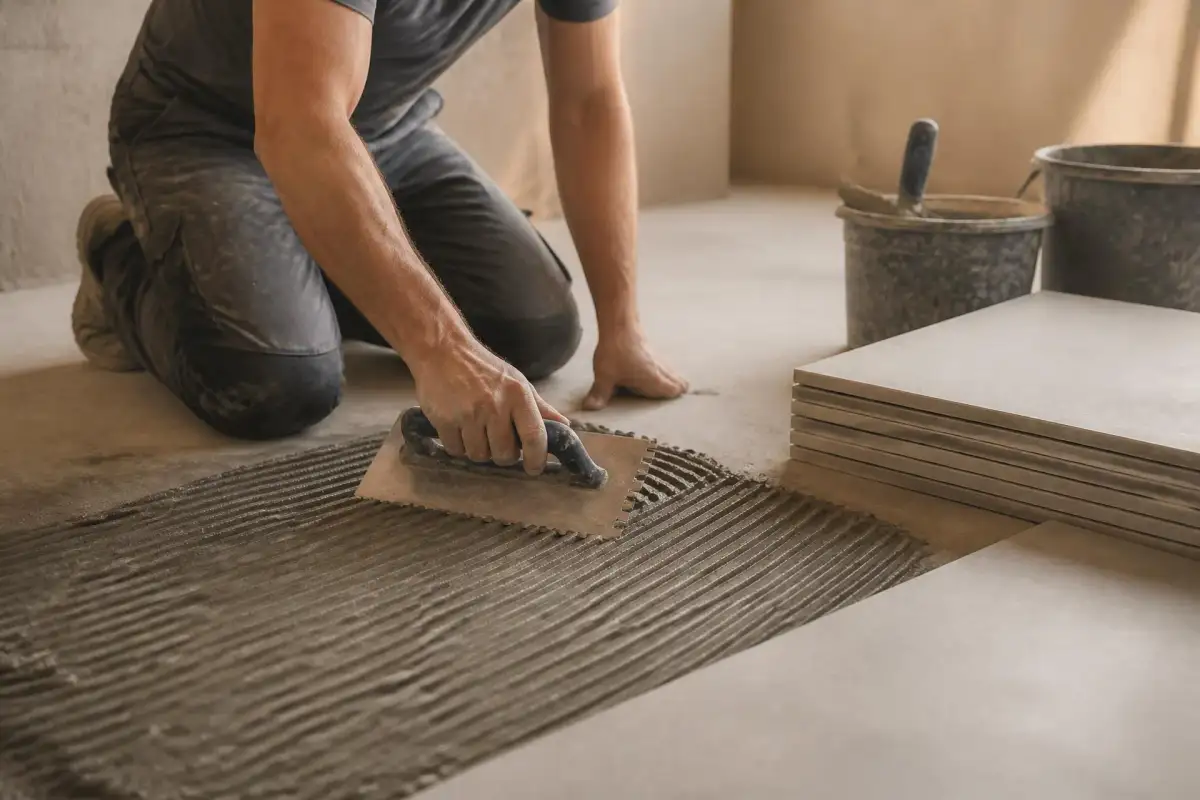
Tiles have got bigger and thinner, and what holds them down has had to change with them. A large slab on a heated floor is a different job from a small tile on a plastered wall, and using one adhesive for the whole project is how hollow tiles and cracked joints happen.
Nobody photographs the adhesive. Everybody remembers the floor that drummed hollow after two winters.
We quote the whole package: primer for the surface, the right adhesive for each area, grout in the colour you've chosen, and everything needed at wet-area junctions — with quantities worked out so the order is right first time.
The adhesive, the grout and the primer are specified against your actual tile and site, and delivered on the same order as the tile.
Large-format porcelain, marble and outdoor terraces each need a different class. We specify C2TE S1 or S2 where it matters, not everywhere.
Class specified per tile format and exposure
Consumption per m² from trowel size and tile format, so 300 m² of tile doesn't arrive with 40% too little adhesive.
Consumption per m² in every quote
Full colour range with samples, so the joint is a design decision instead of whatever the merchant had in stock.
Colour range sampled before order
Tile, adhesive, grout, waterproofing and trims on the same truck under one PO — the whole package, one invoice.
Delivered with the tile order
C1, C2TE, C2TE S1 and S2 flexible classes, grey and white, 25 kg
RG-class epoxy for pools, food areas and chemically loaded floors
CG2 WA grouts, 1–20 mm joints, full colour range, anti-mould
Self-levelling compounds 1–15 mm, fast-set screeds, microcement bases
Absorbent and non-absorbent primers, repair mortars, neutral silicones

Waterproof first, tile second.
Sealing goes in before the adhesive, and the grout — standard or epoxy — is chosen to suit how the room will actually be cleaned, not what's fashionable.

Full coverage, no hollow spots.
Large tiles need full-contact bedding and enough working time to handle a Greek summer. That's exactly what our specified adhesives are built for.
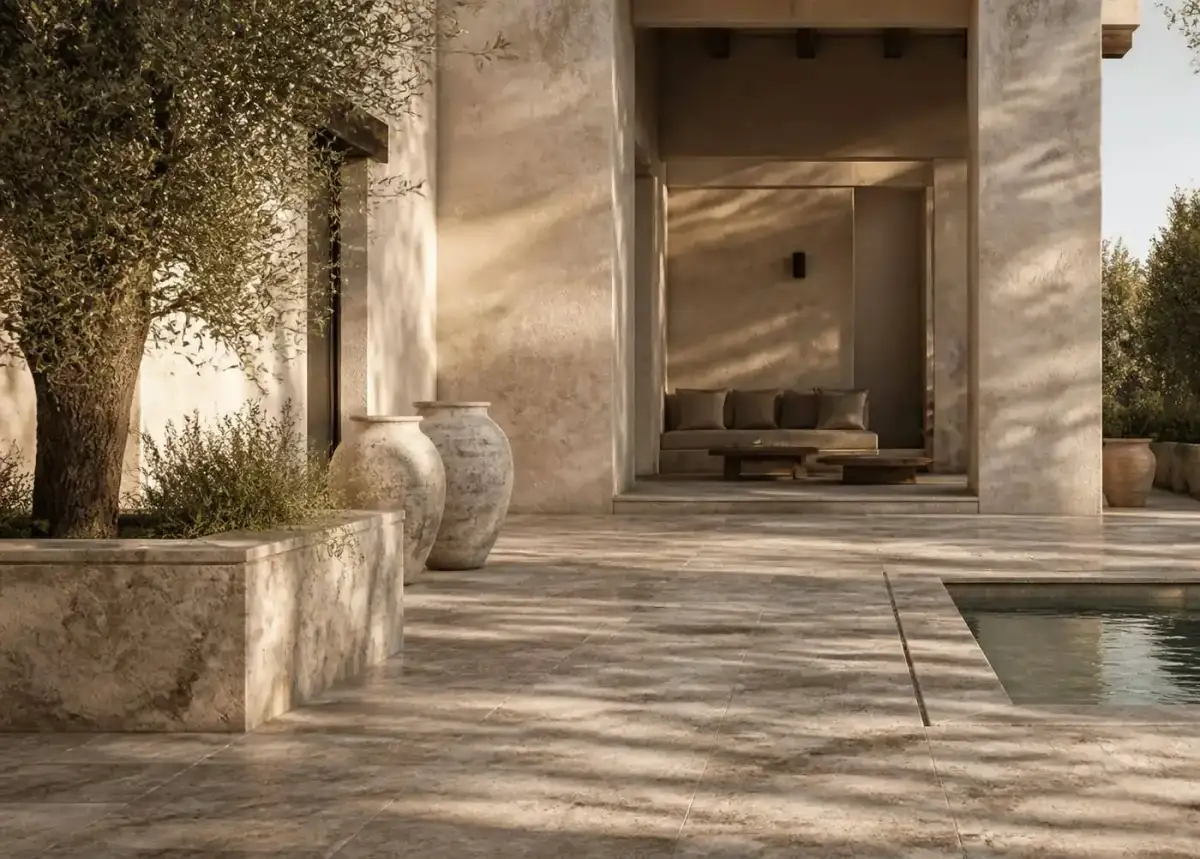
Built to handle outdoor temperature swings.
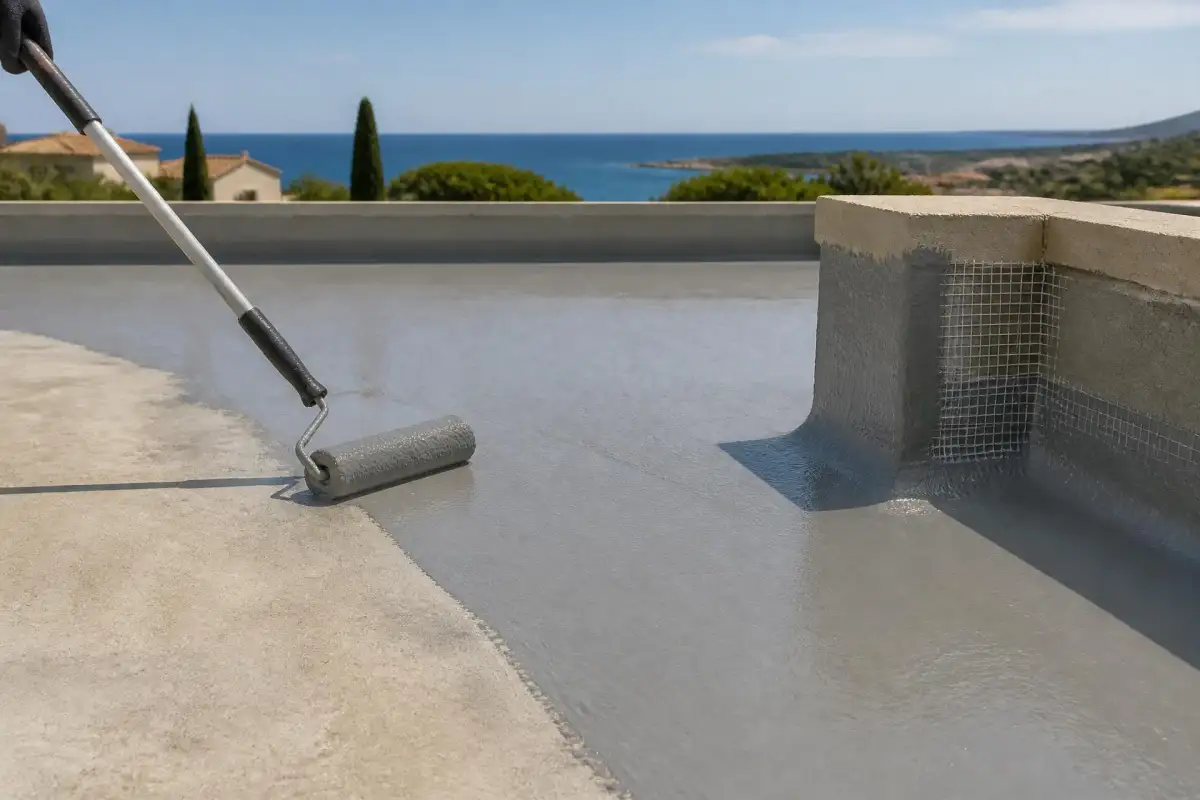
Outdoor tiling lives through big daily temperature changes. The right flexible adhesive, correctly placed movement joints and sealing underneath are the difference between a terrace that lasts and one you repair every year.
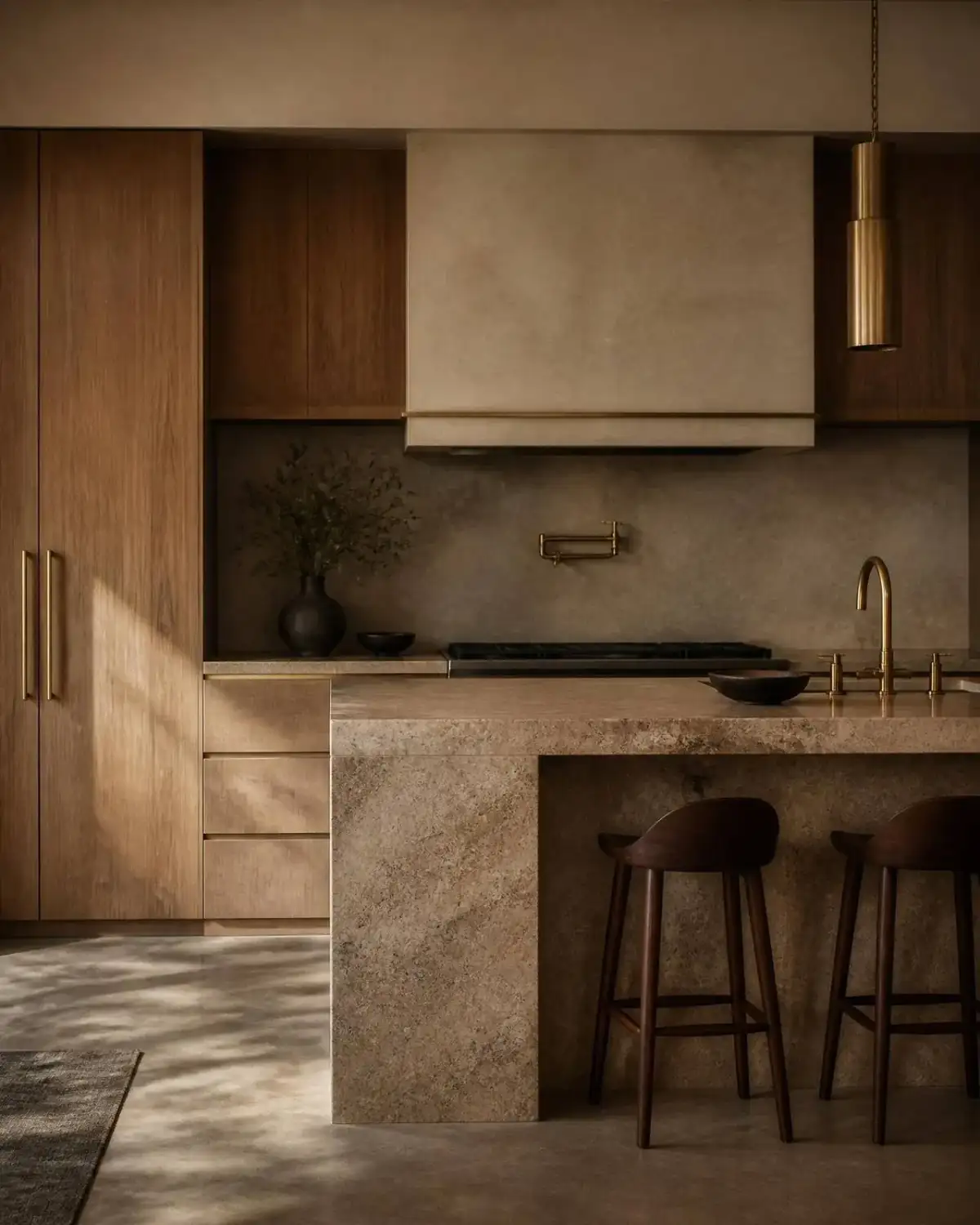
Slabs that need proper support, not just glue.
A porcelain slab worktop or splashback needs a rigid, full-contact adhesive bed so it doesn't flex and crack at the sink cut-out. Floor tiles get the same full-coverage approach, so nothing drums hollow under a dropped pan.
Every substrate — absorbent, heated, old tile — needs its own primer and sometimes its own adhesive.
The correct adhesive class solves most problems. Paying extra for a premium name on a standard job wastes money.
Tile size and application method decide how much adhesive you need — we do that arithmetic against your tile order.
Joint width and colour change how a floor reads more than most people expect. We sample it before the tiler arrives.
Thresholds, expansion joints and the meeting point between two different tile types are exactly where a job looks unfinished if nobody planned them. We work these out against the layout drawing so the tiler has a clear answer for every edge, not an improvised one.
A few dabs of adhesive under a big tile guarantees hollow spots and cracked corners.
It migrates into translucent stone and stains it permanently — we always use white.
New screeds need drying time and a primer — skip it and it shows up later.
Representative selections from the catalog — indicative of what we quote, stock-source and deliver week to week. Ask for the full schedule with formats, finishes and current lead times.
01C1, C2TE, C2TE S1 and S2 flexible classes, grey and white, 25 kg
02RG-class epoxy for pools, food areas and chemically loaded floors
03CG2 WA grouts, 1–20 mm joints, full colour range, anti-mould
04Self-levelling compounds 1–15 mm, fast-set screeds, microcement bases
The adhesive, the grout and the primer are specified against your actual tile and site, and delivered on the same order as the tile. This is the part most suppliers leave out: what we import, how tile adhesives, grouts & mortars should be specified before anyone prices it, where projects lose money, and what our 2–5 days lead time actually covers.
Cement-based tile adhesives from C1 to C2TE S2, epoxy adhesives and grouts, cement and flexible grouts in a full colour range, plus levelling screeds, repair mortars, primers and silicones. Specified against the tile format, the substrate and the exposure — the difference between a floor that lasts twenty years and one that drums hollow in two.
Because we buy tile adhesives, grouts & mortars directly from the factories, the range you see is the range we can programme — not a catalogue we hope to source later. In practice that means cement tile adhesives, epoxy adhesives & grouts and cement & flexible grouts, each with its own price band and availability, so a specification can be tuned to a budget instead of abandoned.
Adhesive matched to the tile class: large-format porcelain, marble and outdoor terraces each need a different class. We specify C2TE S1 or S2 where it matters, not everywhere.
Nobody photographs the adhesive. Everybody remembers the floor that drummed hollow after two winters.
Large-format porcelain, marble and outdoor terraces each need a different class. We specify C2TE S1 or S2 where it matters, not everywhere.
Consumption per m² from trowel size and tile format, so 300 m² of tile doesn't arrive with 40% too little adhesive.
Full colour range with samples, so the joint is a design decision instead of whatever the merchant had in stock.
Tile, adhesive, grout, waterproofing and trims on the same truck under one PO — the whole package, one invoice.
Specifying tile adhesives, grouts & mortars well comes down to a short list of decisions taken in the right order — we start with the surface, not the tile, the right class beats the expensive brand, we calculate the quantity for you and grout is a design decision. Taken on paper, these cost nothing. Taken on site, each one is a change order.
We write the specification with you before anything is quoted, so the number you get is for the material that will actually be installed. That means confirmed dimensions and finishes, the right performance class for the space, and quantities that include the waste factor rather than discovering it mid-installation.
The same reference behaves differently depending on where it goes — bathrooms and wet rooms, large-format porcelain floors, terraces, pools and facades, marble and natural stone each carry their own requirements, and we specify against the space rather than against a mood image.
An adhesive that can move with the substrate — essential outdoors and on heated floors.
Applying adhesive to the tile as well as the floor, for full contact under large tiles.
A tougher, stain-resistant grout for kitchens, wet rooms and commercial use.
How much an adhesive can flex without cracking — S2 is for heated floors and large formats under load.
Almost every delay we are called in to rescue traces back to the same handful of causes: spot-fixing large tiles, grey adhesive under marble, tiling onto fresh screed too soon and no movement joints. None of them are exotic, and all of them are avoidable at specification stage.
Spot-fixing large tiles is the most expensive one, because a few dabs of adhesive under a big tile guarantees hollow spots and cracked corners.
We have supplied tile adhesives, grouts & mortars into bathrooms & wet rooms, large-format floors and terraces & facades, and the pattern is consistent: the projects that run smoothly are the ones where the material was locked before the trades were booked.
Grey adhesive under marble — checked once on paper, never again on site.
A few dabs of adhesive under a big tile guarantees hollow spots and cracked corners.
It migrates into translucent stone and stains it permanently — we always use white.
New screeds need drying time and a primer — skip it and it shows up later.
Every large area and every edge needs one, or the tiles make their own crack.
Standard lead time on tile adhesives, grouts & mortars is 2–5 days from confirmed specification, and that window covers the whole chain — factory programming, consolidation, transport, customs where applicable and delivery to site or to your warehouse. We quote the landed number, not an ex-works price that grows later.
Pricing is per project rather than per line. Because we import directly and consolidate tile adhesives, grouts & mortars with the rest of the materials for the same room, you get one quote, one delivery window and one point of contact — and the savings show up on the total, not just on a headline reference.
If you already have drawings, send them and we will come back with a specification and a landed price. If you do not, we will build the specification with you first. Either way, nothing is ordered until the quantities, finishes and dates are agreed in writing.
A C2TE S1 flexible adhesive, applied with back-buttering and a suitable notched trowel to reach near-full coverage. On heated floors, terraces or over existing tiles, step up to S2. On marble use a white rapid-set adhesive to avoid staining and edge curl.
Adhesive is a polymer-modified thin-bed system engineered for adhesion and deformation; sand-cement mortar is a thick bed with no polymer chemistry. Modern rectified tiles and porcelain need the adhesive — the traditional mortar bed is why old bathrooms drum hollow.
White for marble, translucent stone, glass mosaic and light grouts, where a grey binder shows through or stains the edges. Grey everywhere else — it costs less and performs the same.
Typically 3.5–5 kg/m² for standard floor tiles with a 8–10 mm trowel, and 5–6 kg/m² for large-format with back-buttering. We calculate the exact quantity from your tile schedule.
Cement CG2 WA grout is right for the vast majority of bathrooms and floors. Epoxy RG grout goes into pools, food-preparation areas, industrial kitchens and anywhere the joint must resist chemicals and never absorb.
Materials from this category are usually specified for bathroom development projects. If your project needs installation as well as supply, we handle both together.
If something fails after installation — damp, a leak, cracking — our engineers inspect the work and find the cause, with a written finding you can take back to the contractor.