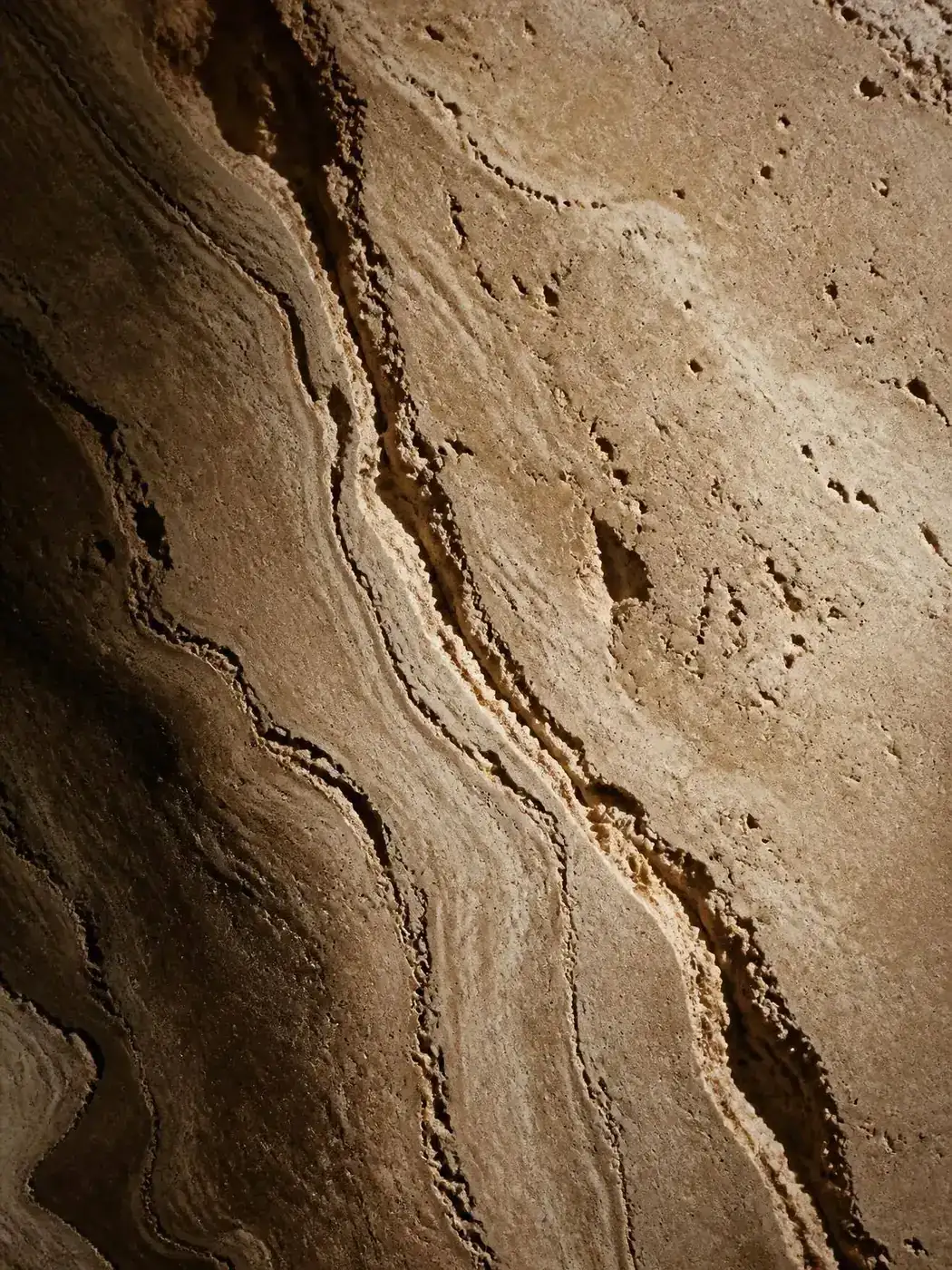
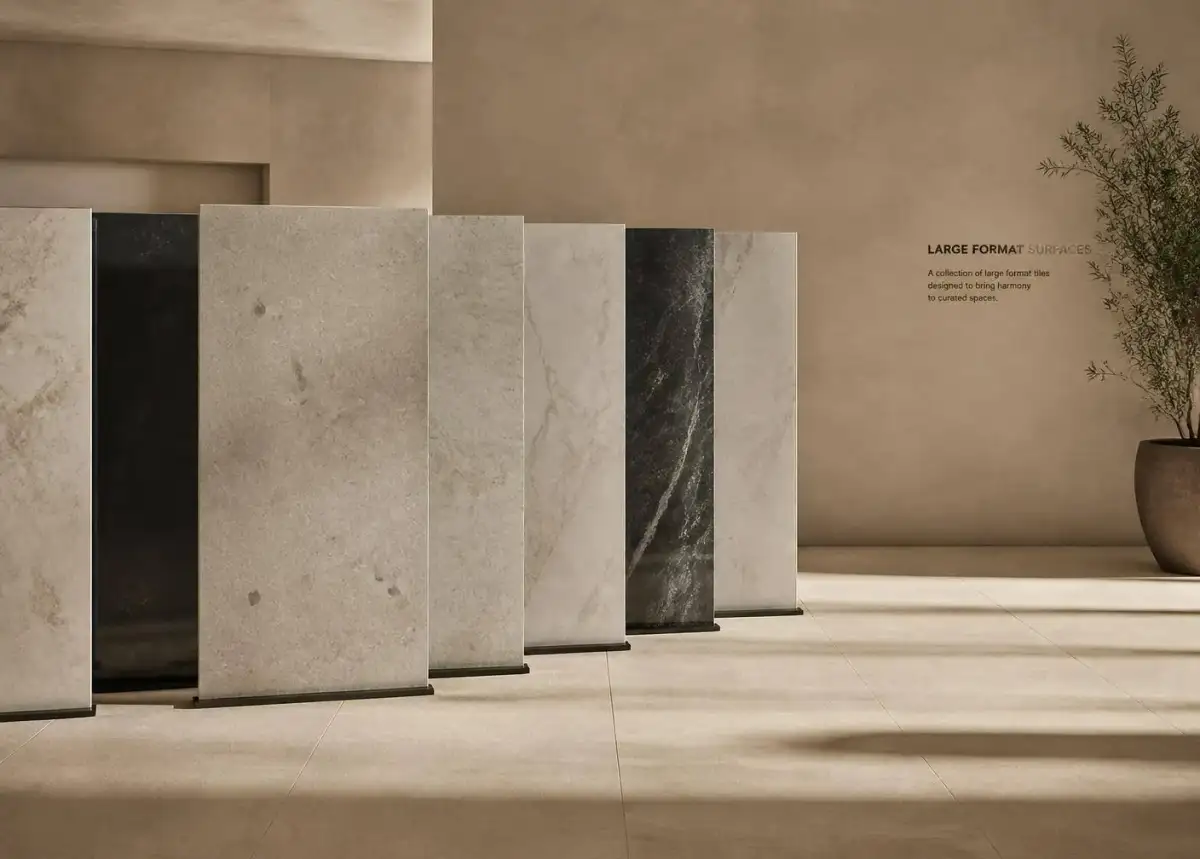
01 / 04
The right finish, so nobody slips on your terrace
Brushed, bush-hammered or split faces are specified against slip and exposure, removing a liability before it happens.
Slip performance checked, not assumed
Travertine, limestone, granite and quartzite — sourced, finished and delivered to site.
Natural stone carries a building. We source travertine, limestone, granite, slate and quartzite for facades, terraces, pool surrounds and interior floors, with finishes chosen for the way the stone will be used — brushed for grip, honed for calm, split for texture.
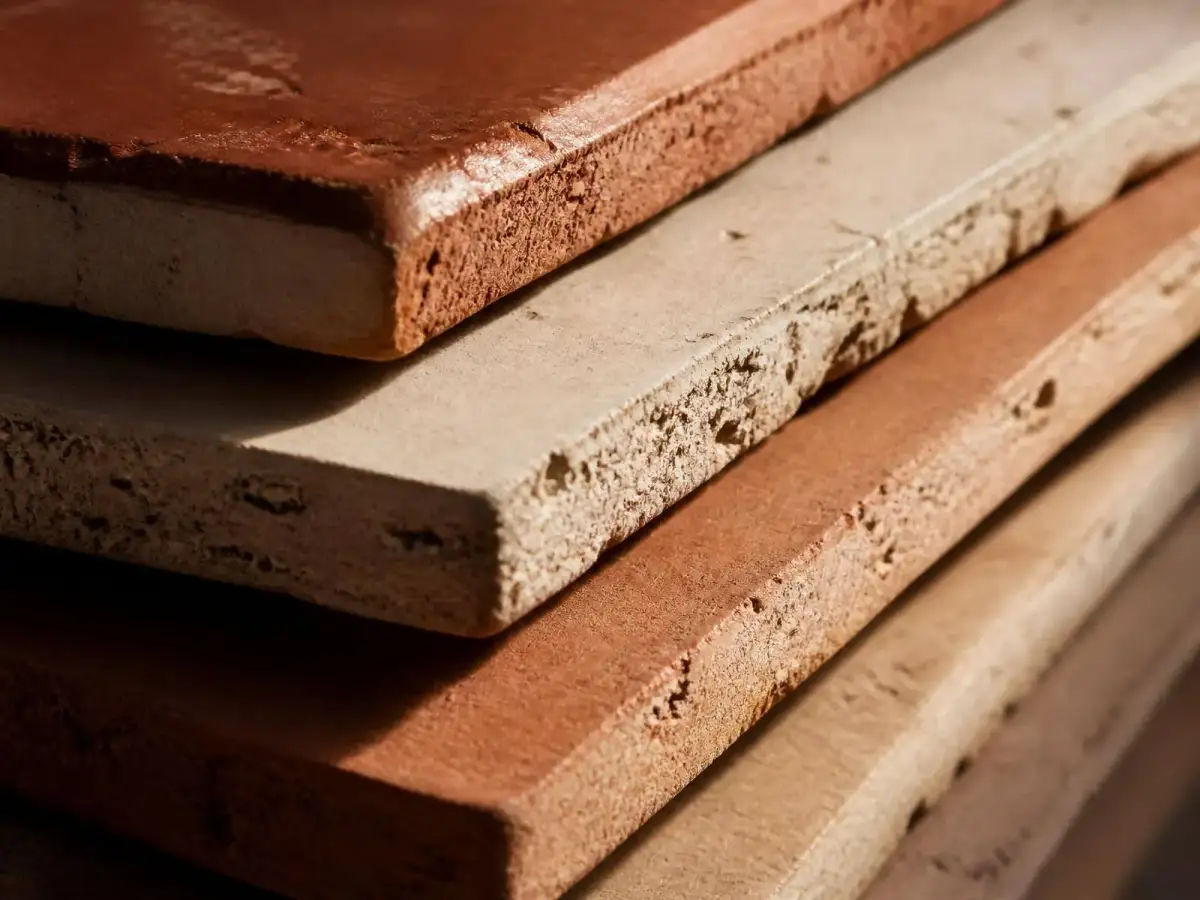
A soft interior limestone laid outside will spall after two winters, and a polished floor beside a pool is a liability, not a luxury. We specify frost resistance, water absorption and slip performance against the actual exposure before anything is ordered, so the project isn't paying twice — once for the wrong stone and again for the replacement.
Frost-resistant, pool-safe stone specified against your exposure — not a re-order after the first winter.
We source travertine, limestone, granite, slate and quartzite from quarries we buy from repeatedly, which is what makes phase two of a project match phase one. Cladding thickness, fixing detail, joint width and sealer are specified with the stone, and the whole package lands on site as one delivery.
A facade or terrace built on the wrong finish is a repair job within two years. We specify thickness, fixing and finish against exposure before the order is placed, so it's right once.
Brushed, bush-hammered or split faces are specified against slip and exposure, removing a liability before it happens.
Slip performance checked, not assumed
Cladding thickness and fixing detail are coordinated with the stone itself, so the design doesn't collide with the fixing method on site.
Fixing and thickness agreed before production
Frost-resistant, pool-safe selections mean no re-order after the first season shows up the wrong stone.
Outdoor-rated, no first-winter surprises
Repeat quarry sourcing means a later phase of a project can be matched closely to what was delivered years earlier.
Same source, years apart, same stone
Classic and filled travertine in warm tones for floors, walls and pool decks.
Soft, even stone for interior floors and calm facades.
Hard-wearing stone for high traffic, kerbs, thresholds and exterior paving.
Textured cladding stone for walls, plinths and country-house detailing.
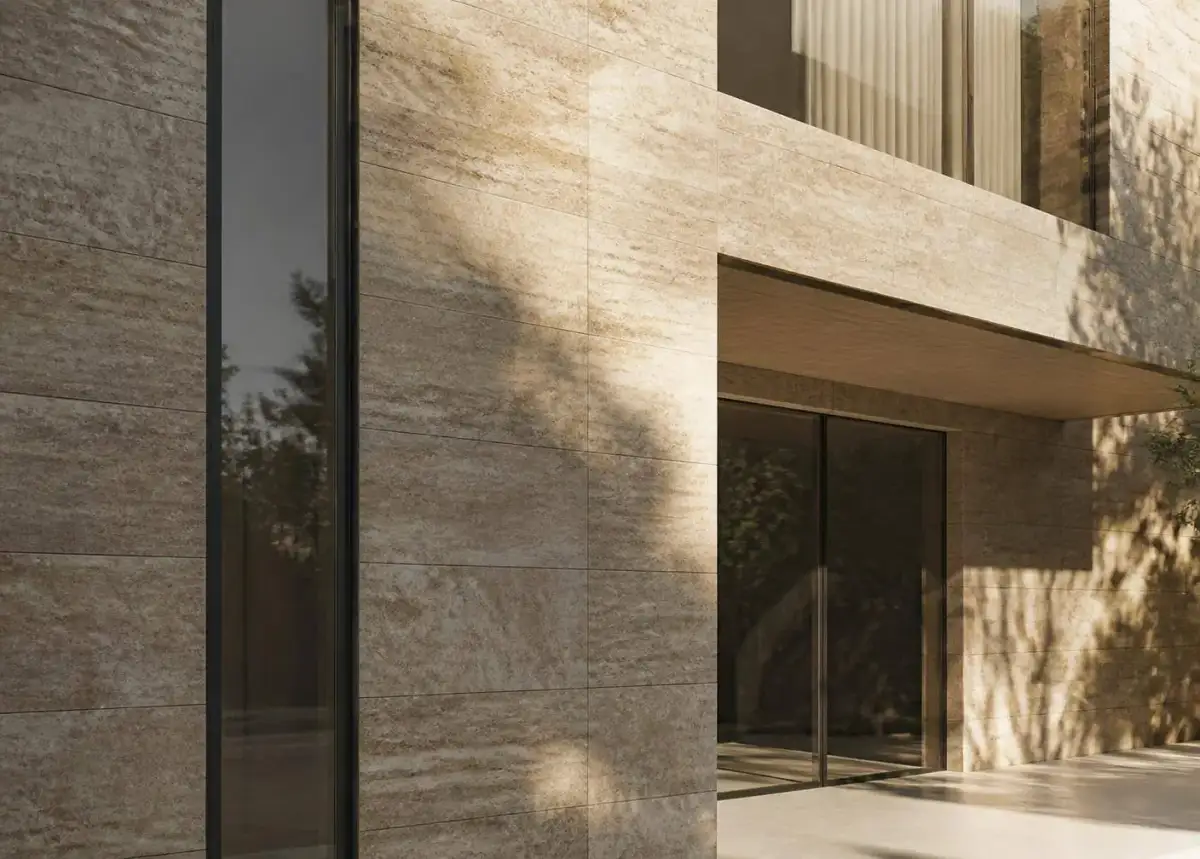
Thickness and fixing resolved with the elevation.
A stone facade is a fixing problem before it is an aesthetic one. Panel size, thickness, undercut anchors or a rail system, movement joints and the corner detail are decided together with the stone selection.
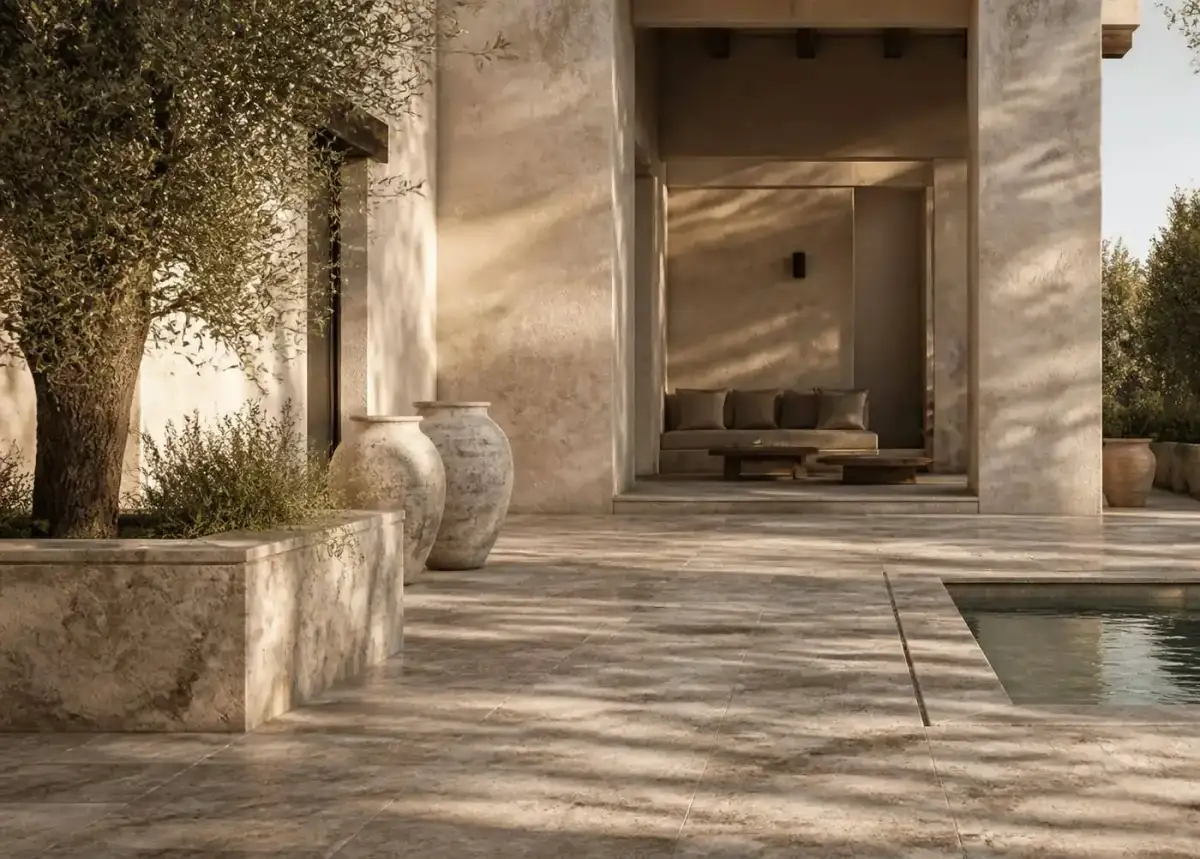
Cool underfoot, grippy when wet.
Travertine and brushed limestone stay cool in August and give grip when the deck is wet — the two things a pool surround is actually judged on. Coping pieces, drainage channels and the step nosing are cut as part of the same order.
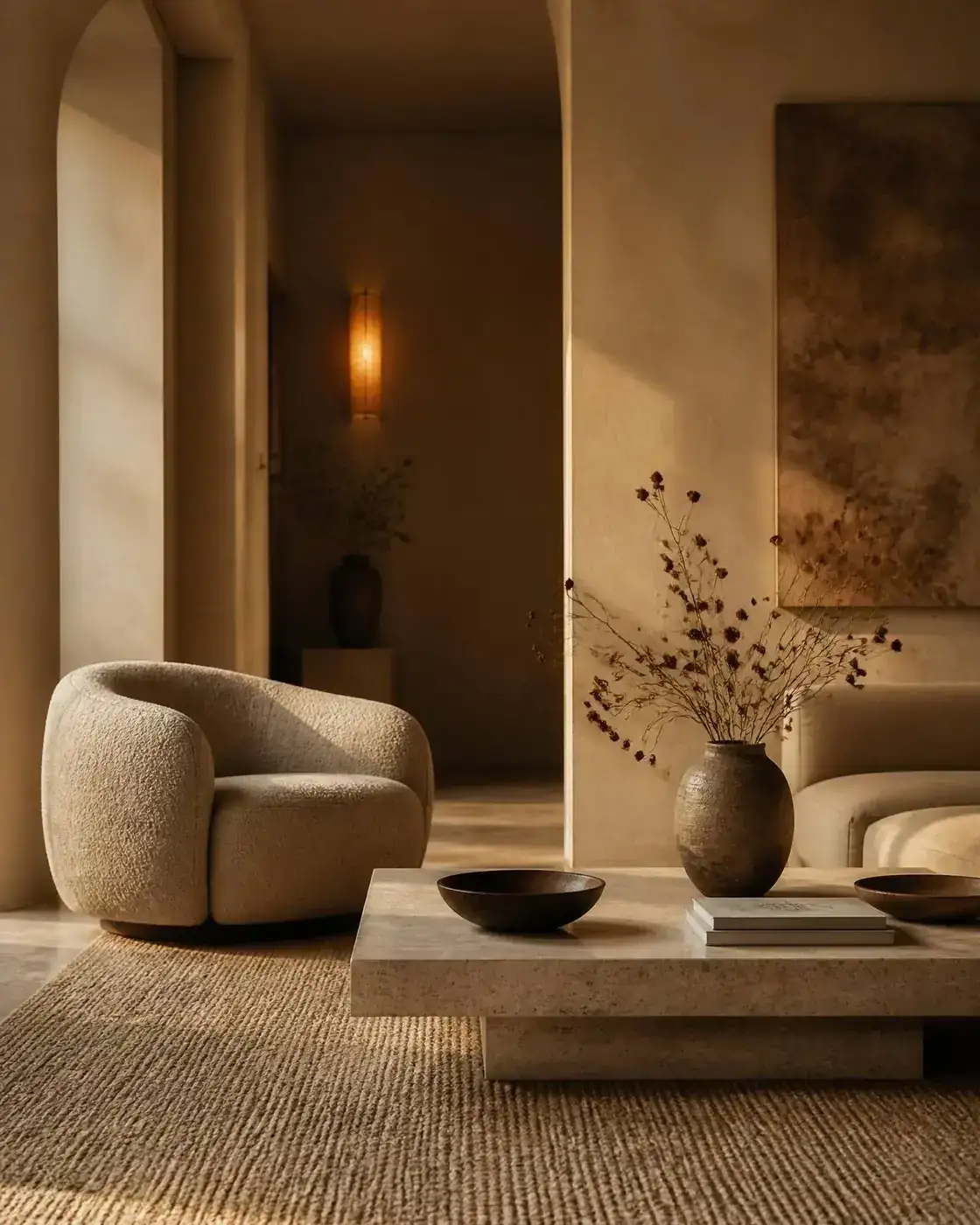
Large-format limestone that keeps a room quiet.
Honed limestone in large format gives a floor with almost no visual noise, which is exactly what a room full of texture needs. It works over underfloor heating and it takes a patina rather than damage.
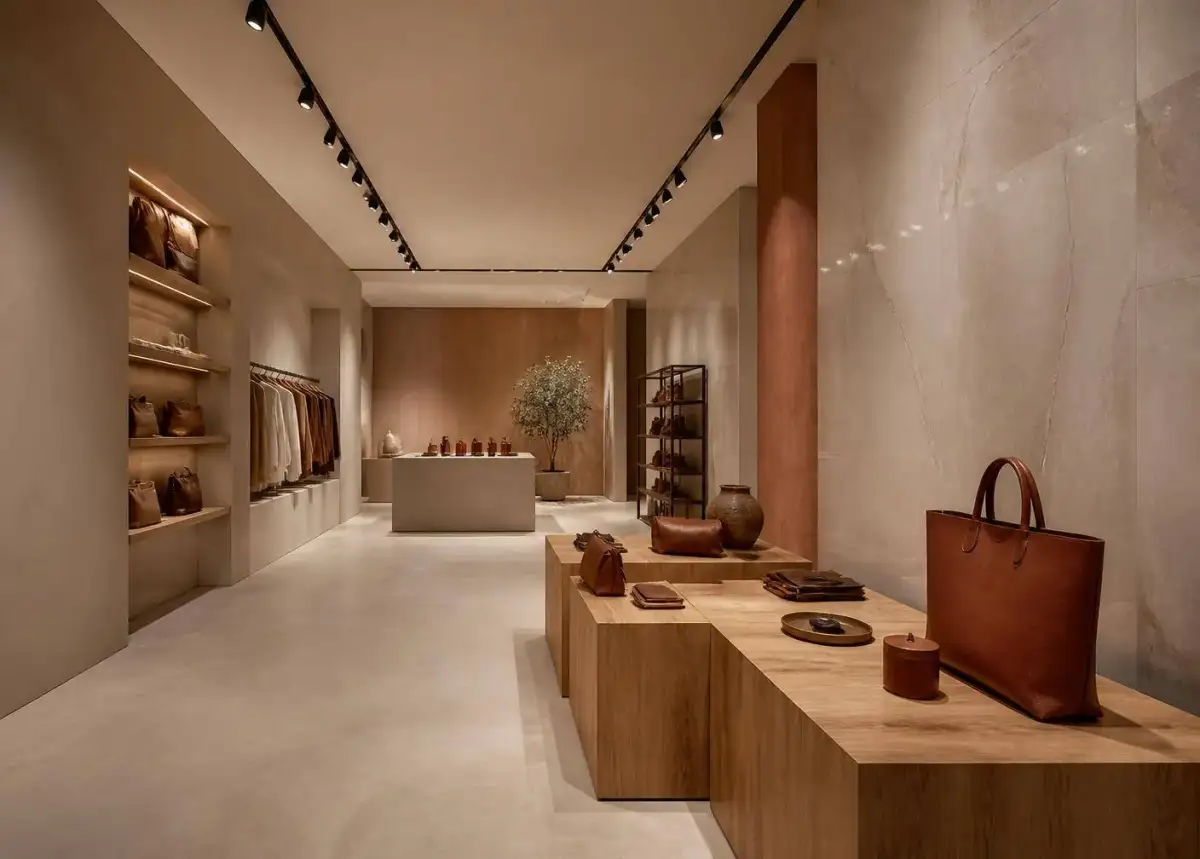
Split-face cladding with a real shadow line.
Split and rustic stone earns its place where light rakes across it — plinths, garden walls, a restaurant feature wall. Corner pieces and a matched coping are what separate a finished wall from a tiled one.
Get this wrong on an exterior and the stone spalls apart within two winters — a full re-lay, not a repair. Water absorption below roughly 0.5% is what separates a stone that survives outdoors from one that only looks like it will.
The wrong finish is either a slip hazard or a maintenance headache from day one. Honed suits calm interiors, brushed suits wet exteriors, bush-hammered suits steps and ramps, split belongs on vertical surfaces only.
Put unfilled travertine on a floor and it collects dirt and grout in every open pore forever. Filled gives the smooth continuous surface floors need; unfilled keeps its texture for walls, where that's the point.
Outdoor stone moves with the seasons, and a joint or fall left to the installer's judgement is how cracked paving and standing water happen. Joint width, flexible mortar, falls and channel positions belong in the spec, not the installation.
Grout haze on an open-pore stone stains permanently if it isn't sealed first — a mistake that costs a whole floor's finish to fix. Pre-sealing costs an afternoon and prevents it.
A soft interior limestone spalls apart after two winters outdoors, turning a finished terrace into a re-lay job. The frost-resistant version of the same look exists, and it should be the one specified.
Skipping the mock-up means the first time anyone sees the real colour and joint in daylight is once the whole elevation is fixed — too late to change anything cheaply. One built square metre answers what a sample board can't.
The wrong bedding mortar under a porous stone produces a white salt bloom that ruins the finish after handover, not before. The bedding system needs to be quoted and matched with the stone, not left to whatever the installer has on the van.
Representative selections from the catalog — indicative of what we quote, stock-source and deliver week to week. Ask for the full schedule with formats, finishes and current lead times.
01Classic and filled travertine in warm tones for floors, walls and pool decks.
02Soft, even stone for interior floors and calm facades.
03Hard-wearing stone for high traffic, kerbs, thresholds and exterior paving.
04Textured cladding stone for walls, plinths and country-house detailing.
A facade or terrace built on the wrong finish is a repair job within two years. We specify thickness, fixing and finish against exposure before the order is placed, so it's right once. This is the part most suppliers leave out: what we import, how natural stone should be specified before anyone prices it, where projects lose money, and what our 1–2 wks lead time actually covers.
Natural stone carries a building. We source travertine, limestone, granite, slate and quartzite for facades, terraces, pool surrounds and interior floors, with finishes chosen for the way the stone will be used — brushed for grip, honed for calm, split for texture.
Because we buy natural stone directly from the factories, the range you see is the range we can programme — not a catalogue we hope to source later. In practice that means travertine, limestone and granite & quartzite, each with its own price band and availability, so a specification can be tuned to a budget instead of abandoned.
The right finish, so nobody slips on your terrace: brushed, bush-hammered or split faces are specified against slip and exposure, removing a liability before it happens.
Frost-resistant, pool-safe stone specified against your exposure — not a re-order after the first winter.
Brushed, bush-hammered or split faces are specified against slip and exposure, removing a liability before it happens.
Cladding thickness and fixing detail are coordinated with the stone itself, so the design doesn't collide with the fixing method on site.
Frost-resistant, pool-safe selections mean no re-order after the first season shows up the wrong stone.
Repeat quarry sourcing means a later phase of a project can be matched closely to what was delivered years earlier.
Specifying natural stone well comes down to a short list of decisions taken in the right order — decide frost resistance before you decide the look, decide the face finish for the job it will do, decide filled or unfilled before travertine goes to floor or wall, decide the joint and drainage detail at specification, not on site. Taken on paper, these cost nothing. Taken on site, each one is a change order.
We write the specification with you before anything is quoted, so the number you get is for the material that will actually be installed. That means confirmed dimensions and finishes, the right performance class for the space, and quantities that include the waste factor rather than discovering it mid-installation.
The same reference behaves differently depending on where it goes — facades, terraces & paving, pool surrounds and interior floors each carry their own requirements, and we specify against the space rather than against a mood image.
Percussion-textured surface that gives high grip on ramps and steps.
Frost cycle test that determines whether a stone can be used outdoors.
Purpose-cut edge piece for a pool, wall or step.
Mechanical fixing into the back of a facade panel, invisible from the front.
Almost every delay we are called in to rescue traces back to the same handful of causes: using an interior stone outside, no mock-up on a facade, ignoring efflorescence risk and expecting quarried stone to look uniform. None of them are exotic, and all of them are avoidable at specification stage.
Using an interior stone outside is the most expensive one, because a soft interior limestone spalls apart after two winters outdoors, turning a finished terrace into a re-lay job. The frost-resistant version of the same look exists, and it should be the one specified.
We have supplied natural stone into facades & cladding, terraces & pool surrounds and interior floors, and the pattern is consistent: the projects that run smoothly are the ones where the material was locked before the trades were booked.
No mock-up on a facade — checked once on paper, never again on site.
A soft interior limestone spalls apart after two winters outdoors, turning a finished terrace into a re-lay job. The frost-resistant version of the same look exists, and it should be the one specified.
Skipping the mock-up means the first time anyone sees the real colour and joint in daylight is once the whole elevation is fixed — too late to change anything cheaply. One built square metre answers what a sample board can't.
The wrong bedding mortar under a porous stone produces a white salt bloom that ruins the finish after handover, not before. The bedding system needs to be quoted and matched with the stone, not left to whatever the installer has on the van.
Demanding zero colour variation from a natural material sets up an argument for delivery day instead of order day. The real range is agreed and shown, batch by batch, before the stone is committed.
Standard lead time on natural stone is 1–2 wks from confirmed specification, and that window covers the whole chain — factory programming, consolidation, transport, customs where applicable and delivery to site or to your warehouse. We quote the landed number, not an ex-works price that grows later.
Pricing is per project rather than per line. Because we import directly and consolidate natural stone with the rest of the materials for the same room, you get one quote, one delivery window and one point of contact — and the savings show up on the total, not just on a headline reference.
If you already have drawings, send them and we will come back with a specification and a landed price. If you do not, we will build the specification with you first. Either way, nothing is ordered until the quantities, finishes and dates are agreed in writing.
Paving and cladding are quoted per m² against thickness and finish, while feature pieces and copings are priced individually — send the drawing and we return one clear number.
Small garden and terrace jobs can be filled from stock finishes, while facade cladding and large paving runs are ordered as a dedicated quarry batch for colour consistency.
Common travertine and limestone finishes are held in fast-moving stock; less common finishes, thicknesses and bespoke cladding are programmed at 1–2 weeks.
Yes, physical samples are sent for every finish, and the reference can be visualised in 3D across your actual facade or terrace layout beforehand.
Brushed or bush-hammered travertine and limestone are the standard answer, chosen for grip when wet; we confirm the finish against the required slip performance.
Most natural stone benefits from an impregnating sealer, especially outdoors and in kitchens, and we supply the product with the application schedule.
Send the facade or paving drawing and we return a quantified take-off with wastage allowance for cuts, corners and copings.
We work with repeat quarry relationships specifically so later phases can be matched closely to earlier deliveries, and we flag it honestly if an exact match is not possible.
Yes, we supply trade and private clients alike and deliver nationwide including the islands, with logistics planned around site access and stone weight.
Materials from this category are usually specified for interior design projects and bathroom development projects. If your project needs installation as well as supply, we handle both together.