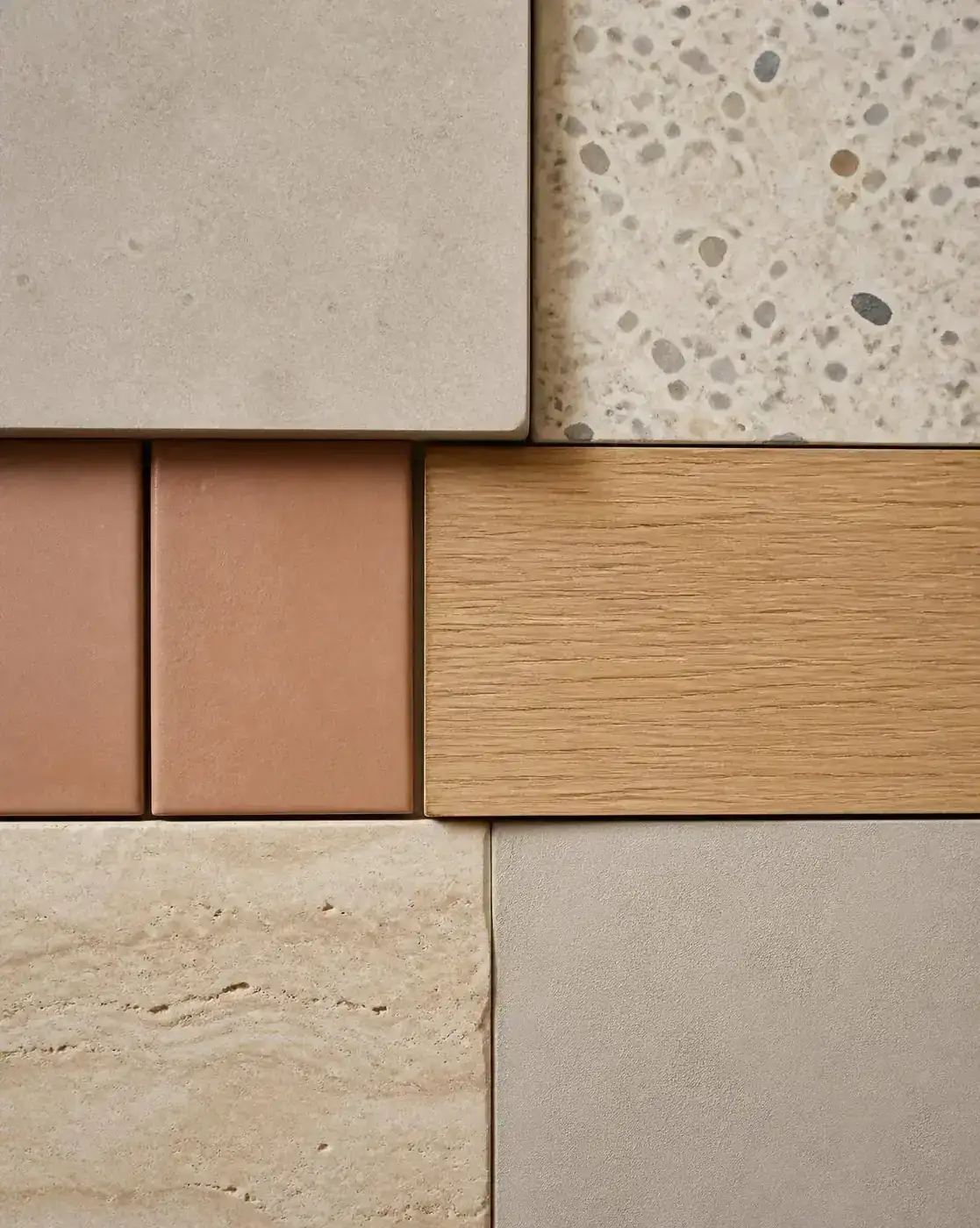
01 / 04
Turn a phone photo into a real order
Hybrid AI matches the image to sourceable catalog products, so the result is something you can sell.
Matched against real catalog stock — an order, not a description.
Hybrid AI identification that turns a site photo into a sourceable material.
Upload or shoot a photo of a surface and MaterialsHub identifies the material family, finish and closest matches in the catalog — so a photo from a site visit becomes a real, sourceable specification.
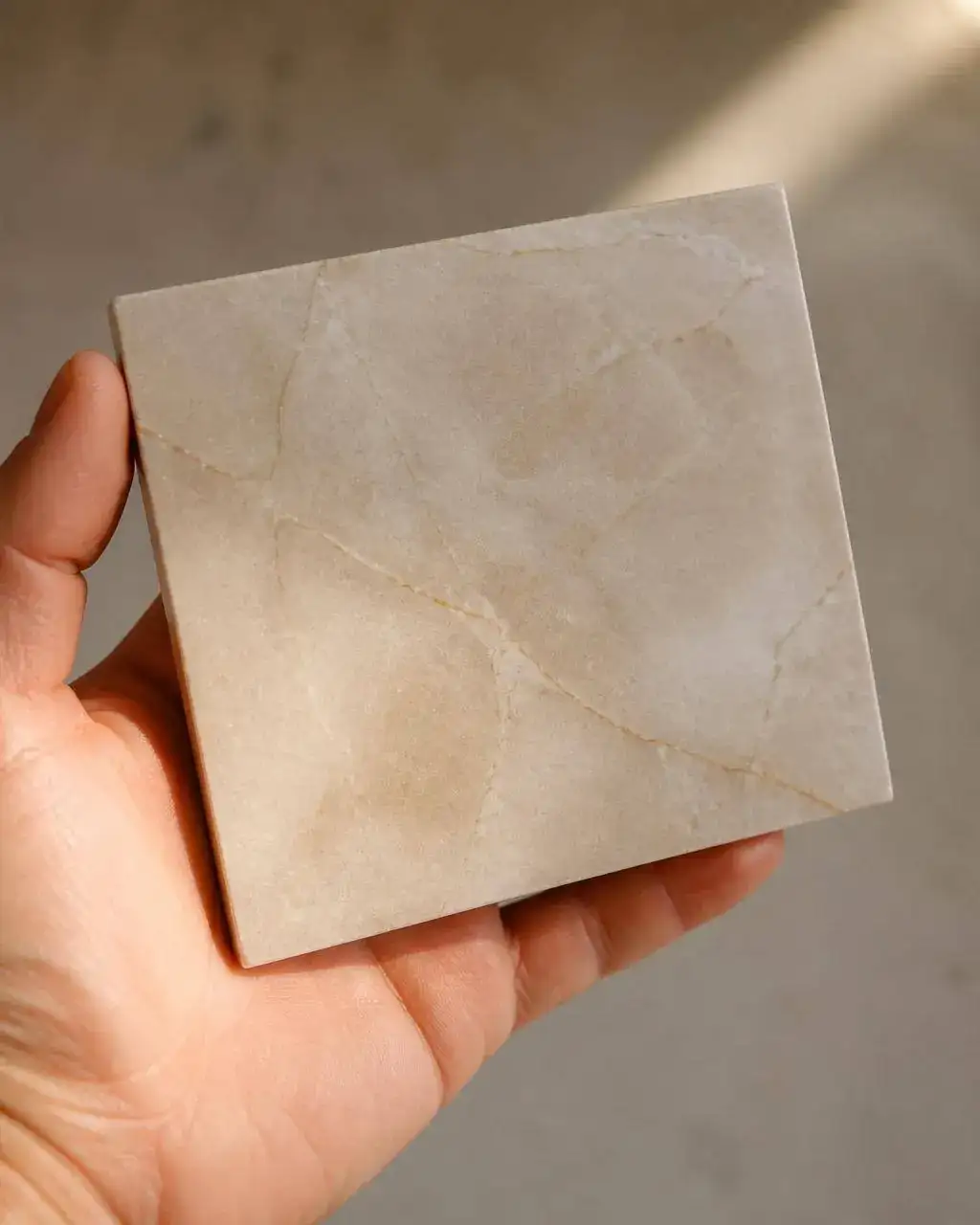
A client's photo becomes a sourceable quote in minutes instead of a week of sample chasing — turning a casual enquiry into paid work before it cools off.
Hybrid AI matches the image to sourceable catalog products, so the result is something you can sell.
Matched against real catalog stock — an order, not a description.
Get the material family, finish and likely format instantly, so you brief the right sample first time.
Family, finish and format returned — enough to start sourcing now.
Every match returns with price and lead time, so you can answer 'how much and when' on the spot.
Price, supplier and lead time arrive with every match.
Built for a phone camera on site or in a showroom, with no studio shot required.
Built for real site photos — mixed light, dust, phone cameras.
Start from whatever's in front of you — no studio shot or sample required.
Know what you're looking at within seconds, with a confidence score you can trust.
Walk away with a sourceable, priced option instead of a guess.
A slow response to a client's photo is a lost opportunity, not just a delay. Traditionally that starts a week of guessing, sample chasing and phone calls. Material recognition analyses the image, identifies the likely material family, finish, format and colour range, and returns the closest available matches from the catalog with their technical data and price.
Getting the identification wrong costs a wasted sample, a wasted site visit, or worse. Pure catalog search needs a code. MaterialsHub combines both: computer vision reads texture, veining, grout pattern, gloss and scale, then matches those attributes against structured catalog data. The result is a ranked shortlist with a stated confidence rather than a single unverifiable answer.
A shortlist is only worth something if it turns into an order, not a folder of guesses. Every match can move straight into a comparison, a moodboard, a room plan with quantities, or a priced request — so the photo that started the conversation ends as an ordered material with a delivery date.
Identify an existing tile or stone so a repair or extension matches what is already installed.
Take a Pinterest or magazine reference and find real, available, priced equivalents.
Photograph a finish in a hotel or showroom and see comparable products in your own range.
Hybrid AI identification that turns a site photo into a sourceable material.
Accuracy is highest for common families — ceramic, porcelain, natural stone, wood and concrete finishes — and every result shows candidate matches rather than a single guess.
Often yes: recognition finds visually and technically equivalent current products.
Accuracy depends on photo quality and how distinctive the material is. Results are returned as a ranked shortlist with confidence, so a human still makes the final call — which is the correct workflow for specification.
Even lighting, a straight-on angle, and something for scale such as a grout line or a hand in frame. Avoid heavy filters and strong shadows.
It will identify the material family and characteristics, then propose the closest available alternatives you can actually buy.
Yes — it is designed for shooting directly on site or in a showroom.