01 / 04
The system, not just the resin
Primer, levelling layer, body coat, topcoat and movement joints specified as one build-up, so the floor doesn't peel at month six.
Full build-up specified per project
Epoxy, polyurethane and self-levelling industrial floors, plus microcement for interiors — systems, not buckets.
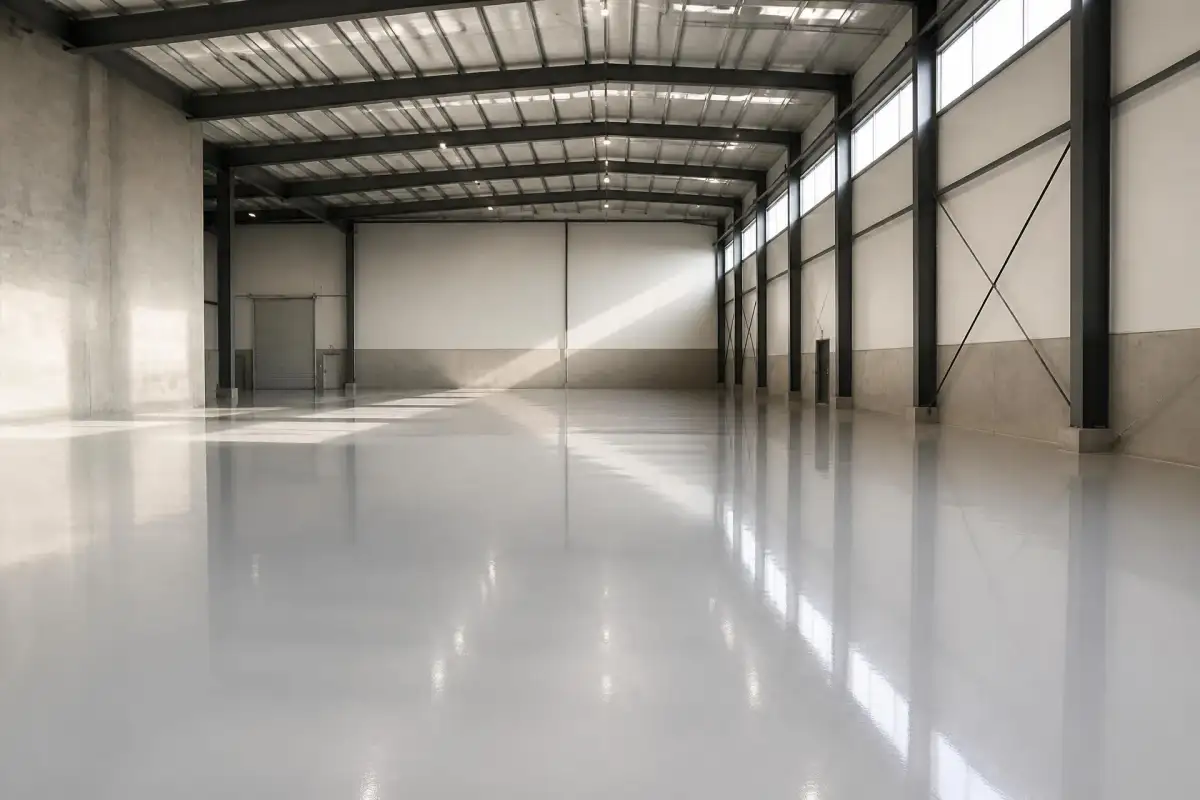
Epoxy and polyurethane resin systems for warehouses, factories, workshops and garages, self-levelling decorative floors for retail and homes, and pressed microcement for walls, floors and bathrooms. We specify the whole build-up — primer, levelling, body coat, topcoat and joints — against the substrate you actually have, and price it per m².
Preparation, primer, levelling and topcoat all have a job to do, and skip one and the floor tells you within a year. The most common failure in Greece is a damp slab coated with the wrong primer: the floor blisters and the resin gets blamed. We check the slab first, so that doesn't happen on your job.
Resin floors don't fail because of the resin. They fail because of the slab underneath and the primer nobody specified.
The same expertise also delivers beautiful interior floors — smooth decorative resin, and seamless microcement that runs from a bathroom floor up the wall with no joints at all. One supplier, one contact, whether it's a warehouse or a bathroom.
We spec the whole floor build-up against your actual slab, work out the quantities, and supply industrial and decorative systems from the same order.
Primer, levelling layer, body coat, topcoat and movement joints specified as one build-up, so the floor doesn't peel at month six.
Full build-up specified per project
Moisture, laitance and tensile strength decide which primer works. We tell you what the slab needs before you buy resin for it.
Substrate diagnosis before specification
Consumption per layer calculated from the real area, so you order the right quantity instead of five spare pails.
Consumption calculated per layer
The same programme covers a 2.000 m² warehouse floor and a microcement bathroom — one supplier, one technical contact.
Industrial and decorative in one range
Solvent-free epoxy body coats, 0.5–3 mm, chemical and abrasion resistant
Thermal-shock and chemical resistant floors for food plants and cold rooms
Seamless 2–3 mm resin floors in solid colours and metallic effects
Hand-pressed cement coating 2–3 mm for floors, walls, showers and stairs
Epoxy and PU primers, repair mortars, levelling screeds, joint profiles and sealants

A layered resin floor with a textured surface handles forklifts and pallet racking, cleans easily and marks out safely. Joints are planned into the design, not left as an afterthought.
Our systems survive hot washdown and freezer transitions where a standard floor would fail, with rounded wall junctions that turn the floor into an easy-clean tray.

Microcement gives you a continuous floor, wall and shower over your existing tile, sealed to resist water and everyday cleaning.

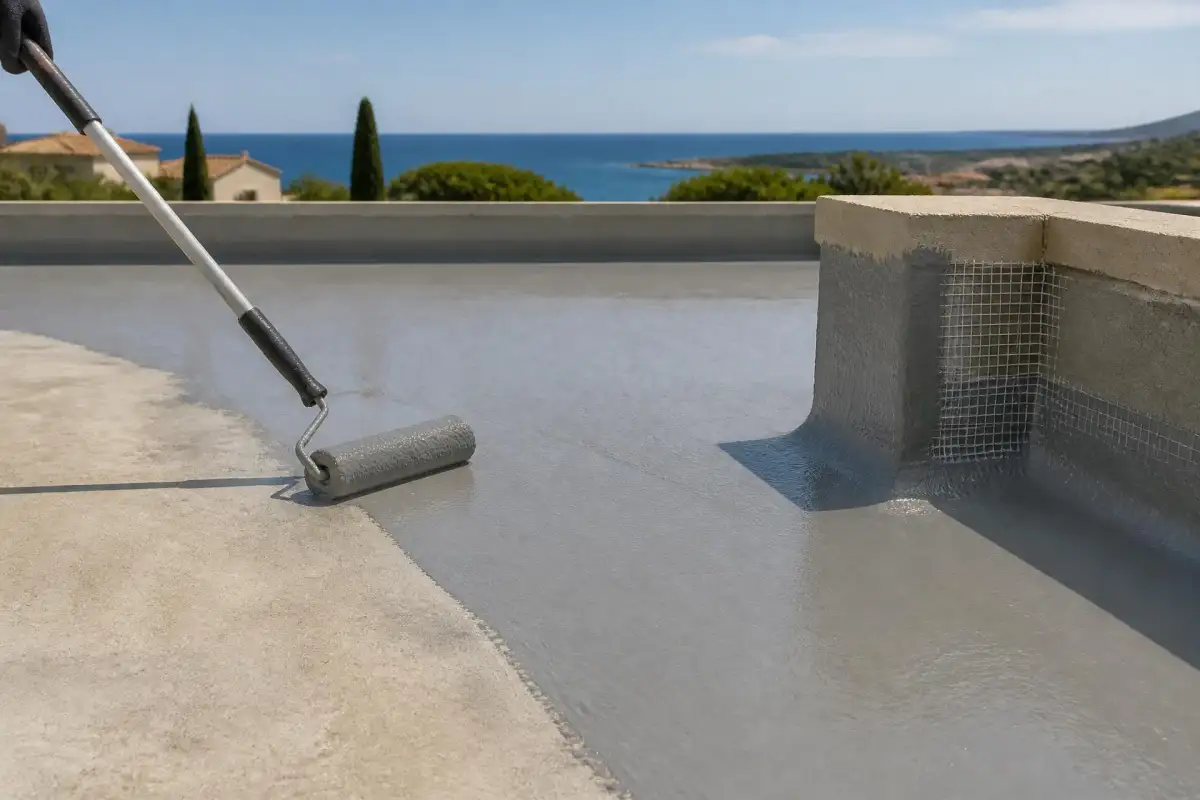
Roof decks and parking areas take sun, vehicle traffic and standing water all at once. We specify a UV-stable, flexible system with the falls checked before coating, so the floor doesn't crack in the first hot summer or pond water in the second.
Epoxy,polyurethaneandself-levellingindustrialfloors,plusmicrocementforinteriors—systems,notbuckets.
Moisture and surface strength decide the primer, and sometimes the whole system — we test first so the job doesn't fail later.
Mechanical grinding is not optional — it's the difference between a floor that lasts and one that peels within a year.
A glossy floor is a hazard when wet. We set the texture to the job, without ruining how easy it is to clean.
Rushing the topcoat traps softness and ruins the finish. We build the programme around proper cure windows.
Bay markings, safety lanes and logo work are far cheaper to build into the specification than to add as a second visit once the floor has cured. We agree the layout and the colours against the site plan before ordering, so the finished floor matches the drawing everyone signed off.
The single biggest cause of a floor blistering. A moisture-blocking primer costs far less than doing the floor twice.
Leftover chemicals on the slab break the bond invisibly — until the first forklift turn.
Decorative and microcement systems exist for a reason — better colour and finish for living spaces.
Representative selections from the catalog — indicative of what we quote, stock-source and deliver week to week. Ask for the full schedule with formats, finishes and current lead times.
01Solvent-free epoxy body coats, 0.5–3 mm, chemical and abrasion resistant
02Thermal-shock and chemical resistant floors for food plants and cold rooms
03Seamless 2–3 mm resin floors in solid colours and metallic effects
04Hand-pressed cement coating 2–3 mm for floors, walls, showers and stairs
We spec the whole floor build-up against your actual slab, work out the quantities, and supply industrial and decorative systems from the same order. This is the part most suppliers leave out: what we import, how epoxy, resin & industrial floors should be specified before anyone prices it, where projects lose money, and what our 3–7 days lead time actually covers.
Epoxy and polyurethane resin systems for warehouses, factories, workshops and garages, self-levelling decorative floors for retail and homes, and pressed microcement for walls, floors and bathrooms. We specify the whole build-up — primer, levelling, body coat, topcoat and joints — against the substrate you actually have, and price it per m².
Because we buy epoxy, resin & industrial floors directly from the factories, the range you see is the range we can programme — not a catalogue we hope to source later. In practice that means epoxy industrial floors, polyurethane & PU-Cement and Self-Levelling decorative, each with its own price band and availability, so a specification can be tuned to a budget instead of abandoned.
The system, not just the resin: primer, levelling layer, body coat, topcoat and movement joints specified as one build-up, so the floor doesn't peel at month six.
Resin floors don't fail because of the resin. They fail because of the slab underneath and the primer nobody specified.
Primer, levelling layer, body coat, topcoat and movement joints specified as one build-up, so the floor doesn't peel at month six.
Moisture, laitance and tensile strength decide which primer works. We tell you what the slab needs before you buy resin for it.
Consumption per layer calculated from the real area, so you order the right quantity instead of five spare pails.
The same programme covers a 2.000 m² warehouse floor and a microcement bathroom — one supplier, one technical contact.
Specifying epoxy, resin & industrial floors well comes down to a short list of decisions taken in the right order — check the slab before we buy resin, prepare the surface properly, match the grip to the use and respect the cure time. Taken on paper, these cost nothing. Taken on site, each one is a change order.
We write the specification with you before anything is quoted, so the number you get is for the material that will actually be installed. That means confirmed dimensions and finishes, the right performance class for the space, and quantities that include the waste factor rather than discovering it mid-installation.
The same reference behaves differently depending on where it goes — warehouses and factories, workshops and garages, food and beverage plants, retail and showrooms each carry their own requirements, and we specify against the space rather than against a mood image.
A thin coating that flows out to a flat, seamless finish.
A hand-applied decorative coating for floors and walls, just a few millimetres thick.
A primer that blocks slab dampness from reaching the coating above.
Coloured quartz or flake scattered into wet resin for extra grip and a decorative finish.
Almost every delay we are called in to rescue traces back to the same handful of causes: ignoring rising damp, coating over old curing compounds, using an industrial floor indoors and skipping movement joints. None of them are exotic, and all of them are avoidable at specification stage.
Ignoring rising damp is the most expensive one, because the single biggest cause of a floor blistering. A moisture-blocking primer costs far less than doing the floor twice.
We have supplied epoxy, resin & industrial floors into warehouses & factories, food plants & cold rooms and interiors & bathrooms, and the pattern is consistent: the projects that run smoothly are the ones where the material was locked before the trades were booked.
Coating over old curing compounds — checked once on paper, never again on site.
The single biggest cause of a floor blistering. A moisture-blocking primer costs far less than doing the floor twice.
Leftover chemicals on the slab break the bond invisibly — until the first forklift turn.
Decorative and microcement systems exist for a reason — better colour and finish for living spaces.
The floor will find its own joint eventually — usually as a crack down the middle.
Standard lead time on epoxy, resin & industrial floors is 3–7 days from confirmed specification, and that window covers the whole chain — factory programming, consolidation, transport, customs where applicable and delivery to site or to your warehouse. We quote the landed number, not an ex-works price that grows later.
Pricing is per project rather than per line. Because we import directly and consolidate epoxy, resin & industrial floors with the rest of the materials for the same room, you get one quote, one delivery window and one point of contact — and the savings show up on the total, not just on a headline reference.
If you already have drawings, send them and we will come back with a specification and a landed price. If you do not, we will build the specification with you first. Either way, nothing is ordered until the quantities, finishes and dates are agreed in writing.
It depends on the build-up: a thin coating over a sound slab is a fraction of a 3 mm multi-layer industrial floor with quartz broadcast. Tell us the area, the traffic and the slab condition and you get a materials price per m² with the consumption per layer shown.
Usually yes, after mechanical preparation — grinding or shot-blasting — and a moisture check. Slabs above the moisture threshold take an epoxy moisture-barrier primer first. Skipping that step is the single most common cause of failure.
Epoxy is harder and cheaper and dominates warehouses and workshops. Polyurethane and PU-cement handle thermal shock, steam cleaning and food-plant chemistry, and stay flexible. We match the system to the actual duty.
Yes — self-levelling decorative resin and microcement give seamless floors with no grout joints, in solid colours or stone-like finishes. Microcement also runs up walls and into showers for a continuous surface.
We supply the system and the technical specification, and we work with applicator crews across Greece. For contractors doing their own application we supply the layer-by-layer method statement.
Materials from this category are usually specified for retail fit-out and office fit-out. If your project needs installation as well as supply, we handle both together.