01 / 04
One certified system, one warranty
Boards, adhesive, anchors, mesh, base coat and render come from the same certified system — mixing brands is what voids the guarantee.
Single-system ETA documentation
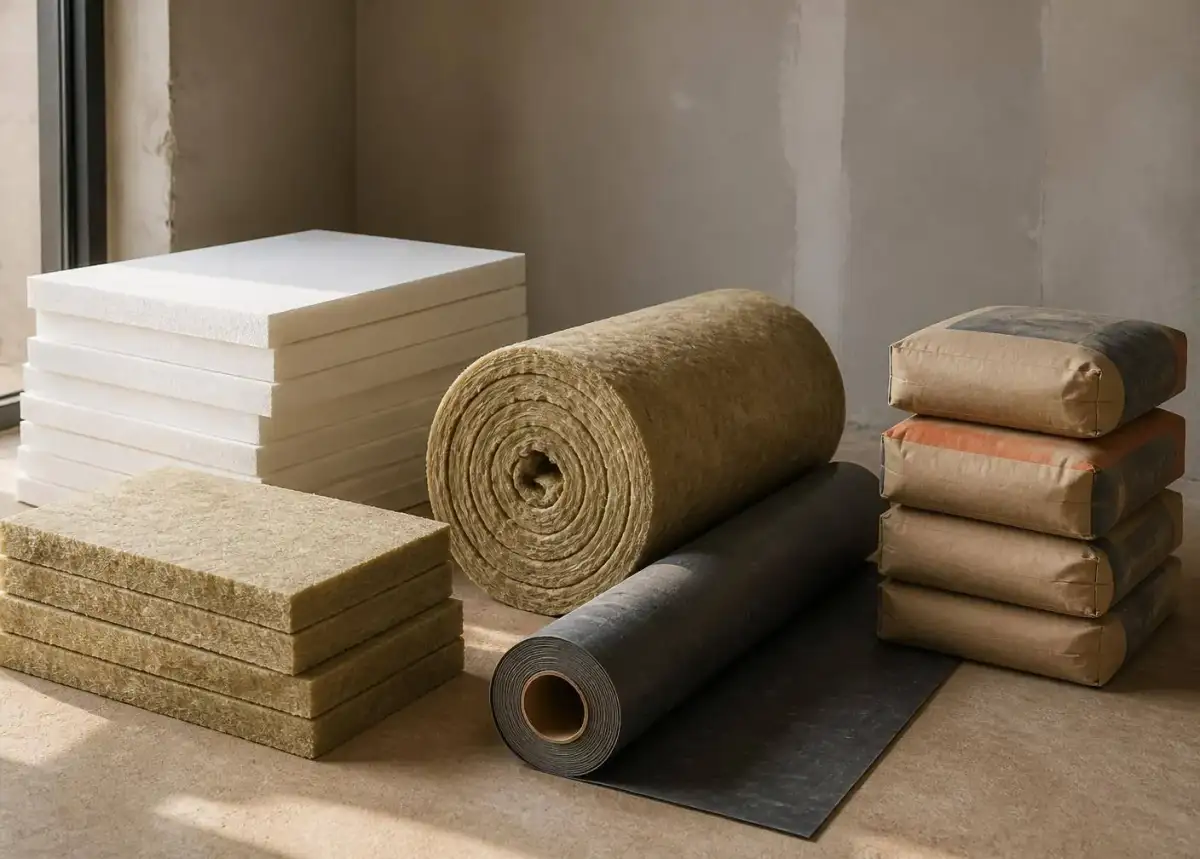
Complete ETICS packages — EPS or stone wool, adhesive, anchors, mesh, base coat, primer and finish render.
External thermal insulation composite systems for new build and energy retrofit: graphite EPS or stone wool boards, system adhesive, mechanical anchors, alkali-resistant mesh, base coat, primer and silicone or silicate finish render — supplied as one certified system with the layer schedule, quantities and details your engineer needs for the energy study and the subsidy file.
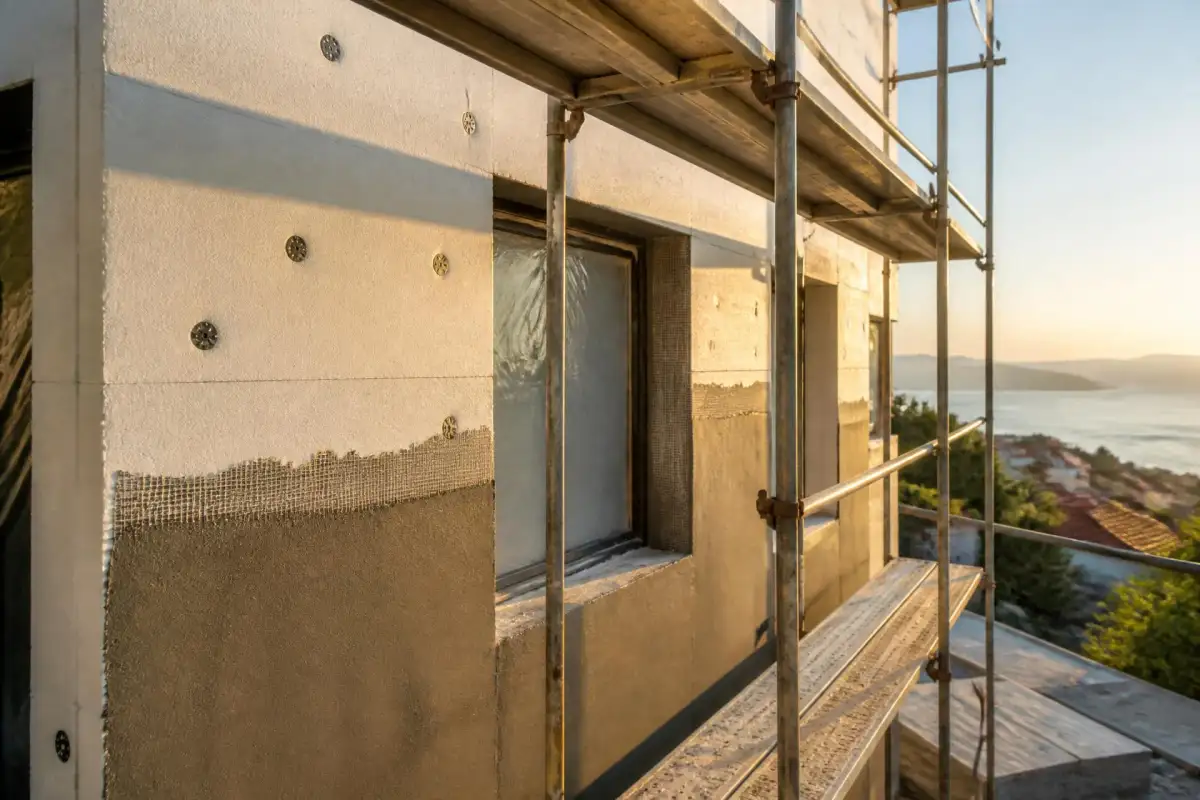
Wrapping a building on the outside removes cold spots, keeps the structure warm, and comes with a brand-new facade attached. In Greek apartment blocks, it's routinely the single biggest cut to heating and cooling bills available.
A facade insulated with mixed brands is not a system — and it is not covered by anybody's warranty.
What makes it work is buying it as one tested system rather than a pile of parts — boards, adhesive, mesh and render tested together, applied in the right order, with the tricky details around windows and corners drawn in advance. That's what we supply, not a pallet of boards and best wishes.
One certified insulation system arrives complete, with the documents your energy study and subsidy file need.
Boards, adhesive, anchors, mesh, base coat and render come from the same certified system — mixing brands is what voids the guarantee.
Single-system ETA documentation
You get consumption per layer and anchor counts per m², so the site orders once and the estimator prices honestly.
Consumption and anchor schedule supplied
Base profiles, window reveals, corner beads, expansion joints and roller-shutter boxes detailed before the scaffold goes up.
Standard details issued per project
Thermal conductivity, reaction-to-fire and system approval documents packaged for the energy study and grant application.
Full documentation pack for energy filings
λ 0.031–0.032 W/mK, 50–120 mm — best thermal performance per euro
Non-combustible A1 boards for tall buildings, escape routes and fire-rated facades
Cement adhesives and fibre-reinforced base coats for board bonding and mesh embedding
Thermal-break anchors, 160 g/m² alkali-resistant mesh, base and corner profiles
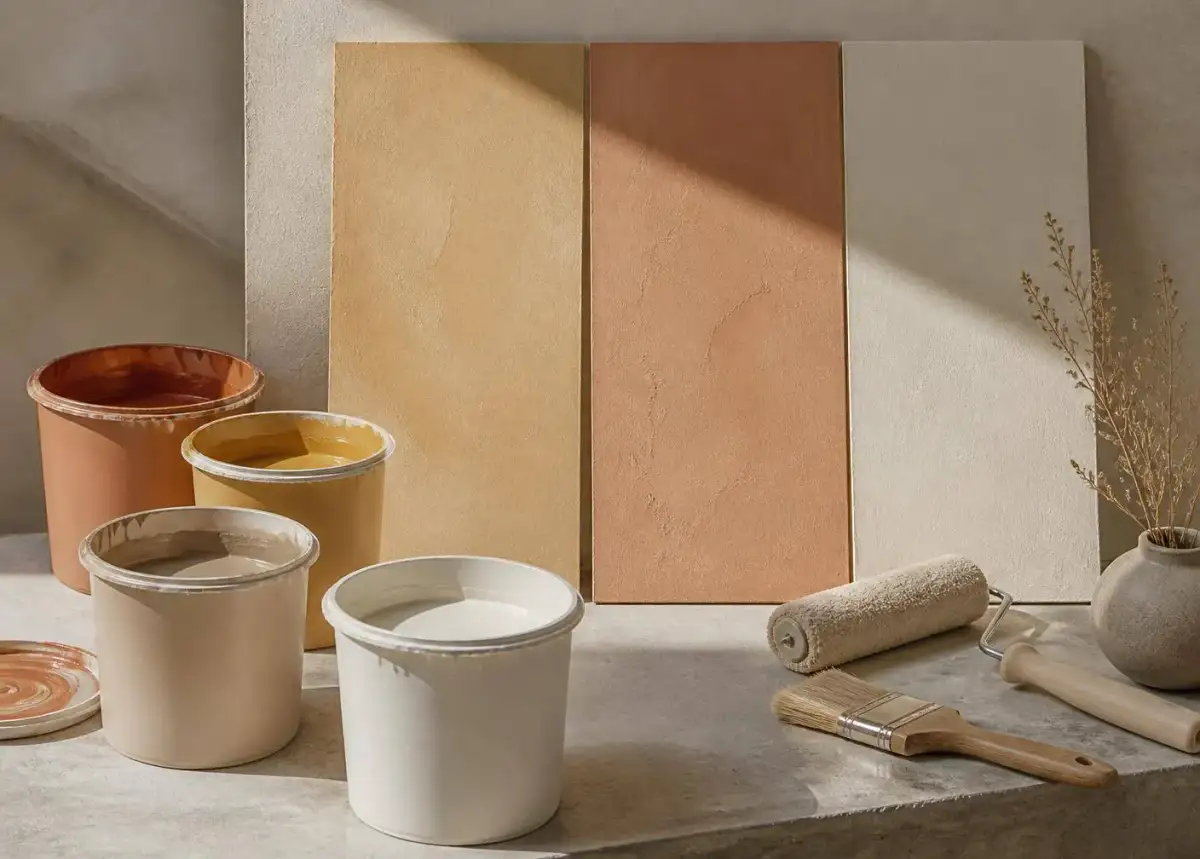
Silicone, silicate and acrylic renders 1.0–2.0 mm, full colour range, hydrophobic
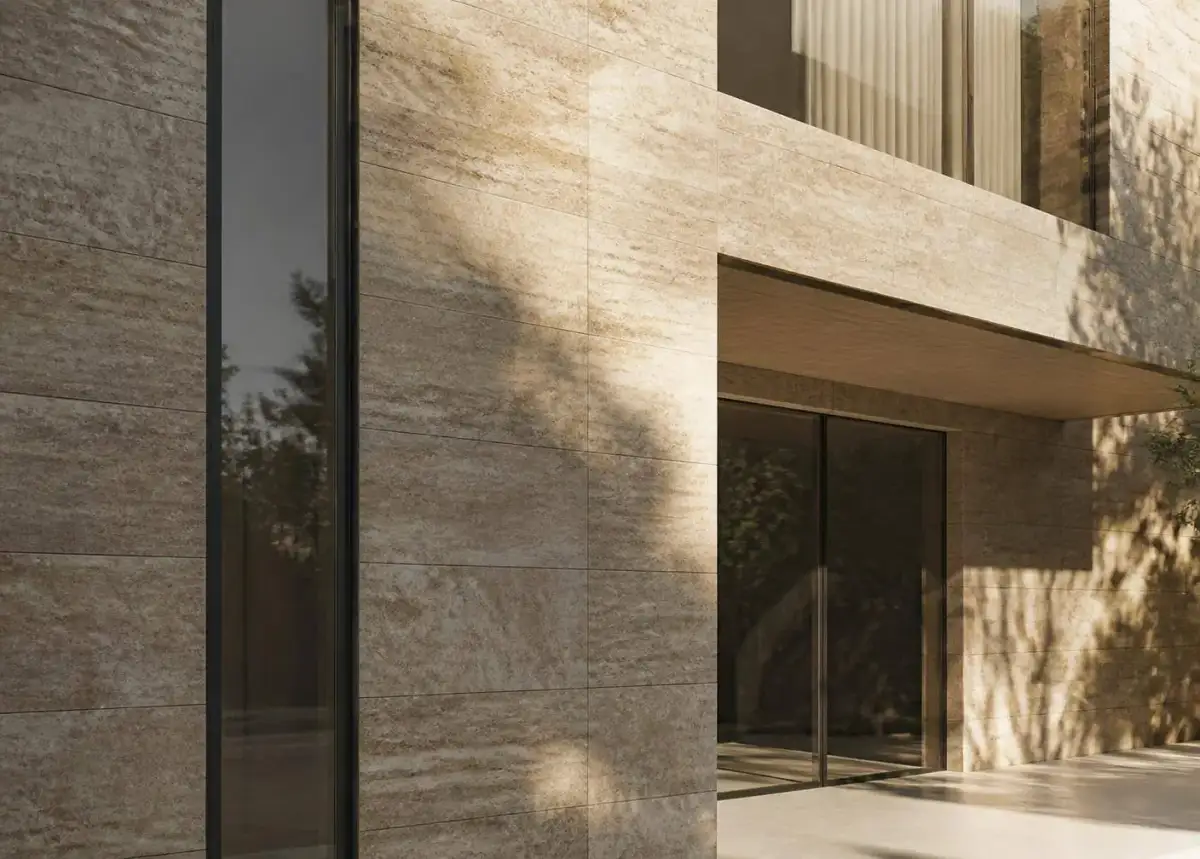
One scaffold, one job, a permanently lower bill.
We price the whole elevation from your drawings and supply the full material schedule, so the building committee sees one clear number and the site orders once.

Get the envelope right once, live with it for fifty years.
Thickness is set to hit your energy target, and the tricky details — window reveals, sills, shutter boxes — are worked out on paper before the scaffold goes up.
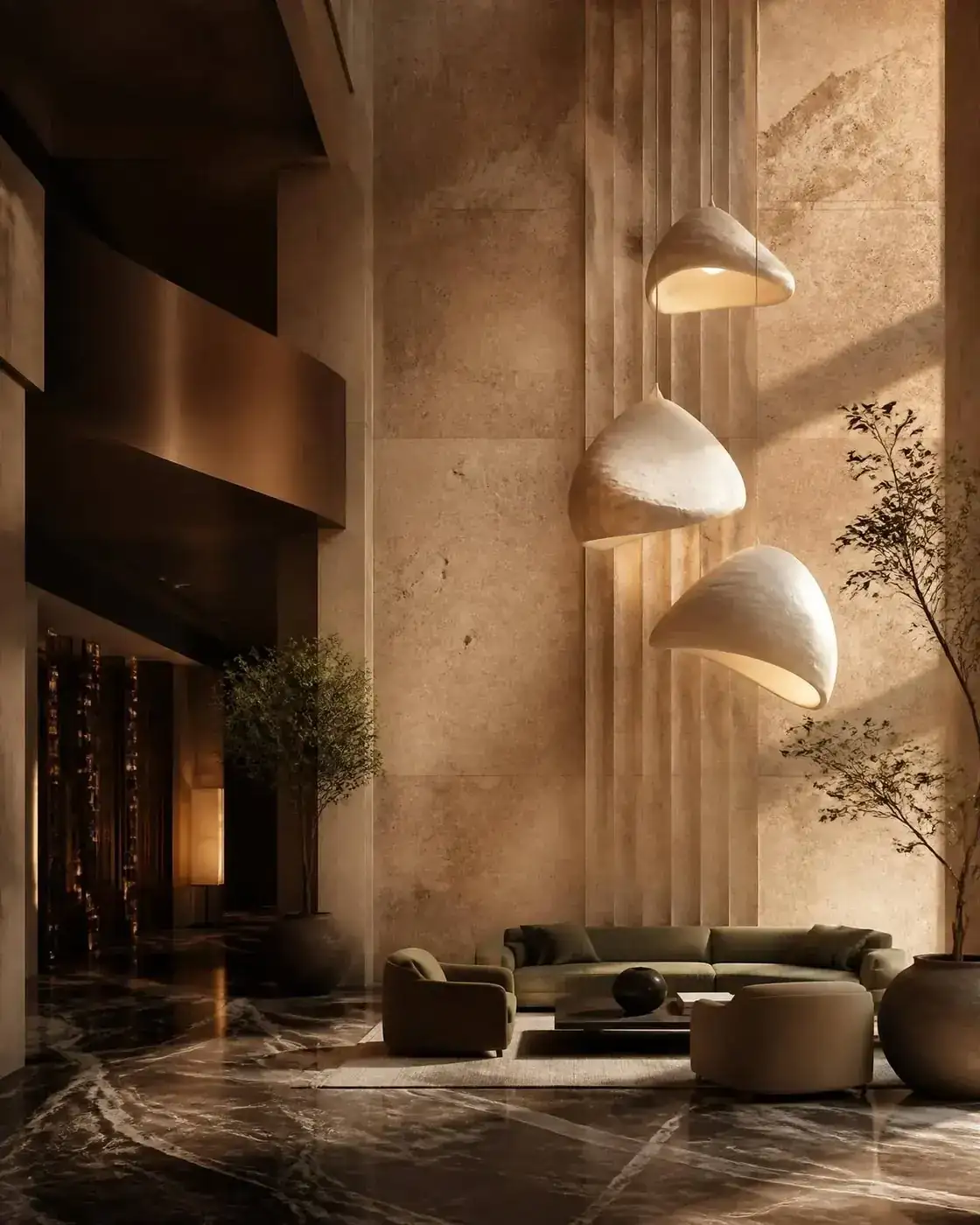
Fire safety, programme and looks, all covered.
Where fire rating matters most, we supply non-combustible boards. Weather-resistant renders hold their colour on a south-facing wall and shed dirt with the first rain.
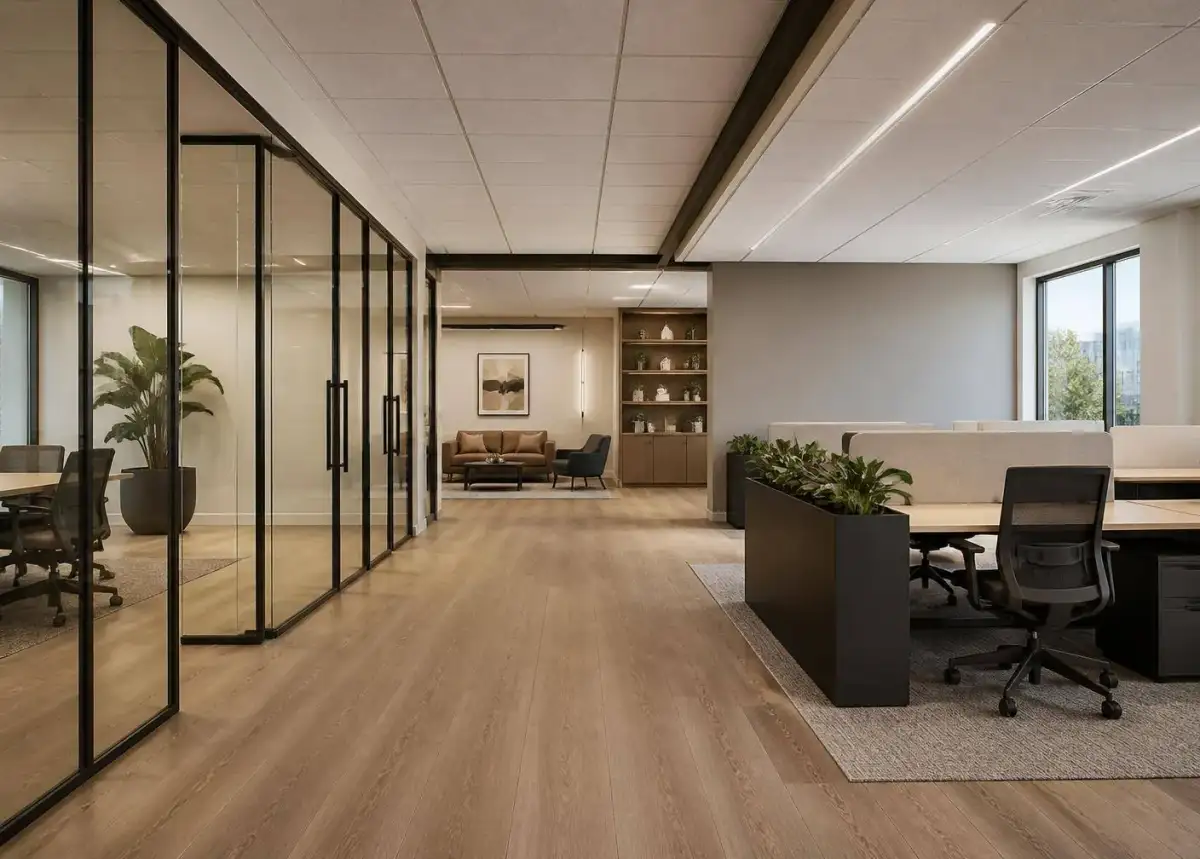
Lower cooling load, without touching the tenants inside.
Commercial buildings run air conditioning hard all day, so cutting the heat gain through the walls goes straight to the cooling bill. Work is sequenced floor by floor so the building stays open and occupied throughout.
Your energy study and any subsidy scheme decide the millimetres — not habit or price alone.
The certified combination is what's covered by warranty — swapping in a cheaper layer voids it.
Reveals, corners and shutter boxes are where facades fail — we draw them in advance.
A quick test on the old render decides how the new system is fixed on.
Energy programmes like Exoikonomo want a before-and-after energy study, product certificates and photographic proof at each stage — all far easier to collect if the file is opened before work starts than reconstructed afterwards. We prepare the documentation as the job progresses.
A cheap layer under a premium finish is the classic way to lose the warranty and crack the facade.
Corners and edges need more support than the flat wall — we calculate this per building.
Hot sun, rain or cold during cure causes colour patches and a weak finish — we schedule around it.
Representative selections from the catalog — indicative of what we quote, stock-source and deliver week to week. Ask for the full schedule with formats, finishes and current lead times.
01λ 0.031–0.032 W/mK, 50–120 mm — best thermal performance per euro
02Non-combustible A1 boards for tall buildings, escape routes and fire-rated facades
03Cement adhesives and fibre-reinforced base coats for board bonding and mesh embedding
04Thermal-break anchors, 160 g/m² alkali-resistant mesh, base and corner profiles
One certified insulation system arrives complete, with the documents your energy study and subsidy file need. This is the part most suppliers leave out: what we import, how external thermal insulation (ETICS) should be specified before anyone prices it, where projects lose money, and what our 1–2 weeks lead time actually covers.
External thermal insulation composite systems for new build and energy retrofit: graphite EPS or stone wool boards, system adhesive, mechanical anchors, alkali-resistant mesh, base coat, primer and silicone or silicate finish render — supplied as one certified system with the layer schedule, quantities and details your engineer needs for the energy study and the subsidy file.
Because we buy external thermal insulation (ETICS) directly from the factories, the range you see is the range we can programme — not a catalogue we hope to source later. In practice that means graphite EPS boards, stone wool boards and adhesives & base coats, each with its own price band and availability, so a specification can be tuned to a budget instead of abandoned.
One certified system, one warranty: boards, adhesive, anchors, mesh, base coat and render come from the same certified system — mixing brands is what voids the guarantee.
A facade insulated with mixed brands is not a system — and it is not covered by anybody's warranty.
Boards, adhesive, anchors, mesh, base coat and render come from the same certified system — mixing brands is what voids the guarantee.
You get consumption per layer and anchor counts per m², so the site orders once and the estimator prices honestly.
Base profiles, window reveals, corner beads, expansion joints and roller-shutter boxes detailed before the scaffold goes up.
Thermal conductivity, reaction-to-fire and system approval documents packaged for the energy study and grant application.
Specifying external thermal insulation (ETICS) well comes down to a short list of decisions taken in the right order — let the energy target set the thickness, keep every layer as one system, sort the details before the scaffold goes up and check the existing wall first. Taken on paper, these cost nothing. Taken on site, each one is a change order.
We write the specification with you before anything is quoted, so the number you get is for the material that will actually be installed. That means confirmed dimensions and finishes, the right performance class for the space, and quantities that include the waste factor rather than discovering it mid-installation.
The same reference behaves differently depending on where it goes — apartment-block energy retrofits, new-build residences, hotels and short-term rentals, public and school buildings each carry their own requirements, and we specify against the space rather than against a mood image.
The complete, tested insulation build-up on a facade, covered by one warranty.
How much heat the wall loses — the number your energy study sets, and we build to.
An insulation board that performs better than standard foam at the same thickness.
A fibreglass mesh embedded in the base coat that stops the render cracking as the facade moves.
Almost every delay we are called in to rescue traces back to the same handful of causes: mixing brands across the layers, skimping on fixings, rendering in the wrong weather and insulating over a damp wall. None of them are exotic, and all of them are avoidable at specification stage.
Mixing brands across the layers is the most expensive one, because a cheap layer under a premium finish is the classic way to lose the warranty and crack the facade.
We have supplied external thermal insulation (ETICS) into apartment-block retrofits, new-build residences and hotels & public buildings, and the pattern is consistent: the projects that run smoothly are the ones where the material was locked before the trades were booked.
Skimping on fixings — checked once on paper, never again on site.
A cheap layer under a premium finish is the classic way to lose the warranty and crack the facade.
Corners and edges need more support than the flat wall — we calculate this per building.
Hot sun, rain or cold during cure causes colour patches and a weak finish — we schedule around it.
Damp needs fixing first, or it gets sealed in behind the new system.
Standard lead time on external thermal insulation (ETICS) is 1–2 weeks from confirmed specification, and that window covers the whole chain — factory programming, consolidation, transport, customs where applicable and delivery to site or to your warehouse. We quote the landed number, not an ex-works price that grows later.
Pricing is per project rather than per line. Because we import directly and consolidate external thermal insulation (ETICS) with the rest of the materials for the same room, you get one quote, one delivery window and one point of contact — and the savings show up on the total, not just on a headline reference.
If you already have drawings, send them and we will come back with a specification and a landed price. If you do not, we will build the specification with you first. Either way, nothing is ordered until the quantities, finishes and dates are agreed in writing.
For most Greek buildings graphite EPS at λ 0.031 W/mK gives the best thermal performance per euro, with a silicone render on top for water repellence and colour stability. Where fire class or height demands it, stone wool A1 boards replace the EPS. What matters more than the brand is that all layers belong to one certified system.
In most Greek climate zones 60–80 mm of graphite EPS hits the sweet spot; colder zones and buildings targeting deep-retrofit grants go to 100–120 mm. Your energy study sets the target U-value and we specify the board thickness that meets it.
Materials are quoted per m² of facade including adhesive, boards, anchors, mesh, base coat, primer and render — send the elevation areas and opening schedule and we return one figure with the layer consumption shown.
Yes, if the existing render is sound, clean and bonded. We test adhesion and specify the fixing pattern — bonded plus mechanically anchored — accordingly. Loose or blown render must come off first.
Between roughly 5°C and 30°C with no rain or direct hard sun on the fresh render — spring and autumn are ideal in Greece. Winter-grade additives extend the season where the programme demands it.
If something fails after installation — damp, a leak, cracking — our engineers inspect the work and find the cause, with a written finding you can take back to the contractor.