
MaterialsHub
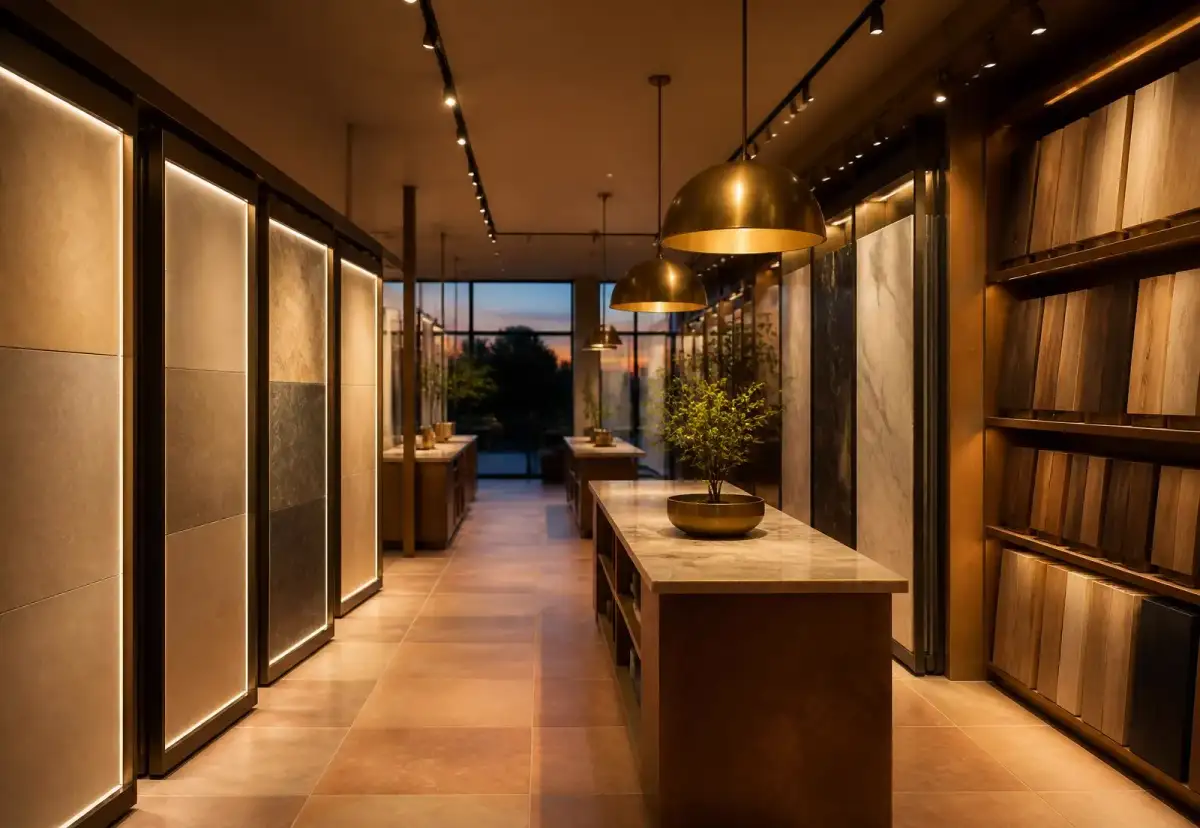
Materials franchise store interior with backlit tile panels and a sample library
Consulting/ Franchise Management /

We turn one store into a network.

Franchise management for materials brands and retailers: the model, the contracts, the store build, the range and the pricing — plus buying power that makes every franchisee cheaper to open and cheaper to run. One centre, many stores, one catalogue.

8-14
Weeks from signed deal to opening
7
Material families in the shared catalogue
-18%
Typical landed-cost saving via group buying
1
Playbook every store runs on
MaterialsHub
02 / The franchise sequence

From one proven floor to a repeatable network.

Stage 01 / 5
01Model & economics

We start with the numbers, not the logo. Catchment analysis, store P&L, entry fee, royalty, margin bands per material family and the break-even month for a franchisee. If the model does not work on paper, we fix it before anyone signs.

  • Catchment & competition study
  • Store P&L and break-even model
  • Fee, royalty and margin structure
02Franchise pack & contracts

The franchise becomes a document set anyone can execute: territory map, brand book, operations manual, supply agreement, service levels and the legal frame — reviewed for the Greek market and ready for candidate meetings.

  • Territory & exclusivity map
  • Operations manual and brand book
  • Supply agreement and service levels
03Store creation

We build the store itself — shell survey, layout, display systems, lighting design, sample library, signage and installation. Every fixture is specified once and reused across the network, so store number six costs less than store number one.

  • Layout, joinery and display systems
  • Lighting design and sample library
  • Fit-out supervision and opening punch list
04Range, sourcing & savings

The network buys as one. We consolidate demand across stores, negotiate directly with factories, import under one plan and hold the shared range — so each franchisee gets factory pricing, tighter stock and fewer dead SKUs.

  • Consolidated group purchasing
  • Direct factory and import negotiation
  • Shared core range plus local flex
05Launch & operations

Staff training on the ranges and the platform, opening campaign, local architect and contractor outreach, then a monthly operating rhythm: KPIs per store, range reviews, restock plans and support that does not disappear after the ribbon.

  • Staff and sales training
  • Opening campaign and spec outreach
  • Monthly KPI and range reviews
03 / Why it works

Onecatalogue.Oneplaybook.Buyingpowerthatbelongstothewholenetwork,notjusttheheadoffice.

04 / Where the money is saved

Franchising is not a fee. It is a cost structure.

A single store negotiates alone, imports small volumes and pays for every mistake twice. A managed network buys together, builds from one specification and shares everything that was already paid for once.

-18%
Landed cost

Consolidated containers and direct factory terms instead of local wholesale margins on every pallet.

-30%
Fit-out cost

Display systems, joinery and lighting specified once and reordered for every new store at network pricing.

0€
Catalogue build

Every franchisee inherits the full digital catalogue, imagery and specifications on day one — nothing to rebuild.

4x
Faster opening

A documented sequence replaces improvisation: the sixth store opens on a schedule, not on hope.

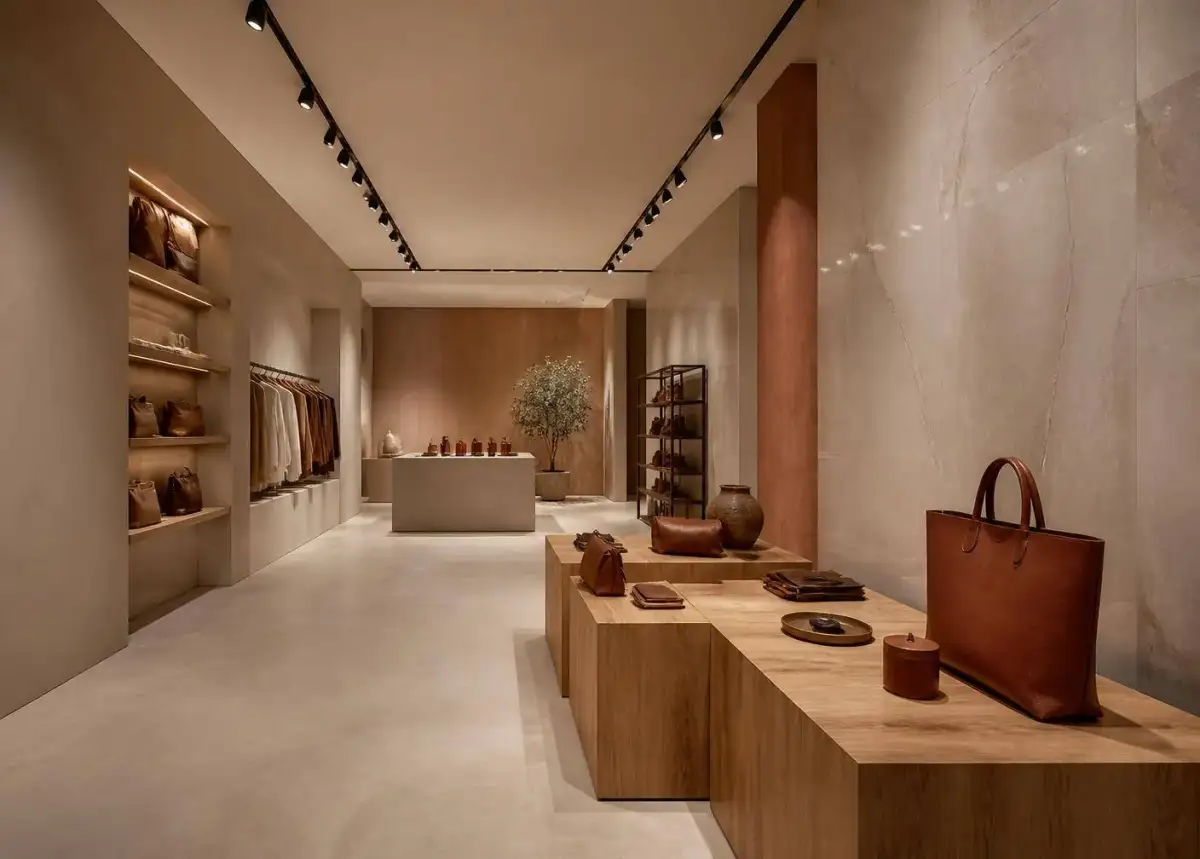
Standalone materials franchise store interior
05 / Formats we manage

Not every network is a full franchise.

Some brands want owned stores with partners running them. Some want a corner inside an existing retailer. Some just want dealers who carry the range properly. We manage all four, with the same discipline and the same catalogue behind them.

06 / What head office actually does

A franchise is only as good as the support behind it.

01Candidate screening

We qualify partners on capital, catchment, retail experience and appetite — before a territory is committed.

02Territory planning

Population, competition, construction pipeline and drive-time mapping decide where store number two goes.

03Supply and logistics

Import planning, container consolidation, customs and delivery windows managed centrally for the whole network.

04Stock and range control

Core range obligations, seasonal additions and dead-SKU pruning reviewed store by store, every quarter.

05Marketing system

Brand assets, campaign templates, local architect outreach and a shared content calendar each store can run.

06Platform and catalogue

Every store works inside MaterialsHub — search, 3D visuals, moodboards and quotes from a single shared catalogue.

07 / Engagement

Three ways to start the network.

4–6 weeks
Feasibility
  • Market and catchment study
  • Store P&L and fee model
  • Format recommendation
  • Go / no-go with numbers

For brands deciding whether a network is worth it.

3–4 months
Franchise build
  • Full franchise pack and contracts
  • Store design and fit-out specification
  • Range, pricing and supply plan
  • Candidate pipeline and pitch material

Everything needed to sign and open the first partners.

Ongoing
Managed network
  • Head-office function on retainer
  • Group purchasing and import planning
  • Per-store KPI and range reviews
  • Continuous training and marketing

We run the network function so you run the business.

07 / The long read

What running a MaterialsHub
franchise actually involves.

A franchise is not a logo and a price list — it is a territory, a showroom, a supply chain and a monthly set of numbers you have to hit. This is the full picture: how territories are defined, what capital is needed, how margin is built, and what we do versus what you do.

01

Territory, catchment and why exclusivity is drawn on a map

We define a franchise territory by catchment rather than administrative boundary: population, building permit volume, the number of active architecture and contracting practices, and the distance a specifier will realistically travel to see a sample. That analysis decides whether a city supports one showroom or three, and it is written into the agreement so you are not competing with another partner for the same architect.

Territory exclusivity also sets your growth path. A partner who opens in a secondary city with strong permit activity usually reaches steady specification volume faster than one in a saturated centre, because the local specifier base has fewer alternatives for samples, lead times and technical support.

Exclusivity is drawn from catchment data — permits, practices and travel distance — not from a postcode list.

02

The investment: fit-out, stock, samples and working capital

Four cost blocks make up the opening investment. Fit-out covers the showroom shell, display systems, lighting and the consultation area. Sample and display stock is the working inventory of tiles, worktop slabsets, hardware, sanitaryware and finish boards a specifier needs to touch. Systems and training cover onboarding, the catalogue and quoting tools, and staff certification. Working capital covers the months between opening and the point where recurring specification revenue funds itself.

Most partners underestimate the fourth block. Specification is a lagging business: an architect selects your material in month two and the order lands in month six or nine when that project reaches its finishes stage. We size working capital against that lag explicitly, so the plan survives the first two quarters instead of squeezing stock or marketing exactly when both matter most.

Showroom fit-out

Shell, display systems, lighting, consultation and sample library area.

Display & sample stock

The physical library specifiers come to touch — surfaces, hardware, finishes.

Systems & training

Catalogue access, quoting tools, technical and sales onboarding for your team.

Working capital

Runway sized against the lag between specification and order.

03

Where the margin comes from

Franchise revenue has three layers. Materials supply is the base — you buy through consolidated group purchasing, so pricing reflects the volume of the whole network rather than a single showroom's turnover. Project work adds the second layer: kitchens, joinery, interior and office packages specified and delivered through your territory, at a project margin rather than a product margin. Services form the third — consulting, 3D specification, showroom setup for local retailers, and continuity work with contractors.

The mix matters more than the headline margin. A partner selling only materials competes on price with every importer in the market; a partner who attaches specification and project delivery to the same client base defends margin because the work is no longer directly comparable. Our model is built to push that mix towards project and service revenue in year two onward.

Group purchasing sets your floor; specification and project delivery are what protect the margin above it.

04

What we provide and what stays your responsibility

We supply the brand and its positioning, the material portfolio and supplier relationships, consolidated purchasing, the catalogue and quoting platform, technical documentation, showroom design and merchandising standards, launch marketing assets, sales and technical training, and continuing support for complex specifications and project pricing.

You run the territory: hire and lead the local team, build the relationships with architects, contractors and developers in your catchment, manage the showroom day to day, hold local stock decisions, and own the commercial performance of your business. The division is deliberate — nobody in a central office can build trust with a local architect, and no local partner should have to negotiate with twenty factories alone.

We provide

Brand, portfolio, purchasing, platform, training, technical and specification support.

You provide

Team, local relationships, showroom operation, commercial performance.

Shared

Marketing calendar, project pricing on complex work, annual business planning.

Reviewed

Quarterly performance review against the plan agreed at signing.

05

From first conversation to open doors

The path runs through a structured application, a territory and financial review, an agreement, then location selection, fit-out, stocking, staff training and a launch programme aimed at the local specifier base rather than the general public. The critical milestone is not the opening day — it is the first quarter in which your showroom is being used as a working sample library by architects who did not previously know the brand.

We are deliberately selective about partners, because the territory model means one weak franchise blocks a whole catchment. What we look for is commercial experience in construction, interiors or materials, credible access to the local specifier and contractor market, and the capital to run the plan without cutting the sample library in month four.

Success is not the opening — it is the quarter your showroom becomes the local sample library for architects.

08 / Questions

What owners ask before they sign

Do we need an existing store to franchise?+

One proven floor helps, but it is not mandatory. If you have the brand, the supply and the capital, we can build the prototype store and the franchise pack in parallel.

How much capital does a franchisee need?+

It depends on format and city. A shop-in-shop can start in the low tens of thousands; a full 300 m² store is a different order. The feasibility stage gives you real bands, not brochure numbers.

Who owns the supply relationship?+

Head office. The network buys as one so the pricing stays consistent and the leverage stays with the brand — franchisees order from the shared catalogue.

How do you guarantee the same experience in every store?+

One fit-out specification, one sample library standard, one training programme and one catalogue. The differences between stores are local range flex, not the brand experience.

Can you manage stores outside Greece?+

Yes. Import planning, factory negotiation and the platform are not country-bound; territory and legal work are handled with local counsel.

What happens if a franchisee underperforms?+

Quarterly KPI reviews catch it early. Most cases are range or training issues we can fix; the agreement also defines performance thresholds and exit terms up front.

Materials store interior at dusk
08 / Start the network

Send Us The Market. We'll send back a model.

Tell us where you are today — one store, a brand without retail, or a network that needs running properly. You get a call, an honest read on the opportunity and a phased plan with cost bands.

Prefer to give us a call? +30 6948 408 542

Franchise brief — four steps

  1. 01Your goal
  2. 02Your business
  3. 03What you need
  4. 04Contact